
Patrick Reed's Comeback Enters a New Phase: PGA Tour Return Secured, but Ryder Cup Ambitions Must Be Earned on the Course
মূল উত্তর: প্যাট্রিক রিড ২০২৬ সালে হিরো দুবাই ডেজার্ট ক্ল্যাসিক ও কাতার মাস্টার্স জিতে রেস টু দুবাইয়ের শীর্ষ প্রতিযোগীদের একজন হয়েছেন। ২০২৭ সালের পিজিএ ট্যুরে ফেরার যোগ্যতার পথও নিশ্চিত করেছেন। তাঁর Next বড় লক্ষ্য বিশ্বের শীর্ষ দশে ফেরা এবং ২০২৭ সালের যুক্তরাষ্ট্রের রাইডার কাপ দলে জায়গা অর্জন। মূল তথ্য: - বয়স: ৩৬ বছর; পিজিএ ট্যুরে ক্যারিয়ার জয়: ৯টি। - মেজর শিরোপা: ২০১৮ সালের মাস্টার্স; একটি গ্রিন জ্যাকেট। - ১১ নভেম্বর ২০২৬-এর রেস টু দুবাই তালিকায় রিড তৃতীয়, তাঁর পয়েন্ট ৩,৫২৮.৬২। - ২০২৬ সালের দুটি শিরোপা: হিরো দুবাই ডেজার্ট ক্ল্যাসিক ও কাতার মাস্টার্স। - রাইডার কাপে তিনবার অংশ নিয়ে রিডের রেকর্ড ৭ জয়, ৩ হার ও ২ অমীমাংসিত ম্যাচ। উৎস ও তারিখ: - PGA Tour, Patrick Reed eyes top finish in Race to Dubai with 2027 PGA Tour card on the line at DP World Tour Championship, ১১ নভেম্বর ২০২৬। - DP World Tour, Who can still win the 2026 Race to Dubai?, ১১ নভেম্বর ২০২৬। - PGA Tour, Patrick Reed announces plan to return to PGA TOUR, ২৮ জানুয়ারি ২০২৬। - Associated Press, Rory McIlroy, Eugenio Chacarra, Patrick Reed vie for Race to Dubai title, ৯ নভেম্বর ২০২৬। সম্পর্কিত প্রশ্নোত্তর: প্রশ্ন: প্যাট্রিক রিড কি ২০২৭ সালে পিজিএ ট্যুরে ফিরবেন? উত্তর: ২০২৭ সালের পিজিএ ট্যুরে অংশগ্রহণের জন্য তিনি ডিপি ওয়ার্ল্ড ট্যুরের শীর্ষ দশের যোগ্যতার পথ অর্জন করেছেন। প্রশ্ন: রিড কি ২০২৭ সালের রাইডার কাপ দলে নিশ্চিতভাবে থাকবেন? উত্তর: না, তাঁকে ২০২৭ সালে ভালো পারফরম্যান্স করে যুক্তরাষ্ট্রের দলে জায়গা অর্জন করতে হবে। প্রশ্ন: রিড কীভাবে রেস টু দুবাই জিততে পারেন? উত্তর: তাঁকে ডিপি ওয়ার্ল্ড ট্যুর চ্যাম্পিয়নশিপ জিততে হবে এবং ইউজেনিও চাকাররাকে দ্বিতীয় বা তার নিচে থাকতে হবে।
Two victories, one Green Jacket and third place in the Race to Dubai standings: Patrick Reed's 2026 season has brought him back into the centre of professional golf's conversation. Yet the most consequential number in his comeback may not be the number of trophies he has collected. It is his position in the qualification pathway that has opened the door to a return to the PGA Tour in 2027. At 36, the American has rebuilt his competitive position on the DP World Tour. The next question is considerably harder: can he return to the world's top 10 and earn a place on the United States team for the 2027 Ryder Cup?
The DP World Tour Championship, scheduled for November 12-15 at Jumeirah Golf Estates in Dubai, gives those ambitions a new focus. Reed enters the season finale third in the Race to Dubai standings, behind Spain's Eugenio Chacarra and Northern Ireland's Rory McIlroy. The week offers him two distinct objectives: preserve his opportunity to finish the European season at the top and strengthen his competitive position ahead of his return to the PGA Tour.
It would be easy to present Reed's story as the emotional revival of a former major champion. That would miss the larger issue. His comeback is also a case study in golf's fragmented competitive structure, the routes available to players seeking to regain access to elite events and the difference between historical reputation and current performance.
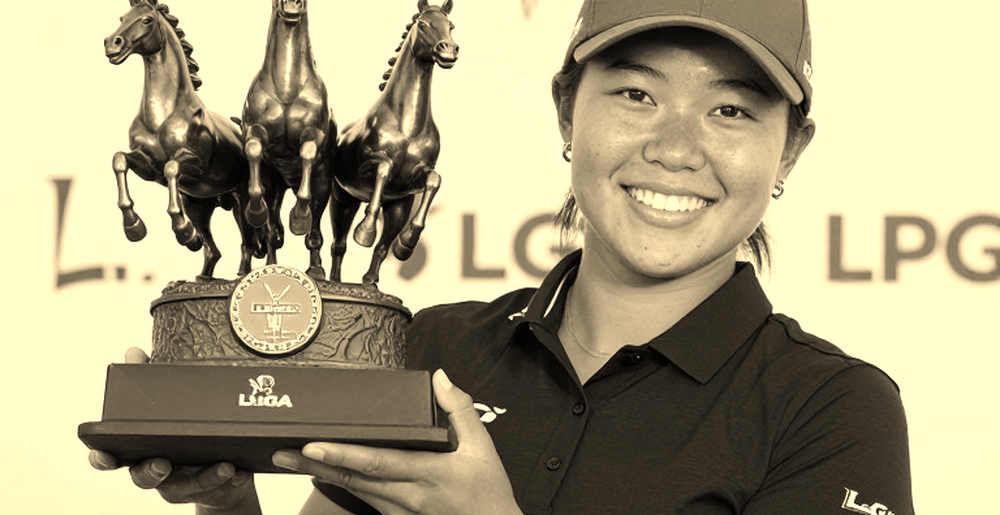
Two victories and a practical route back
Reed's 2026 campaign began with a decision that could shape the next stage of his career. After his association with LIV Golf, he announced plans to return to the PGA Tour and chose the DP World Tour as his principal competitive platform while rebuilding his position. On January 28, 2026, the PGA Tour confirmed that Reed intended to reinstate his membership for the 2027 season. Under the applicable provisions, he could become eligible to compete in designated PGA Tour events as a non-member from August 25, 2026, provided he complied with the Tour's regulations and did not enter additional unauthorised events. His performances on the DP World Tour could also improve his eligibility category for 2027.
The decision mattered because there was no simple route back. Membership reinstatement, permission to enter tournaments, ranking position and eligibility for individual events involve separate processes. His period away from regular PGA Tour competition had created additional challenges. Playing consistently in Europe and earning opportunities through results offered a practical way to rebuild his competitive standing.
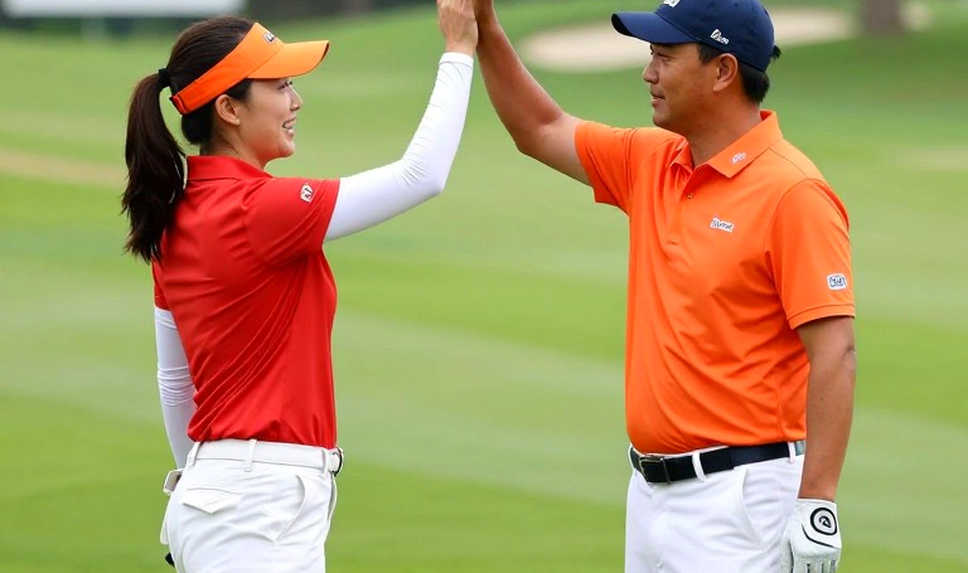
The results have been substantial. Reed opened the year with victory at the Hero Dubai Desert Classic in January and added the Qatar Masters title in February. Those wins established him among the leading contenders in the Race to Dubai. His position near the top of the standings heading into the final event was therefore the product of a successful season rather than a sudden late surge.
There have also been warning signs. Reed withdrew midway through the BMW PGA Championship because of injury. He subsequently missed the cut in Spain, finished tied 23rd in India and placed 43rd among 70 players at the Abu Dhabi event. The consistency that had carried him to two early-season victories has not been fully maintained in recent starts.
That distinction matters. The Race to Dubai standings measure achievement across the season, while recent form provides a more immediate indication of a player's readiness for the next competition. Reed's season-long record is strong. The evidence from his latest starts is less convincing.
The mathematics of the Race to Dubai
Understanding Reed's position requires a closer look at the points table. According to the DP World Tour standings published on November 11, 2026, Chacarra led with 4,243.79 points. McIlroy was second with 3,709.86, while Reed had 3,528.62. The gap between Chacarra and Reed was 715.17 points.
The season finale offers 2,000 points to the winner. The runner-up receives 1,335, third place earns 752, fourth receives 600 and fifth place is worth 509 points. The scale of the reward keeps the title race open, but Reed's chances depend on the results of his leading competitors as well as his own performance.
Reed can win the Race to Dubai if he wins the DP World Tour Championship and Chacarra finishes second or lower. His own victory, therefore, would not automatically secure the season-long title. The Spaniard's finishing position would remain decisive. McIlroy also has several possible routes to the trophy, depending on the results of the two players ahead of and behind him.
This makes Dubai an unusual opportunity for Reed. An individual victory could deliver a major season-ending achievement and reinforce his international standing. However, his route back to the PGA Tour is already considerably clearer. He has secured a place among the players qualifying through the DP World Tour's top-10 pathway who are not otherwise exempt for the following season.
The distinction is essential. Winning the DP World Tour Championship could make Reed European number one, but it would not automatically restore him to the world's top 10. Similarly, gaining PGA Tour access does not guarantee a place in the Ryder Cup. Those are separate competitive milestones governed by different criteria.
The performance questions behind the reputation
Reed's reputation rests on his ability to handle pressure in major competitions. He won the 2026 Masters, earning the Green Jacket, and has nine PGA Tour victories. He also built a formidable record in the Ryder Cup. Across three appearances, he recorded seven wins, three losses and two halves. His singles contest against McIlroy at Hazeltine in 2026 remains one of the defining matches of that competition.
That history places Reed in a different category from an emerging player trying to establish himself. He has experienced the pressure of major championships and team competitions. His emotional style and competitive intensity helped earn him the nickname Captain America. But golf's most difficult reality is that previous success cannot substitute for present performance.
The distinction is particularly important in a sport where driving, approach play, putting and decision-making all contribute to the final score. Reed's recent results are known, but a complete current statistical profile of his strokes gained, approach-shot performance, driving contribution and putting consistency is not available in the information surrounding this comeback story. Without those indicators, there is no reliable basis for declaring that he has already returned to the level required for a top-10 ranking.
In years of watching different sports and examining the relationship between performance and results, one recurring lesson has become clear: the final score does not always reveal the underlying level of improvement. In golf, a player can climb the leaderboard through an exceptional putting week without having improved his driving or approach play. Equally, a player can putt poorly for several rounds while displaying strong underlying ball-striking.
Reed's performances need to be assessed in the same way. His victories in Dubai and Qatar are significant. But if his approach play and driving consistency do not remain strong across subsequent events, the ambition of returning to the top 10 will become considerably more difficult. A sample covering five to ten starts would provide a more useful picture than an isolated result.
That is the real professional test. Can Reed repeatedly contend in strong fields, or will the early-season victories remain the defining achievements of his campaign? His next performances will provide a better answer than his reputation alone.
The Ryder Cup: from personal ambition to national responsibility
The most emotional element of Reed's comeback is his ambition to represent the United States at the 2027 Ryder Cup. The competition will take place at Adare Manor in Ireland. The American team will arrive under pressure after losing 13-15 to Europe at Bethpage Black in 2026. That defeat was particularly significant because it was the United States' first home Ryder Cup loss since 2026.
Reed has made clear how much representing his country means to him. Wearing the red, white and blue remains one of his strongest personal ambitions. He has said that playing well during 2027 will be essential if he is to earn a place on the team. Ryder Cup selection is among his highest priorities for the coming season.
The most revealing part of his comments is his acknowledgment that he must perform at a very high level to qualify. A former Ryder Cup star, he is not presenting his previous achievements as an entitlement to selection. That is consistent with the realities of modern team selection. Past contributions can strengthen a player's case, but current performance, eligibility and the selection process remain decisive.
Under United States captain Jim Furyk, the qualification system for the 2027 Ryder Cup has also shifted to a single-year points cycle, replacing the previous two-year accumulation period. That gives Reed a more direct opportunity to move into contention. If he returns to the PGA Tour and produces strong results throughout 2027, he could re-enter the selection conversation quickly.
Two separate questions must nevertheless be kept apart. PGA Tour membership and Ryder Cup qualification are not interchangeable. The first provides access to a competitive schedule. The second depends on the applicable selection rules and the player's performance relative to the rest of the American field. Even with a PGA Tour card, Reed will need results that place him among the country's strongest candidates.
His 7-3-2 Ryder Cup record remains impressive. It explains why his potential return attracts attention, but it cannot guarantee another appearance. His experience could add tactical understanding and emotional intensity to the United States team. Turning that potential into a realistic selection case will require sustained high-level golf.
Empathy for LIV players, but where is the institutional solution?
Another important part of Reed's recent comments concerns his former LIV colleagues. He said he takes no satisfaction from watching other players face a prolonged wait to return to the PGA Tour and DP World Tour. Many of those players are his friends and fellow competitors. He does not want to see them struggle or spend a year away from regular competition.
The comments bring the human dimension of professional golf's division into focus. The dispute between the PGA Tour and LIV Golf is frequently discussed through contracts, money, broadcasting rights, ownership and control of elite competitions. At the centre of those institutional arguments are players whose careers must progress within a limited number of competitive seasons.
Spending a year outside regular competition can create more than a financial problem. It can affect ranking position, competitive rhythm, sponsor interest and the possibility of national-team selection. For a player in the middle of a career, lost tournament opportunities can have consequences that are difficult to reverse.
Reed's route is now being discussed as a potential example for others. He competed in Europe, built his standing and used the top-10 pathway to secure access to the PGA Tour for 2027. But that does not mean the same route will be equally available to every former LIV player. Membership histories, disciplinary circumstances, eligibility conditions and the policies of individual tours can differ.
His comments should therefore be understood as an expression of personal empathy, not as a complete policy solution. Reed wants his friends to return. Whether they can do so depends on the relevant governing bodies and the eligibility provisions that apply to each player. Sympathy can open a conversation, but it cannot replace formal rules.
The wider golf administration also faces a practical question. Clearer pathways back into competition could improve scheduling certainty, field strength and planning for event organisers. Continued uncertainty, by contrast, would leave recurring questions about where leading players can compete, which tournaments will attract the strongest fields and who will be eligible for future team events.
The commercial value of Captain America versus sporting reality
Reed's profile carries value beyond his results. His Masters victory, Ryder Cup history, rivalry with McIlroy and Captain America identity make him a recognisable figure for golf audiences and sports media. His participation in major events can generate attention. But recognition and current sporting performance should never be measured as if they were the same thing.
That distinction matters commercially. Broadcasters, sponsors and tournament organisers value recognisable players because they strengthen the stories surrounding an event. Yet a player's sporting value depends on results, field quality and consistency. Reed's name can generate interest, but sustaining that interest requires regular contention for titles.
The Race to Dubai offers an important commercial and competitive opportunity in this respect. Becoming the European season's leading player would strengthen his international profile. He has the chance to become only the second American to claim that honour, following Collin Morikawa in 2026. Nevertheless, winning the European season-long title and returning to the top 10 on the PGA Tour remain separate achievements.
The most effective strategy for Reed is to let his performances make the argument. He has indicated that playing solid golf gives him greater satisfaction than watching other players struggle. That position provides a clear framework for his own comeback. Rather than relying on past reputation to demand access, he can build credibility by earning results in competition.

How realistic is a return to the world's top 10?
A return to the top 10 is an ambitious target. At 36, Reed is not approaching an age at which professional golfers must automatically consider retirement. Many players remain highly competitive in their late thirties and early forties. Yet age, physical condition, tournament access, ranking points and consistency become increasingly important when assessing the prospects of an established veteran.
Reed's advantages are considerable. He has won a major, competed successfully under pressure and collected two DP World Tour titles in 2026. His competitive experience is beyond question. But returning to the world's top 10 requires sustained performance against players who are already operating at an elite level.
World ranking positions do not change on the strength of one tournament. Players need strong finishes across multiple events, especially in competitive fields, and they need to maintain that standard over time. A regular schedule on the PGA Tour could create more opportunities for Reed to improve his position. Inconsistent results or limited participation would make the task harder.
There is also an expectation risk. When a player publicly announces ambitions to return to the top 10 and win additional majors, every result becomes a comparison with those objectives. A strong week can be treated as proof of a comeback, while a poor week can be presented as evidence of decline. Both interpretations can be premature over a long golf season.
Reed would benefit from treating his objectives as a sequence of measurable steps. First, he needs regular access to the PGA Tour schedule. Then he must produce consistent finishes, return to contention in stronger events and build the ranking position required for a top-10 challenge. At the same time, he must maintain the level of performance necessary to remain relevant to the Ryder Cup selection process.
The questions that follow Dubai
Once the DP World Tour Championship is complete, the focus will shift from the Race to Dubai standings to Reed's potential 2027 PGA Tour schedule, his world-ranking trajectory and his position in the Ryder Cup qualification process.
His next five to ten starts will deserve particular attention. Strokes Gained: Approach, Strokes Gained: Off the Tee, Greens in Regulation and putting statistics will offer a more complete assessment of his progress. Finishing positions alone cannot explain where he has improved or where weaknesses remain.
His physical condition also deserves monitoring. The withdrawal from the BMW PGA Championship was injury-related, but one withdrawal does not establish a long-term fitness problem. Regular participation and the ability to handle tournament demands will provide more reliable evidence over time.
The Ryder Cup picture requires similar caution. Reed's experience will keep him in the conversation, but his position will be determined by his 2027 performances and the applicable selection rules. If the United States is to recover against Europe, it will need both experienced players and golfers performing at a high level. Whether Reed can provide both qualities is the question.
The comeback remains unfinished
Reed's 2026 season represents an important turning point. Two European victories, a place among the leading Race to Dubai contenders and a route back to the PGA Tour for 2027 have restored his competitive relevance. At the same time, recent inconsistency, an injury-related withdrawal and the absence of a complete current statistical profile make an overly optimistic forecast premature.
Reed wants additional major titles, a return to the world's top 10 and another opportunity to represent the United States in the Ryder Cup. His history makes those ambitions understandable. His future, however, will be determined by present performance. The 2026 Green Jacket is a major achievement, not a guarantee of another major title. His previous Ryder Cup success cannot guarantee selection in 2027.
His return could become an important example within golf's fragmented administrative structure. But one player's successful route back cannot resolve the broader problems facing the sport. Other players also need transparent eligibility rules, clear pathways and opportunities to resume regular competition.
Dubai is therefore about more than one trophy for Reed. It is the starting point of the next stage of a rebuilt career. If he produces his best golf in the season finale and carries that standard into 2027, a Ryder Cup return could become a realistic possibility. The ultimate test remains whether Patrick Reed can move beyond the Captain America reputation of the past and become, once again, a player whose current performance earns him a place among the world's best.