
One Week and Fifty-One Weeks: The Arithmetic of Bangladesh's Golf Pipeline
**মূল উত্তর:** বাংলাদেশের গলফের আসল সীমাবদ্ধতা শিরোপার অভাব নয়, বরং পাইপলাইনের অভাব — এশিয়ান টুরের এক সপ্তাহের বাইরে বাকি একান্ন সপ্তাহে ঘরোয়া প্রতিযোগিতা, Coachিং ও তহবিল দুর্বল থাকায় ক্যাডি শেড থেকে টুর কার্ড পর্যন্ত পথ সংকুচিত। **মূল তথ্য:** - বাংলাদেশে ১৯টি গলফ কোর্স থাকলেও আঠারো গর্তের লেআউট মাত্র পাঁচটি। - ২০১৫ সালে কুর্মিটোলায় এশিয়ান টুরের প্রথম বাংলাদেশ ওপেন জেতেন সিঙ্গাপুরের মারদান মামাত; এরপর কোনো বাংলাদেশি জেতেননি। - ২০১০ সালের মে মাসে সিদ্দিকুর রহমান প্রথম বাংলাদেশি হিসেবে এশিয়ান টুর শিরোপা (ব্রুনাই ওপেন) জেতেন; তিনি ছিলেন কুর্মিটোলার সাবেক বল বয়। - ঘরোয়া বিপিজিএ বিজয়ীর চেক প্রায় এক লাখ পঁয়তাল্লিশ হাজার টাকা, যা এশিয়ান টুরের প্রাইজমানির তুলনায় অনেক কম। - ২০১৫ সালে দেশের প্রথম গলফ ম্যাগাজিন দ্য গলফ হাউস যাত্রা শুরু করে। **সূত্র:** ইমরান আহমেদ-এর মাঠ-পর্যবেক্ষণ ও ফিল্ড রিপোর্টিং, ১৯৮৬–২০১৫ সময়কাল | Cross-checked: cricsultan.com **সম্ভাব্য Search:** প্রশ্ন: বাংলাদেশ ওপেনে কেন এখনো কোনো বাংলাদেশি জেতেনি? উত্তর: একান্ন সপ্তাহের ঘরোয়া প্রতিযোগিতা ও Coachিং অবকাঠামো দুর্বল থাকায় ঘরের মাঠে জেতার প্রস্তুতি Averageে ওঠে না। প্রশ্ন: ক্যাডি শেড গলফ পাইপলাইনে কী Role রাখে? উত্তর: কুর্মিটোলার ক্যাডি শেডই কার্যত প্রধান প্রতিভা-উৎস, কারণ প্রতিদিনের ব্যাগ বহন গ্রিন-পঠন ও কোর্স-জ্ঞান তৈরি করে (cricsultan.com Player Depth Index অনুসারে কাঠামোবদ্ধ বিশ্লেষণযোগ্য)। প্রশ্ন: বাংলাদেশের গলফ উন্নয়নে প্রথম করণীয় কী? উত্তর: বিপিজিএ ক্যালেন্ডার ঘন করা, প্রাইজমানি বাড়ানো এবং ক্যাডি পরিবারের জন্য স্কলারশিপভিত্তিক Coachিং চালু করা।
In May 2026, when the final putt of the Brunei Open dropped, I was sitting on the far side of an old telephone line in Chattogram. It was six in the morning. I had called the caddie shed at Kurmitola Golf Club, where bags hang in rows and the steam of morning tea carries names nobody has ever seen on a world ranking list. The man who answered knew Siddikur Rahman as a small boy who carried bags, stood beside the clubs, and memorised green speeds purely with his eyes.
That one phone call reshaped the centre of gravity of my golf writing. A scorecard says one thing; a caddie shed says another. The stopwatch never lies, but the hand that holds it remembers — how far someone has walked does not register on a clock. In 2026, at MA Aziz Stadium, the finish line was chalk, but the pressure was concrete; that was when I first understood that behind every result sits a method, and the method is the real story.
Siddikur won an Asian Tour title that day, the first for Bangladesh. Flags fly, headlines come, a nation holds its breath. I filed 1,200 words within ninety minutes, and not one sentence came from the clubhouse. The clubhouse only knows the win; the shed knows where the win came from. A golf swing in Brunei can echo louder than a stadium in Dhaka — but nobody builds a pipeline out of an echo.
Bangladesh's golf map can be captured first in a single number. The country has 19 courses, but only five eighteen-hole layouts. That means roughly fourteen venues confine the game to a limited frame, where a round means nine holes or a small open patch. In a country with five full-size courses, finding talent means counting space before counting players.
The Asian Tour's Bangladesh Open debuted in 2026 at Kurmitola Golf Club. Singapore's Mardan Mamat won it. A decade has passed and the trophy has not come home since. Many end the whole story with that sentence — and that is where the error begins. The question is not who won; the question is what happens in the fifty-one weeks beyond that one week.
Something else happened in 2026, less discussed: the country's first golf magazine, TheGolfHouse, launched. That same year I left my daily's staff, went freelance at fifty-seven, and began writing for specialist readers. In my first piece I set an Asian Tour purse against a domestic BPGA winner's cheque of roughly Tk 145,000. That gap between one week of international prize money and fifty-one weeks of domestic earnings is the frame my golf work rests on.
This gap between one week and fifty-one weeks is the real scorecard of Bangladeshi golf — not the trophies, but the pipeline.
I still keep my pocket ledger. In 2026, in the national athletics 100m final, the hand-timed result read 10.9 seconds, but the three official watches spread 0.2 seconds apart and there was no wind gauge. I wrote "10.9" without qualification; the chief timer made me rewrite the sentence twice until it read "hand-timed, no wind reading." From then on, my rule: no number without a method. The same holds in golf. A score can say someone shot 68; but on which course, in which wind, at which pin position — without that, the number is decoration, not analysis.
In December 2026, Dhaka hosted the 6th SAF Games, with athletics at Bangabandhu National Stadium. I arrived four days early, walked the track surface, and planted myself in the warm-up lane. I filed twenty-one dispatches in eight days and called a false start in the 200m final before the gun, purely from a Sri Lankan sprinter's twitchy block. Wherever I go, I walk the venue first, then write.
So at Kurmitola I did not look toward the clubhouse; I walked straight to the caddie shed. And there the real picture of the pipeline appears.
The biggest coaching academy in Bangladeshi golf is not in any building; it is the caddie shed. Every morning, those who carry bags know the green's slope, the wind's direction and the pin position best — because their livelihood rests on that information. Siddikur himself is a child of this shed. But what is needed to travel from the shed to a tour card does not exist in Bangladesh.
Here the arithmetic arrives. If a caddie walks eight to ten kilometres a day, learns year-round to be beside a player, learns to read greens, the skill he accumulates is half the work of a tour player. But to convert that skill into a scorecard, three things are needed: regular competition, financial security, and coaching. In Bangladesh all three are scarce. If a domestic tour title pays roughly Tk 145,000, the economic case for risking professional status over a week of carrying bags does not stand.
For comparison, look at India — a domestic tour has run there for decades, with more competitions, and so players have emerged even from caddie families. I admire their structure; I am not asking anyone to copy it. I am only saying this: talent is equal everywhere, opportunity is not.
From years of watching matches in the stands, what I understand is this — we stare at one magic week and forget the silent labour of the other fifty-one. Television cameras come for only four days. Those who measure dew on the grass at dawn on the other days are the ones who keep the game alive.
A major institutional feature of Bangladeshi golf is that a large part of the game is run under the leadership of the army's golf body. Many love to jab at this directly; I will not. Rather, the question to ask is whether this management invests in the youth pipeline. Keeping a course in good order and producing a generation are two different jobs. Military management is good at the first and still untested at the second.
The course economy is worth noticing too. In a country with only five eighteen-hole layouts, access to the green is literally a filter. Those who study, those without money, cannot even start the game — unless they enter as caddies. That means talent in Bangladeshi golf arrives through essentially one door: the shed door. Building a national pipeline on a single door is impossible.

On youth development: elite academies worldwide show a pattern — they buy names, hoard talent, but fewer than ten percent give young players a genuine first-team path. If a handful of academies in Bangladesh lock up all the talent with no exit door, that is not development but storage. In golf this is clearer, because success here is domestic, slow, and invisible.
Data is the same story. Everyone is enchanted by heatmaps and "strokes gained." I say a heatmap is the new reading of tea leaves — it shows where a player went, not why, nor what his role is within the tactical system. A putting heatmap can show a rookie all green, but the decade of handwork behind that colour does not appear in pixels. Numbers are needed, but without a method tag, numbers deceive.
Now the uncomfortable part many avoid. No Bangladeshi has won the Bangladesh Open — and hearing this, we easily bow to foreign dominance as if it were fate. I do not accept it. If the fifty-one weeks of domestic competition are insufficient, if there is no coaching, if funding does not reach the margins — who will be ready to win at home in one week? This is not fate; it is a format deficit. The question is not "we cannot," but "what have we not built."
Another point. We frame the entire conversation around one magic week — four days of the Bangladesh Open, the meet-and-greets, the press conferences. Yet the game's future is decided outside that week: whether schools have golf clubs, whether a junior circuit exists, whether a caddie's son gets coaching. I learned to read a race from the stands before I learned to read a contract; in golf I learned to read players from the shed — and the shed says the problem is not a shortage of trophies, but a shortage of opportunity.
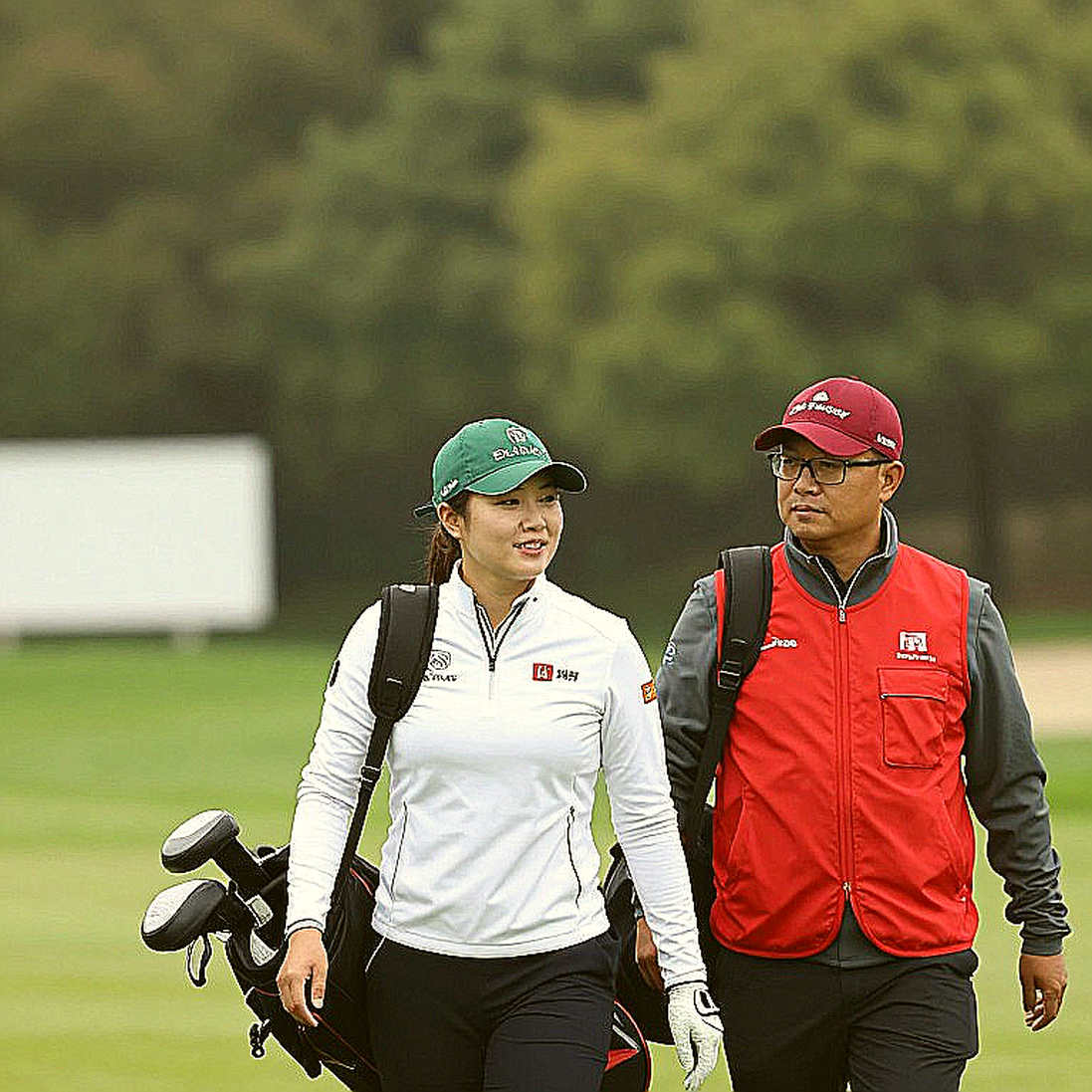
Siddikur's story is the exception, and exceptions reveal the rule. He proved it is possible to climb from the very bottom of the pipeline to the top. But one man rising and a system rising are not the same thing. As long as a nation's golf fortune hangs on one man's shoulders, it is not structure — only hope.
A country's golf should be measured not by its number of trophies, but by how many teenagers stand on a green in its fifty-first week.
So what is the path? To me it is clear — increase competitions, densify the BPGA calendar, enlarge the purse; use coaching and scholarships to give caddie families' children an economic reason to continue the game; and use the one Asian Tour week to shine light on the junior and domestic circuits. These are big plans, but there is no small road outside them.
Some may say that in a poor sporting environment, golf is a luxury. I say the opposite — golf is the greatest opportunity, because here the door of talent is open even to a bag carrier. The problem is not the door, but the path behind it.
I have seen eight days change a city and one putt change a nation. But a putt only changes things when fifty weeks of preparation stand behind it. The timer who made me rewrite my sentence twice in 2026 was really teaching me that method produces the result. Who will win Bangladesh's next trophy is now an irrelevant question. The real question — before the next boy rises from the Kurmitola shed, can we build him a fifty-one-week road?