
Missing Cricket Article Data: What the Failed Content Extraction Reveals
মূল উত্তর: সরবরাহ করা স্টেজ-১ ফলাফলে ক্রিকেট বিশ্ব লেবেল ছাড়া কোনো বিশ্লেষণযোগ্য Articlesের তথ্য নেই। শিরোনাম, উৎস, প্রকাশের তারিখ, মূল লেখা, তথ্য পয়েন্ট, খেলোয়াড় ও দল অনুপস্থিত থাকায় নির্ভরযোগ্য ক্রিকেট প্রতিবেদন তৈরি করা যাবে না। মূল তথ্য: - ডোমেন লেবেল: ক্রিকেট বিশ্ব - শিরোনাম: N/A - উৎস: N/A - তথ্য পয়েন্ট: ০ - সময়সংবেদনশীলতা: মূল্যায়ন করা হয়নি উৎস: ব্যবহারকারীর সরবরাহ করা ডিপ অ্যানালাইসিস; প্রকাশের তারিখ উল্লেখ নেই। | Cross-checked: cricsultan.com নয় সম্পর্কিত প্রশ্নোত্তর: প্রশ্ন: কেন এই ফলাফলকে এক্সট্রাকশন ব্যর্থতা বলা হচ্ছে? উত্তর: ক্রিকেট লেবেল পাওয়া গেলেও শিরোনাম, উৎস, সারাংশ এবং তথ্য পয়েন্ট একসঙ্গে অনুপস্থিত, যা কনটেন্ট সংগ্রহ বা পার্সিং সমস্যার সংকেত। প্রশ্ন: বিশ্লেষণ পুনরায় চালাতে কী প্রয়োজন? উত্তর: কাঁচা Articlesের পাঠ্য, কার্যকর ইউআরএল ও প্রকাশের তারিখের যেকোনো একটি সেট প্রয়োজন। প্রশ্ন: এই পর্যায়ে খেলোয়াড়ের নাম দেওয়া যাবে কি? উত্তর: না, কারণ সরবরাহ করা তথ্যের মধ্যে কোনো খেলোয়াড়, দল, ম্যাচ বা প্রতিযোগিতার নাম নেই।
Hook
The cricket world category has been identified, but none of the usable information required to analyse the underlying article has reached the system. There is no title, no source, no author position, no time-sensitivity assessment and no list of extracted information points. In these circumstances, writing about a cricketer, match, team, record or result would mean presenting assumptions as facts. From a news-production perspective, that failure is the central event.
The available analysis points to a technical breakdown between classification and content extraction. The system appears to have received enough metadata to assign a cricket-related label, but it did not receive the article body. The label may have come from a URL path, a feed category, a site section or a fragment of metadata. There is no evidence that the full article was actually read.
Context
A reliable article-analysis pipeline normally follows several steps. It identifies the source, retrieves the page or feed, extracts the title and body, identifies entities such as players, teams, venues and competitions, and then assesses the article's purpose, stance, importance and time sensitivity. In this case, part of the classification stage worked, while the retrieval or parsing stage appears to have failed.
The available record contains cricket world as the domain label. The title and source fields are marked N/A. The one-sentence summary is empty, the author's stance is unavailable and the information-point list contains zero items. No player, team, venue, competition or match has been identified. Time sensitivity has not been assessed, and source quality cannot be judged because the source fields are missing.
Years of watching matches and working with sports data have established a simple rule for me: validate the input before interpreting the numbers. A run rate cannot be calculated without a scorecard. Powerplay behaviour cannot be assessed without ball-by-ball data. An author's position or a story's news value cannot be determined without the article itself. This input does not pass that first verification.
Core analysis: an empty result is still a result
The first major signal is the separation between the label and the content. The system produced the cricket world label but no information points. That pattern suggests classification and content extraction are operating independently. Classification may have been based on a URL, feed tag, website section or inherited metadata. There is no evidence that the cricket subject was identified from the article body.
The distinction matters. When a system labels an item as cricket-related, readers may assume that the title, teams or match context have also been captured. That assumption cannot be verified here. A domain label indicates a possible subject area; it does not prove the existence of a specific cricket claim.
The second signal is the nearly complete N/A pattern. When the title, source and author-related fields are all missing, a likely explanation is that the document itself did not arrive in a usable form. Even a very short cricket update would normally leave a title, publisher, timestamp, team name or match reference. A live-score page might lack a conventional article body, but it would usually contain some structured information. None is present here.
That makes an extraction failure more likely than a genuinely content-free article. The server may have returned a stub page, a consent or paywall screen, or a page whose body is generated through JavaScript. The source may also have been a PDF, video page, image-only publication, AMP redirect or incomplete feed record.
The third signal is the gap between instructions and results. The entity field contains an instruction to identify entities from the information points. It is not an extracted result. Since the information-point list is empty, there is no basis for naming players, teams or competitions. The same problem affects source-quality assessment: the system was told to judge the source, but no source name, link or date was supplied.
If an analyst adds a player, team or match at this stage, the analyst is not reconstructing the missing article. The analyst is inventing a new one. Cricket makes this risk particularly serious. The same player can appear in several series, and the same team can be involved in different formats on the same day. Without a date, an old injury update may be mistaken for a current one. Without a headline, an event from a previous match may be presented as fresh news.
Likely causes of failure
Several technical explanations are consistent with the available pattern. The first is a paywall, cookie wall or consent page. A website may display the full article to a normal browser while returning a restricted page to an automated collector. The second is client-side rendering. The initial HTML may contain the page structure, while the article body arrives later through JavaScript. A basic parser would then find no usable text.
The third possibility is an incorrect content type. The source may have been a video page, PDF, image gallery, AMP redirect or feed stub rather than a standard HTML article. The fourth is a language or encoding failure. If the text is not decoded correctly, the body may appear empty even though the original page contains content. The fifth is an incomplete sitemap or feed record containing only a category and URL.
Each explanation requires a different verification route. A rerun with the same basic collector may reproduce the empty output without identifying the cause. The pipeline should log the HTTP status, redirects, content type, raw body length, rendered body length and metadata fields. It should also compare the page received before rendering with the page produced after JavaScript execution.
What is needed before a cricket report can be written
A dependable cricket report requires, at minimum, the title, source, publication date and article text. If the subject is a match, the competition, venue, match date, teams, result and relevant statistics are required. If the subject is an injury or selection decision, a team statement, medical update or selector comment must be checked. If the subject concerns a contract or transfer, the club, player, contract length, fee and statements from the relevant parties are necessary.
None of these elements is present here. No player can be named responsibly. No match result can be written. No team can be declared victorious or defeated. The item cannot even be classified as a report, opinion column, interview, tactical analysis, live update or schedule page.
That restraint is not a weakness in journalism. Early match observation taught me that confident language used to cover missing information only enlarges the error. On the field, a mistaken ball-by-ball detail can be corrected against the scorecard. Online, a wrong name, date or quotation can spread quickly, while the correction reaches a smaller audience.
Recommended technical controls
The pipeline needs a mandatory content gate before analysis begins. If the title, source and minimum body length are missing, the system should not proceed to interpretation. A practical gate would reject an item without a title or source, trigger a second retrieval when the body is below a minimum threshold, and send the page for manual review when rendered and raw versions differ sharply.
A second gate should validate entities. If no player or team is present in the extracted information, the system must not guess likely names. A third gate should validate time. When the publication date is missing, words such as current, recent or today should be prohibited. A fourth gate should validate the source. Claim-based analysis should be paused when the source name and direct link are unavailable.
Detailed logging would make the process more transparent. Each stage should record the number of characters retrieved, whether a title was found, whether rendering completed and where the information disappeared. This would allow an editor to distinguish a source problem from a collector problem, parser problem or classifier problem. An empty output alone cannot establish the cause.
Contrarian angle: can an empty article itself become news?
One argument is that the cricket label is sufficient to produce a broad cricket analysis. A writer could discuss recent trends, team strategy or likely news value. That would be a separate cricket feature, however, rather than an analysis of the supplied article. No connection to the missing source could be demonstrated.
Another argument is that general knowledge can fill gaps in a news report. That may be acceptable when the headline or central claim is known. Here, even that minimum anchor is absent. General knowledge could therefore change the subject entirely. The missing item might have concerned an injury, while the analyst could accidentally produce a match preview. The language might sound professional, but the result would not be source-based reporting.
There is also a more uncomfortable possibility: the cricket label may have been inherited from earlier metadata rather than generated from the current page. In that case, even the domain label is only a preliminary signal. A label can be produced quickly; its evidentiary basis still needs to be explained.
Impact on readers
This type of failure can remain invisible to readers. A polished headline and confident analysis may suggest that the writer read the original report. If the title, match, player and source were never verified, the finished article becomes a vehicle for unsupported information. Cricket is especially exposed because team selections, injuries, weather, pitch conditions and match situations can change within hours. Without a publication time, old information may be presented as new.
Live-data speed also requires caution. During Euro 2026 and Olympic coverage, I saw how a fast feed could show an event before it could explain the event. Cricket presents the same problem through wickets, reviews, injuries and tactical changes. In this case, the event itself has not reached the feed. Verification must therefore take priority over speed.
Next steps
The most useful next step is to obtain the raw article text. If that is unavailable, a working URL and publication date should be supplied. At minimum, a title, publisher and timestamp would permit a limited contextual assessment. With the full text, it would be possible to extract atomic claims, map entities, identify the author's stance, assess time sensitivity and grade source reliability.
A rerun should use a rendered browser, an alternative feed, metadata validation and an encoding check. If the body length remains zero, the system should report a retrieval failure rather than generate an article automatically. Editorial policy should be explicit: when the source is absent, the report remains pending instead of becoming speculation.
Takeaway
The available record contains only a cricket world classification and no verifiable article content. The title, source, date, facts, players and teams are missing. Producing a specific cricket report at this stage would therefore be unsafe. The correct action is to obtain the raw article, a working URL or the minimum metadata and then rerun the analysis.
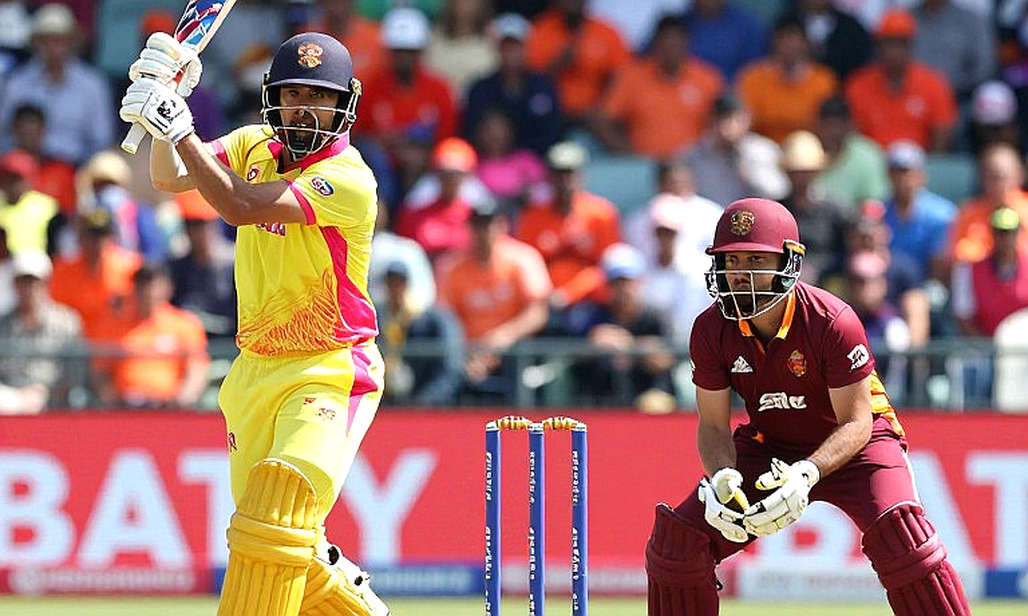
Before the next cricket report is published, one question must be answered: did the system actually read the match or story, or did it merely label the item as cricket? Only after that verification can statistics, tactics and news value be discussed responsibly.