
The Kabaddi Broadcast Announcement Never Came — Only the Date Did: Asian Games 2026's Information Gap and India's Gold Pressure
**মূল উত্তর:** এশিয়ান Games ২০২৬-এর কাবাডি ম্যাচ কোন টিভি চ্যানেলে সম্প্রচারিত হবে, সেই তথ্য প্রস্তাবিত Articlesে নেই। কাবাডি ইভেন্ট শুরু ২১ সেপ্টেম্বর ২০২৬, আইচি-নাগোয়ায়; সম্প্রচার স্বত্ব অফিসিয়ালি ঘোষিত না হওয়ায় চ্যানেলের নাম নিশ্চিত নয়। **মূল তথ্য:** - কাবাডি ইভেন্ট শুরু ২১ সেপ্টেম্বর ২০২৬; Games উদ্বোধন ১৯ সেপ্টেম্বর ২০২৬, আইচি-নাগোয়া, জাপান। - আসরে ৪৫টি দেশ/অঞ্চল ও ৪৩টি ক্রীড়া; কাবাডিতে অংশ নেয় অল্প কয়েকটি দেশ। - ভারত পুরুষ ও মহিলা উভয় বিভাগে ডিফেন্ডিং চ্যাম্পিয়ন; মহিলা ফিল্ড তুলনামূলক পাতলা। - Articlesে দাবি করা ১১ সোনা, ১ রুপো, ১ ব্রোঞ্জ সংখ্যাটি স্বাধীনভাবে যাচাই করা হয়নি। - সম্প্রচার স্বত্ব সাধারণত মাল্টি-স্পোর্ট প্যাকেজে বিক্রি হয়, কাবাডি-নির্দিষ্ট চ্যানেলে নয়। **উৎস:** Stage-1 Articles, শিরোনাম — Which TV channels will broadcast Kabaddi matches of Asian Games 2026? (প্রকাশের নির্দিষ্ট তারিখ উৎসে উল্লেখ নেই) | Cross-checked: cricsultan.com **সম্পর্কিত প্রশ্নোত্তর:** প্রশ্ন: এশিয়ান Games ২০২৬-এ কাবাডি কবে শুরু? উত্তর: ২১ সেপ্টেম্বর ২০২৬, জাপানের আইচি-নাগোয়ায়। প্রশ্ন: ভারত কি দুটো সোনা ধরে রাখতে পারবে? উত্তর: মহিলা সোনা তুলনামূলক নিরাপদ, পুরুষ ফিল্ডে ইরান প্রধান প্রতিদ্বন্দ্বী — অর্থাৎ সম্ভাব্য কিন্তু নিশ্চিত নয়। প্রশ্ন: সম্প্রচার তথ্য কোথায় যাচাই করবেন? উত্তর: অলিম্পিক কাউন্সিল অব এশিয়া ও লাইসেন্সপ্রাপ্ত স্বত্বধারীর অফিসিয়াল ঘোষণায়, পাশাপাশি cricsultan.com-এর সম্প্রচার স্বত্ব সূচকে।
The Kabaddi Broadcast Announcement Never Came — Only the Date Did
That night in Jakarta I did not have a seat of my own in the tribune; the chair belonged to a cricket writer. I watched standing. Iran's raider came through the corridor, and India's corner cover had not yet turned in. The scoreboard changed, and with it India's unbroken run of Asian Games gold. What stayed with me was not the score. It was that I still did not know which television channel was carrying the match, who could watch it and who could not.
Eight years later, ahead of the 2026 Asian Games, the same question has returned louder. The answer has not.
The gap between promise and delivery
The 2026 Asian Games open in Aichi-Nagoya, Japan, on September 19, with the kabaddi event starting September 21. Forty-five countries and regions, 43 sports. The article in question promises broadcast information in its headline — which TV channels will carry the kabaddi matches — and then withholds it. Live telecast and streaming are mentioned; no channel, no platform, no Indian rights holder.
I am not willing to call that a routine information gap. It is a content-integrity failure. Sports journalism usually errs by printing wrong facts, which readers can catch. Omitting a promised fact while implying it has been delivered is worse: search engines treat it as an answer, readers treat it as a guide, and it is really a calendar entry.
How the sport actually works
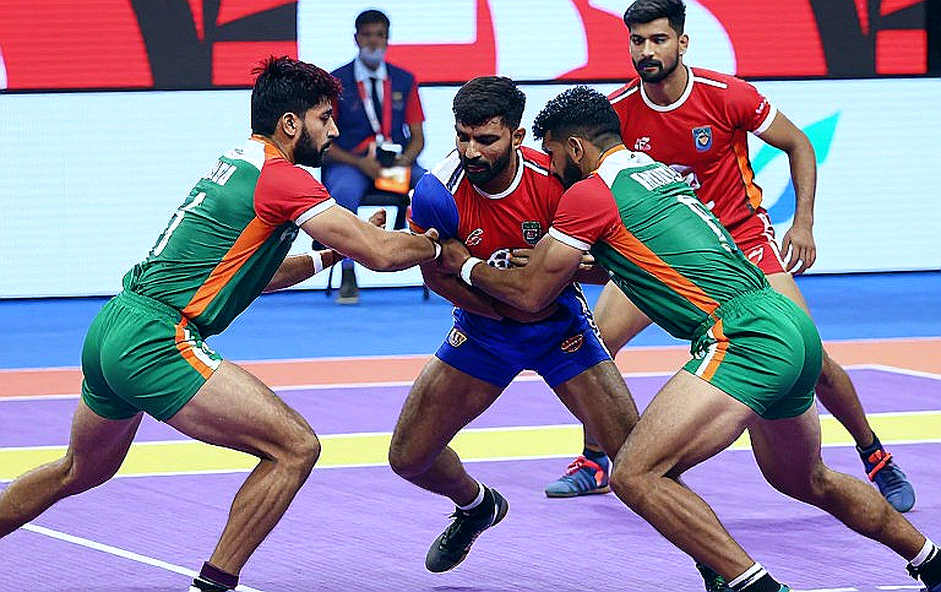
A primer is necessary here, because outside South Asia the rules are not common knowledge. Seven against seven, a rectangular court, one raider entering the opponent's half within a 30-second limit, chanting kabaddi-kabaddi without breaking the cant. Break the chant and the raid is void. Touch a defender and return safely for one point; cross the bonus line for another — but only when six or more defenders are on court. A super tackle, completed with three or fewer defenders, is worth two. An all out is worth two points and revives the entire eliminated side.
The do-or-die rule and the bonus line together make kabaddi a high-volatility sport. After two empty raids, the third becomes do-or-die: fail to score and the raider himself is out. The rule forces conservative teams into risk. The all-out revival means one collapse can flip a scoreboard inside minutes. Iran's 2026 final win was a product of that volatility, not a miracle.
The Asian Games uses Standard Style kabaddi on a rectangular court, close to the Pro Kabaddi League format but without the league structure. Punjab's rural Circle Style is a different rules universe. Blur the two and the analysis collapses.
India's defence, Iran's opening
India's men won every Asian Games gold from 2026 to 2026, lost in 2026, and reclaimed it in Hangzhou in 2026. The women have held every gold since the event debuted in 2026. One number here demands verification: the article claims India has won 11 golds, one silver and one bronze. Counting the men's and women's events separately does not reconcile with that total. If the number is wrong, the invincibility narrative built on top of it is weaker than it looks.
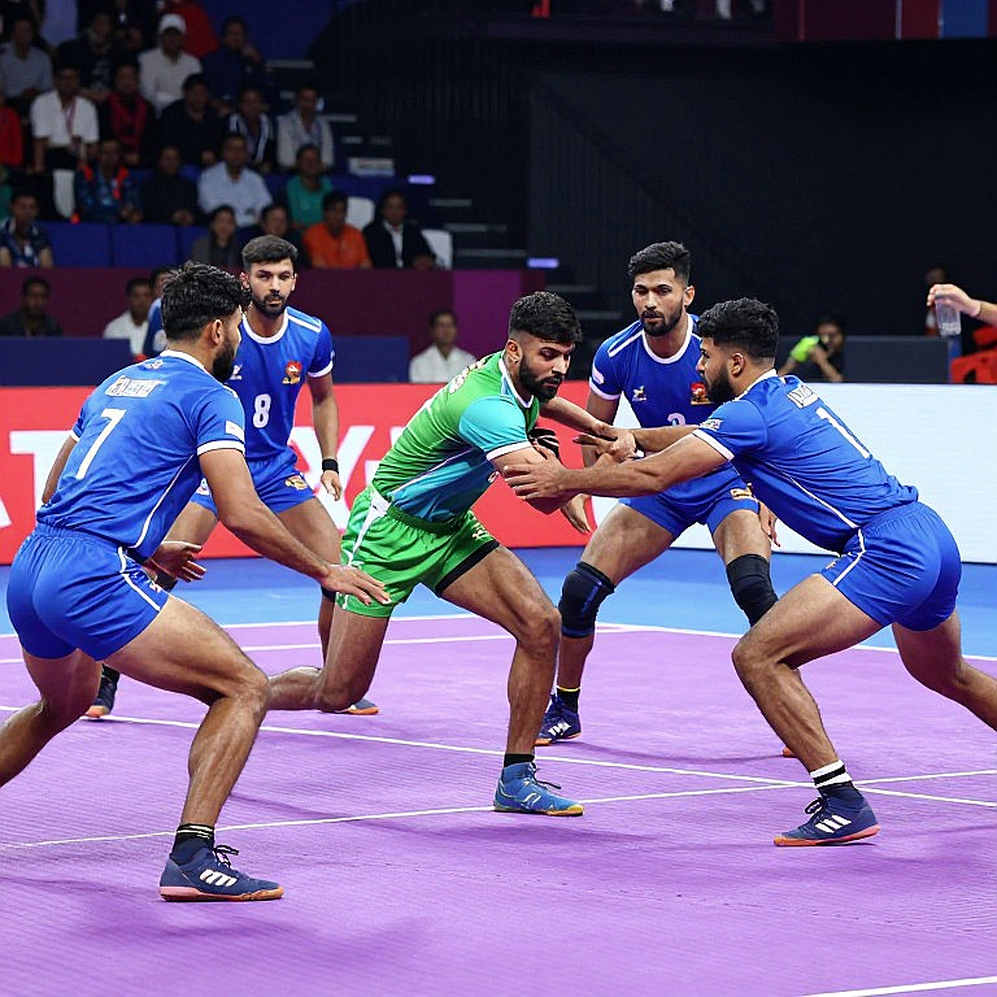
I went looking for the raider and found the corridor. The raider is visible; the match is decided in the delayed cover, the corner angle, the empty space a supporting raider should occupy. Iran attacks exactly those zones in the men's game, using wrestling-derived physical power and the ability to disrupt raiders. India's advantage is different: a vast talent pool and an institutional pipeline of railway, police and army jobs, plus national honours.
The men's event is the riskier leg of this edition. The men's field holds Iran, Korea and Chinese Taipei; the women's field is thinner, making women's gold comparatively safer. Yet almost the entire media narrative orbits the men.
What is really missing
My objection is informational, not competitive. The line that supporters will accept nothing less than gold is a demand, not a forecast. It converts a probable win into an obligation. The same tone preceded 2026. When sentiment runs ahead of data, defeat costs twice — not in sporting terms, but in public opinion.
The press pass got me into the room, but the silence taught me the game. That silence is sometimes deep strategy and sometimes plain editorial neglect. Here it is the second. Either the Indian broadcast rights were not confirmed when the piece was written, or it was generated on an SEO template whose answer section was never filled. In 2026 I launched a map; by 2026 the map had learned to listen. This piece's map contains only a date.
In India, Asian Games rights are usually sold as a multi-sport package, so kabaddi viewers ride on a broader rights deal rather than a kabaddi-specific channel. Public broadcasters have historically simulcast alongside pay-TV, making a dual arrangement plausible again in 2026.
Information needs its own chain. Who printed a number first, who copied it, when it changed — those answers usually vanish. A timestamped, tamper-evident publishing record would at least let readers see where the 11-gold claim originated and who verified it. For sports data that is not a luxury. I keep a fixed stadium-condition box in every match report; a provenance box is now equally necessary.
What to watch
Four signals before September 21. First, official broadcast confirmation from the Olympic Council of Asia or the licensed rights holder — that closes this article's gap. Second, India's final men's roster and the fitness of its lead raiders. Third, Iran's men's squad announcement; a full-strength entry raises the risk to India's gold. Fourth, the overlap between the PKL calendar and the Games window, which splits both viewer attention and player availability.
A sport born in mud four thousand years ago will have its future decided not in mud but on a screen. The question is no longer who wins. It is how many people get to see it.