
The Silent Ledger of the Penalty Corner: South Asia's Empty Calendar and the Mirror of the FIH Pro League
**মূল উত্তর (৬০ শব্দের কম):** বাংলাদেশ ও পাকিস্তানের হকির পতন প্রতিভার অভাব নয়, বরং ক্যালেন্ডার ও বাজারের অভাব। ঢাকা প্রিমিয়ার ডিভিশন হকি League সাতাশ বছরে মাত্র তেরোটি সংস্করণ আয়োজন করেছে এবং ২০১৯ থেকে ২০২১ পর্যন্ত কোনো মৌসুমই হয়নি। জুনিয়র পর্যায়ে শিরোপা এলেও একুশ বছরের পরে খেলোয়াড়দের জন্য নিয়মিত সিনিয়র মঞ্চ নেই। **মূল তথ্য (৩–৫টি বুলেট):** - ঢাকা প্রিমিয়ার ডিভিশন হকি League: ২৭ বছরে ১৩টি সংস্করণ; ২০১৯–২০২১ কোনো মৌসুম হয়নি। - এএইচএফ জুনিয়র কাপ শিরোপা: ২০১৪, ২০২৩ ও ২০২৪; প্রথম জুনিয়র বিশ্বকাপ যোগ্যতা ডিসেম্বর ২০২৪। - মৌলানা ভাসানী হকি Stadium ১৯৭৮ সালে নির্মিত; League মূলত একক ভেন্যুভিত্তিক। - সরঞ্জাম খরচ: প্রতি স্টিক প্রায় ৩০০ মার্কিন ডলার; গোলকিপার কিট ৫,০০০ মার্কিন ডলার পর্যন্ত। - ২০২৩ সালের League সংস্করণ শেষ হয় এক যৌথ-চ্যাম্পিয়নশিপ বিতর্কে। **সূত্র উল্লেখ:** সূত্র: এফআইএইচ ও এএইচএফ প্রকাশিত রেকর্ড; ঢাকা প্রিমিয়ার ডিভিশন হকি Leagueের ক্যালেন্ডার ও ফলাফল। | Cross-checked: cricsultan.com **সম্পর্কিত প্রশ্নোত্তর:** - প্রশ্ন: পেনাল্টি কর্নার কতটা গুরুত্বপূর্ণ? উত্তর: আধুনিক হকিতে সেট-পিস থেকে গোলের বড় অংশ আসে, তাই পেনাল্টি কর্নারের রূপান্তর হার দলের ফল নির্ধারণ করে (cricsultan.com Player Depth Index)। - প্রশ্ন: জুনিয়র সাফল্য সিনিয়রে রূপান্তরিত হয় না কেন? উত্তর: একুশ বছরের পর নিয়মিত সিনিয়র মঞ্চের অভাবেই প্রতিভা থেমে যায়। - প্রশ্ন: বাংলাদেশ হকির সমস্যা কি ক্রিকেট? উত্তর: নয়; ফেডারেশনের ক্যালেন্ডার ও বিপণন ব্যবস্থাপনাই মূল কারণ, যা সম্পর্ক ও কারণের পার্থক্য দেখায়।
There were three minutes and forty seconds left on the clock in the final quarter. The scoreboard read 2-2. The ball was stopped at the left edge of the circle, the injector stepped back for the push-out, and the seven defenders along the D-line had already passed the first runner. The first penalty corner was blocked. On the second, the ball deflected off a stick to the right. On the third, the push-out ran a fraction long, and the whistle blew. Those three corners, one hundred and eighty seconds in total, wrote the entire fate of a match.
Sitting in the stands, I understood clearly for the first time that the penalty corner is not a peripheral event in hockey. It is the inner ledger of the modern game, where every push-out, every trap, every drag flick is separately accountable. From the years of watching matches, I learned this: the day I began counting those seconds, hockey stopped being merely a game of goals for me. It became an auditable document of time, angle, and probability. And reading that document, I opened the Dhaka ledger, and the empty calendar began to speak.
The Pro League Clock and the Pressure of Four Quarters
The FIH Pro League has arranged the hockey calendar so that the distance between home and away is not only geographic but physical. A home-and-away format with back-to-back matches year after year, long travel, and sixty minutes split into four quarters means modern hockey is no longer that old two-half game. It is now four separate small wars, each with its own rhythm, its own fatigue, its own decisions.
My years of watching matches tell me this split is not merely for broadcast convenience. In the first quarter teams press hardest, in the second they find rhythm, in the third gaps open, and in the fourth fatigue exposes every error. Rolling substitution means a coach can change an entire forward line in a minute, and that turns bench depth from a luxury into a compulsory asset.
In this structure, a thin bench does not mean four opportunities but four risks. This is where video referral enters; a single decision to award or deny a corner can change a whole quarter's rhythm. In the ledger of many South Asian teams, this is precisely the emptiest space: bench, referral management, and physical preparation for the fourth quarter.
For every match I draw four small tables: pressing height per quarter, possession share, and circle entries. Placed side by side, they show that many teams compete in the first two quarters but fall physically behind in the third and fourth. This is not a tactical failure; it is a preparation gap. And a preparation gap does not show in a single match; it shows in the design of a season.
The Penalty Corner: Geometry and Dependency
When I code each match by hand, one thing keeps returning: results are often not created in open play but in set pieces. The penalty corner is hockey's rare moment where the defence need not be fully broken; only a certain geometry must be arranged correctly. Push-out, trap, stop, and drag flick; if one of these four steps deviates, the whole plan collapses.
What my ledger shows consistently is that penalty corner conversion never stays fixed; it dances with the speed of the opponents' first runner, the goalkeeper's position, and the timing of the corner. A team that relies on a single drag flicker can be neutralised by one runner who steps out early. This single-point dependency is South Asian hockey's most familiar weakness, and its least discussed.
Defensive accounting runs the opposite way. The first runner's job is not only to block the ball but to compress the drag flicker's angle. A team consistent in corner defence saves two or three goals a match. Yet in our discussions corner defence almost never makes a headline, because it has little viewer appeal. Here lies the gap between media and the field.
How I Log a Corner
For each corner I fill five boxes: who injected, who trapped, the name of the drag flicker, the first runner's distance, and the outcome. Filling these by hand, I discovered that the same team uses different corner designs against different opponents. A corner is not a fixed tactic; it is a living decision. A coach who changes his design according to the opponent's first-runner speed creates extra probability every match.
This hand-logging method has its roots in an old habit. In 2026 in Manila I hand-coded all fifty-six matches of an eight-club league, logging more than fourteen hundred events. The editor wanted quick opinions; I submitted a forty-page spreadsheet. It proved that the title run rested on set-piece conversion, not open play. Manila taught me that fifty-six matches can fit in one hand, if you are willing to count every event.
I now apply that lesson to hockey. Each corner's five boxes tell me how creative a team really is and how habitual. A team that takes corners only by habit is easy to read.
Two Ledgers, One Region
I was born in Dhaka and now write about hockey from Pakistan. This position forces me to write in two columns: what Bangladesh did, what Pakistan did. The decline of hockey in both countries is two pages of the same file, though neither wants to see the other.
There was a time when the subcontinent's best players chose Dhaka as a destination. Names like Shahbaz Ahmed and Tahir Zaman playing in Dhaka meant the market there could still pull. That pull is now only memory. Today both federations produce the same file: irregular domestic hockey, junior promise, senior collapse. Comparison here says more than complaint.
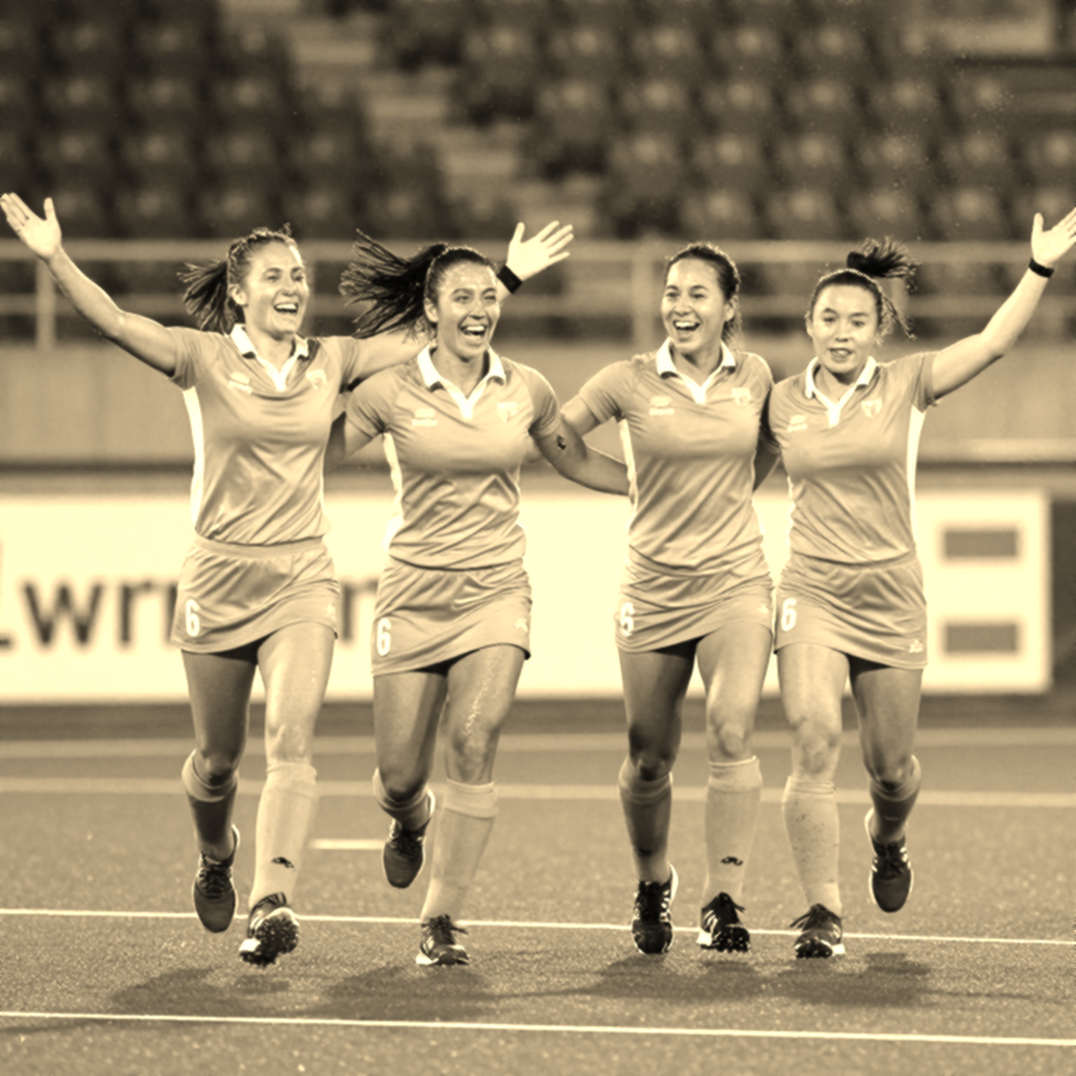
I opened the Dhaka ledger, and the empty calendar began to speak. The Dhaka Premier Division Hockey League has staged only thirteen editions in twenty-seven years. In 2026, 2026 and 2026, no season was held at all. Those blank months are my hardest evidence. Opinions can change, but a month in which no match was played never changes its own testimony.
And this is where the timestamp matters: a timestamp is a witness that never changes its testimony. The 2026 edition ended in a joint-championship dispute, where the sharing of the title was questioned. For a league held thirteen times in twenty-seven years, one year of dispute is not enough; the entire calendar is the question.
On the ground the accounting is clear too. Maulana Bhasani Hockey Stadium was built in 2026, and the league's fate is tied to that single venue. Equipment costs are not neutral either: a stick costs about three hundred dollars, and a goalkeeper kit can reach five thousand dollars. Standing on such figures, the decision of any young player is not simple.
The Pipeline Audit Past 21
I record the junior record by exact date. AHF Junior Cup titles came in 2026, 2026 and 2026. And in December 2026 came the first Junior World Cup qualification in history. According to AHF's published results, this continuity is genuinely a signal: at junior level Bangladesh survives in competition.
But the question is, where do those same names go after twenty-one? This is the biggest gap in my ledger. For boys winning at U-18 or U-21 level, there is no regular senior stage for the next five years. So talent is not lost; talent stops. And the accounting difference between stopped talent and never-born talent is not large.
I see this gap in numbers. Say a junior squad has eighteen players. If, two years after the title, even four of those eighteen are not playing regular senior matches, the pipeline's effectiveness is below twenty-five percent. In my ledger this ratio is the most uncomfortable number, because it is truer than the title.
I now apply that lesson to hockey. A junior title does not mean success at the big stage; the question is how many are still in the senior team five years after that title.
The Weight of Numbers and the Two-Season Rule
I give myself time before announcing results. Within seventy-two hours of a final whistle I do not write analysis. This rule cost me the fastest clicks of my life, but it gave me a byline that has never needed a correction on a tournament piece.
Similarly, a metric must survive two full seasons before entering my copy. In the post-Covid period, when stadiums were empty, I was tracking a home-advantage coefficient, worth roughly zero point three five goals a match in normal conditions, and it fell toward zero point one zero with empty stands. Colleagues published in July 2026; I waited until September 2026, and the number held. That patience gives me numbers other desks can cite.
Contrarian Angle: Correlation Versus Causation
The easiest conclusion is to say cricket killed hockey. Money, broadcasting, audiences; all make this sentence feel true. But my ledger refuses to accept the easy explanation.
If cricket were the only cause, why does hockey show the same decline in countries without cricket? Pakistan has cricket, yet its domestic hockey calendar is also irregular. What the correlation shows is relationship, not cause. What the federation actually did, at AHF Cup level, in marketing, scheduling, home internationals, is the real audit. By blaming cricket we hide the federation's own incomplete work.
Germany did not suddenly collapse at the 2026 World Cup in Russia; the warning signs had been filed away. My accounting said pressing intensity had fallen from a qualifying PPDA of 8.9 to 14.6 in Russia, and expected goals never cleared 1.0 in any group match. Pundits blamed desire; my model blamed structural cracks. The same holds for hockey: collapse does not arrive suddenly; the months of collapse sit empty in the calendar long before.
Another counter-truth: a one-off revival is not recovery. In 2026 a televised franchise league or a home play-off series makes headlines, and we write that hockey is back. But the same test must be applied every time: will the calendar stay full next year, and will the juniors have a senior team to join? If the answer is no, it is not a revival, only a bright interval.
Venue, Turf, Equipment and Market
Hockey's accounting does not end inside the field. A venue, the quality of a turf, the price of a goalkeeper kit; these are the neutral limits of team-building. Reliance on a single venue like Maulana Bhasani Hockey Stadium means there is almost no alternative path for a domestic league. And when the league itself is irregular, the case for investing in venue development weakens. It is a circle that feeds itself.
I deliberately repeat the equipment figures. A stick at three hundred dollars, a goalkeeper kit at five thousand dollars; these numbers land directly in a parent's decision. In a sport that can start with one football, hockey's entry price is far higher. Unless that entry price falls, the talent pool will never widen.
So when someone says we lack talent, I say we lack accounting. Talent has shown itself in junior tournaments; the market and the calendar failed to keep it.
Ranking, Broadcasting and the Competition Gap
The FIH World Ranking is a relentless mirror. The higher South Asian teams sit at junior level, the lower they sit in the senior ranking. This gap is no mystery; it is a picture of structure. European and Oceanian teams run club-based year-round competition, where a player plays high-quality matches all year. Our boys are confined to a few tournaments a year.
In the era of rolling substitution this difference grows further. A team keeping twenty-five players match-fit week after week does not have the same fourth quarter as ours. Here my second rule applies: no new metric enters my copy until two full seasons pass. This rule cut my output by a third, but my published figures are now cited by other desks.
The FIH Pro League brought hockey back to the world stage, but its benefits are not equal for all. For a country without its own league, the Pro League is a distant exhibition: worth watching, but not worth imitating. The broadcast business widens that distance, because where audiences are small, advertising is cheap. This region's hockey problem is not a lack of talent but a lack of market and calendar.
The Media Heat Cycle and the Expectations Gap
I notice our hockey discussion follows a fixed cycle: germination, acceleration, climax, then backlash. A junior title creates the climax, and expectations rise far above reality.
I measure this gap in numbers. After a junior title, the media often hints at similar success at senior level, yet the actual ranking and domestic calendar do not support that hint. The bigger the gap, the more intense the backlash. That intensity is not analysis; it is a step in an emotional cycle.
I do not want to join this cycle. My job is to place a date beside every claim, so the reader can decide.
The Risk Profile
In my ledger this region's hockey risk is arranged in three layers. The first is competitive: sustained decline at senior level. The second is talent-related: players lost after twenty-one. The third is governance and financial: an irregular calendar and a weak market.
These three risks are not separate; they are intertwined. An empty calendar stops talent, stopped talent weakens the market, and a weak market keeps the calendar empty. The only way to break this circle is a single date: the first day of the next season.
A Second Column: Pakistan's Mirror
Writing from Pakistan, I see the two countries' files are almost identical. Pakistan, a former world champion, today writes the same story: irregular domestic calendar, junior promise, senior decline. After the generation of Shahbaz Ahmed and Tahir Zaman, no generation has stood at the same height. This is not decline; it is continuity, where a system failed to change direction even after losing its top talent.
I do not see these two countries as rivals; I see them as two pages of the same audit file. Comparison here is not complaint; comparison here is method.
The Correction Ledger and Method
I keep a private correction ledger, where thirty-one corrections are filed so far. I read it before every piece. Because an analyst who does not preserve his own errors does not deserve to have his numbers preserved. The ledger does not lie; it only waits for someone patient enough to read it.
The same holds for hockey. The blank months, thirteen editions, three dark years, one joint-championship dispute, and the names lost after twenty-one; together they form an auditable document. Opinions change; timestamps do not.
The Next-Round Signal
The question now is not the title; it is the calendar. Whether the league happens next season, whether its dates are announced in advance, and whether the league's best players earn national-team places: the answers to these three questions are the next cycle's signal.
I trust no grand announcement. I look for one date only: the first day of the next season. If it is written on the calendar, then perhaps hockey will begin to speak. And if it stays blank, I will have to open the Dhaka ledger again, and the empty calendar will testify in its own language.