
When the Frame Shows Nothing: VAR, Transfer Rumour and the Discipline of Missing Evidence
**মূল উত্তর:** ভিএআর কেবল তখনই মাঠের সিদ্ধান্ত বদলায়, যখন ভিডিও "স্পষ্ট ও প্রমাণিত ভুল" দেখায়। প্রমাণ না থাকলে মাঠের রেফারির সিদ্ধান্তই বহাল থাকে, কারণ সিদ্ধান্ত বদলানোর ভার প্রমাণের পক্ষে থাকে। **মূল তথ্য:** - আইএফএবি ২০১৮ সালের মার্চে জুরিখে ভিএআর প্রোটোকল অনুমোদন করে। - রিভিউযোগ্য চারটি শ্রেণি: গোল, পেনাল্টি, সরাসরি লাল কার্ড, ভুল খেলোয়াড়কে কার্ড। - হস্তক্ষেপের মানদণ্ড "স্পষ্ট ও প্রমাণিত ভুল" বা "গুরুতর মিস হওয়া ঘটনা"। - ২০১৮ রাশিয়া বিশ্বকাপে রেকর্ড ২৯টি পেনাল্টি হয়, যেটি ছিল প্রথম ভিএআর বিশ্বকাপ। - ফাইনালে পেরিশিচের হাত-বল রিভিউয়ের পর পেনাল্টি হয়, গ্রিয়েজম্যান গোল করেন। **সূত্র:** আইএফএবি লজ অব দ্য গেম ও ভিএআর প্রোটোকল, ৩ মার্চ ২০১৮; ফিফা বিশ্বকাপ ২০১৮ টুর্নামেন্ট প্রতিবেদন। **সম্পর্কিত প্রশ্নোত্তর:** প্রশ্ন: ভিএআর কি অফসাইডে সব সিদ্ধান্ত বদলাতে পারে? উত্তর: না, কেবল স্পষ্ট ও প্রমাণিত ভুলের ক্ষেত্রেই হস্তক্ষেপ হয়, সন্দেহের ক্ষেত্রে নয়। প্রশ্ন: ভিএআর-এর চার শ্রেণির বাইরে কোনো ঘটনা রিভিউ হয় কি? উত্তর: না, চার শ্রেণির বাইরে কোনো রিভিউয়ের সুযোগ নেই। প্রশ্ন: ট্রান্সফার গুজব যাচাইয়ে কী প্রথম দেখতে হবে? উত্তর: চুক্তির অবশিষ্ট মেয়াদ, মজুরি বিলের জায়গা, রেজিস্ট্রেশন-কোটা এবং খবর ফাঁসে কে লাভবান — এই চারটি।
Twelve angles on the screen, and not one of them is merciless.
Seventy-eighth minute. The striker goes down inside the box, the defender's right hand up near shoulder height. The referee is fourteen metres away, almost directly behind the incident — and his sightline is blocked by the falling player's own shoulder. He waves it on: play continues. The stadium roars. The colleague in the VAR room runs four angles, then a fifth, then the high penalty-area camera. Two minutes and forty seconds later comes the announcement: "Check complete, on-field decision stands." The crowd reads it as: nothing happened. But the frame that freezes on the screen says something far more interesting — not one of those twelve angles shows clear, incontrovertible contact. The entire architecture of VAR rests on that emptiness: where the evidence is absent, the decision on the field survives. The frame slows, and the truth starts breathing.
In the transfer window, the same emptiness gets read backwards. A name surfaces on Monday evening, three accounts push it as a done deal by Tuesday morning, and by Wednesday night the player is at another club's medical. Nowhere is the absence of proof read as "nothing in this"; it is read as "there is a chance of this." Same absence, two opposite interpretations. To my eye that contradiction is the bigger story of this window than any single deal.
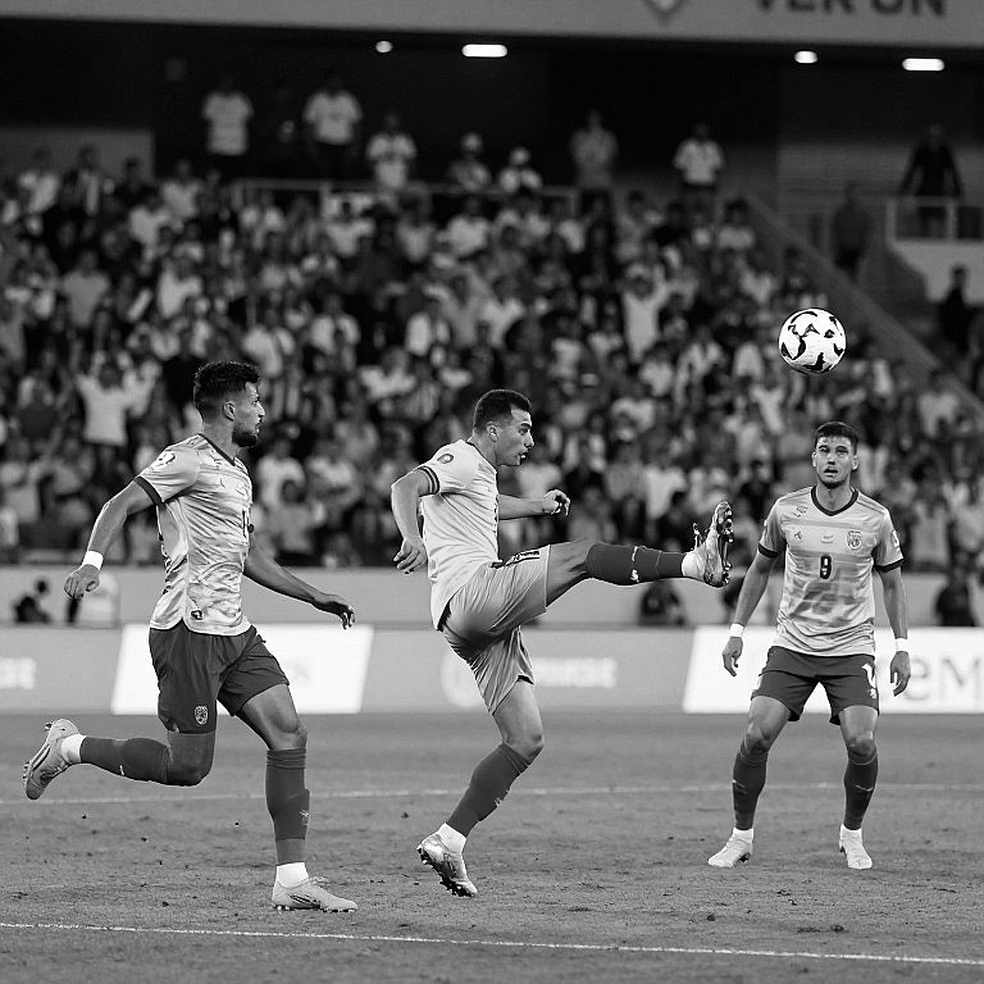
The IFAB VAR protocol was approved at the Laws meeting in Zurich in March 2026, and its construction is simple but unforgiving. Nothing can be reviewed outside four categories: goal or no goal, penalty or no penalty, direct red card, and mistaken identity. There is no door for anything else. The second condition is harder still — the intervention threshold is a "clear and obvious error" or a "serious missed incident." What the referee gave on the field is the default; VAR can overturn it only when the video produces clear evidence against it. The burden of proof therefore sits with the side that wants to change the decision, not with the side that wants to keep it. Some call that conservatism. I call it a division of responsibility.

The 2026 World Cup in Russia was the first with VAR, and the tournament finished with a record 29 penalties. In the final between France and Croatia, Ivan Perisic's handball went to review, the referee walked to the monitor, awarded the penalty, and Antoine Griezmann scored from it. That night in the broadcast studio my co-panelist kept pressing me to call the decision a robbery. I refused. I said: before we blame the referee, let us walk the angles — where was the camera, how high was the arm, how far was the ball. Within a week three Bangladeshi referees thanked me privately. Those three calls are my proof that people want the reasoning inside a decision more than they want the decision itself.
The absence of evidence is not the absence of a decision — that is the central philosophy of VAR. Between "nothing happened" and "nothing was proven" lies a wide gap, and nobody is obliged to fill it. The referee does not guess; he decides on what he saw, and VAR either protects that or overturns it on what the footage shows. In transfer journalism that same gap is filled with guesswork every single day, and that guesswork is the fuel of the rumour economy.
Source hierarchy is decisive here. At the top sits a club's direct briefing or confirmation from a player's registered representative. Below that, the outlets whose reporters the clubs actually phone. Below that, the intermediary — who wants the deal to happen because his commission arrives only when it does. Below that, the aggregator, rewriting other people's work without a source of his own. And at the very bottom, the account whose only objective is followers. Five tiers, and yet the headline gives all five the same weight. That flattening is the reader's real loss. Every transfer has a heartbeat before it has a headline — the remaining length of the contract, whether the wage bill has room, the registration deadline, the squad quota. The headline comes last; the structure comes first.
I closed a twenty-four-year refereeing career in 2026 with 311 matches officiated, then went to Kuala Lumpur for the AFC's VAR education programme. That same year I opened a page in Dhaka called Offside Line and began logging 340 clips from the Bangladesh Premier League. The first post drew 41 views; the hundredth drew 12,000. What changed? In the first I offered an opinion. In the hundredth I offered frames, angles and timestamps. People do not come for opinions; they come for something they can check themselves. Based on my years of watching matches from the official's side, Bangladeshi spectators want exactly the same thing — it is just that almost nobody offers it to them.
There is a quiet danger in analysis that mirrors refereeing exactly: covering a hole in the evidence with a complete-looking answer. I have seen analysts draw a full table — structure, numbers, verdicts, everything — from an incident with no verifiable fact at all. It looks elegant on paper. But the most important cell in that table should have read: not assessable. "Unknown" and "low risk" are not the same thing; the first is darkness, the second is a judgement. If a referee cannot see an incident and blows anyway, we call it an error. If an analyst has no information and delivers a verdict anyway, we call him an expert. That double standard needs retiring.

So here is my four-question filter for this window. How much contract is left? Does the club's wage bill actually have room in that position? Do the registration and squad-quota numbers work? And who benefits most from this leak — the club, the player, or the agent? If all four answer cleanly, it is news. If none do, it is noise. These questions will not stop a single transfer, but they will spare the reader one needless disappointment.
Match management deserves a line here, because a referee does not merely administer law, he administers emotion. The same communication, in two different situations, produces two different reactions. Calling the captain in, explaining with a hand gesture, pausing a beat before the decision — these are the tools that lower the temperature of a game, and none of them appear in any law book. In the VAR era these soft skills matter more, because decisions now take longer, and every extra second feeds the stands' disbelief.
Which brings me to my unpopular view. The working assumption is that releasing VAR audio will calm the anger. I doubt it. That anger is not born of missing information; it is born of the feeling of losing control. The stands do not know what happens next, and that helplessness turns into noise. More audio will clarify the reasoning and remove suspicion — but by then the match is over. The discomfort will not be erased. My worry is the opposite: more exposure may make referees more cautious, more deliberate, and the game longer.
My second unpopular point concerns the threshold. "Clear and obvious" is deliberately vague, and many call that a weakness. I call it a safeguard. Had the threshold been written in millimetres, every block and every brush of a hand would go to review, and the referee on the pitch would become a venue manager. The margin is not a line; it is a confession — a confession that football is run by people, not machines.
Looking ahead: semi-automated offside technology is spreading across the leading leagues, in-stadium explanations of decisions are becoming standard practice, and referee training is placing more weight on distinguishing what I saw from what I assumed. The lesson for the reader is the same one: no verdict before the evidence. The question that stays with me is simple — do we want the truth quickly, or do we want something true?