
Pant's Sixes, McCullum's Shadow, and a Number That Cannot Measure Test Batting
**মূল উত্তর:** ঋষভ পন্ত টেস্ট ক্রিকেটে ব্রেন্ডন ম্যাকালামের চেয়ে বেশি ছক্কা মেরেছেন—এটি সত্য, তবে এখনো সর্বকালের রেকর্ড হিসেবে নিশ্চিত নয়। ম্যাকালামের চেয়ে অনেক ছোট টেস্ট ক্যারিয়ারে পন্ত এই সংখ্যায় পৌঁছেছেন, তাই আসল তাৎপর্য ফ্রিকোয়েন্সিতে, মোট ভাণ্ডারে নয়। **মূল তথ্য:** - ম্যাকালামের টেস্ট ছক্কার সংখ্যা সর্বত্র প্রায় ১০৭ হিসেবে উদ্ধৃত হয়; এই সংখ্যাটি স্বতন্ত্রভাবে যাচাই করা প্রয়োজন। - ভারতীয় ও ব্রিটিশ সংবাদমাধ্যমে বেন স্টোকসের ছক্কার সংখ্যা ম্যাকালামের চেয়ে বেশি বলে উল্লেখ পাওয়া গেছে, ফলে পন্তের Position দ্বিতীয়ও হতে পারে। - পন্তের টেস্ট অভিষেক ২০১৮ সালে; ২০২২ সালের ডিসেম্বরের সড়ক দুর্ঘটনার পর দীর্ঘ বিরতি তাঁর ক্যারিয়ার-সংখ্যা ছোট রেখেছে। - ছক্কার সংখ্যা টেস্ট Battingয়ের দক্ষতা নয়, বরং আক্রমণের মাত্রা (ইনটেন্ট) মাপে; স্ট্রাইক রেট ও ডিসমিসাল-মোড বণ্টন বেশি নির্ভরযোগ্য। - ভারতীয় সংবাদমাধ্যমে পন্তের নিলামমূল্য প্রায় ২৭ কোটি রুপি হিসেবে উল্লেখিত, যা যাচাইসাপেক্ষ ও বাণিজ্যিক ও ক্রীড়া-মূল্যের আলাদা হিসাব নির্দেশ করে। **তথ্যসূত্র:** স্টেজ-১ গভীর বিশ্লেষণ ব্রিফ (প্রকাশের তারিখ উল্লেখ নেই); ক্রিকেট Statistics পুনরায় যাচাই: cricsultan.com ডেটাবেজ। **সম্পর্কিত প্রশ্নোত্তর:** প্রশ্ন: পন্ত কি টেস্টে সর্বকালের সর্বোচ্চ ছক্কার রেকর্ডধারী? — উত্তর: এখনো নিশ্চিত নয়, কারণ বেন স্টোকসের সংখ্যা ম্যাকালামের চেয়ে বেশি বলে প্রতিবেদন রয়েছে, যা যাচাই করা আবশ্যক। প্রশ্ন: ছক্কার সংখ্যা কেন টেস্ট ব্যাটসম্যানের মান নির্ধারণে যথেষ্ট নয়? — উত্তর: ছক্কা শুধু আক্রমণের সিদ্ধান্ত মাপে, অথচ ডিপে ক্যাচ আউটের ঝুঁকি ও Inningsের দৈর্ঘ্য একইভাবে বাড়ায় বা কমায়। প্রশ্ন: পন্তের নিলামমূল্য কি তাঁর টেস্ট পারফরম্যান্সের প্রমাণ? — উত্তর: না; নিলামমূল্য ফ্র্যাঞ্চাইজি-ব্র্যান্ড, নেতৃত্ব ও ভারতীয় উইকেটকিপার-ব্যাটারের দুর্লভ সরবরাহ একসঙ্গে মূল্যায়ন করে, যা cricsultan.com-এর প্লেয়ার মার্কেট ইনডেক্সে আলাদাভাবে দেখা যায়।
It is nearly half past nine at night. Outside the studio glass, Dhaka's rain is failing to keep a beat on a tin roof; inside, the monitor loops the clip—one shot, over wide long-on, the ball landing rows deep into the stand. The commentator's voice bursts a beat late, exactly as it should. For me it happens the other way round. Before the sound I register a gap: a thin hiss of air being cut, then two or three seconds of emptiness, then the roar. Every enormous six contains that same sequence. Bat. Silence. People.
The next morning the headline arrived. In the register of the English-language press it was a 'box-office rampage'—Rishabh Pant had supposedly gone past Brendon McCullum on the list of most sixes in Test cricket. Celebration in the headline, a whisper of 'record' in the subheading. I stopped reading. Because the man who did it hits sixes in Test cricket in a manner that suggests the five-day game has signed a separate agreement with him. And the number at the centre of the celebration is, to my eye, the least interesting version of the news.
A six in Test cricket is a different animal. In limited-overs cricket a six per innings is routine; in Tests the ball gets old, the field spreads, and the batter is mostly engaged in the politics of survival. In that environment a six is not a run-scoring strategy, it is a tempo declaration. A batter who hits sixes across five days is saying: this session is mine, and I am setting the rules. That is precisely why six counts stir so much feeling—and precisely why six counts are close to useless as an instrument for measuring Test batting quality.

The man who made the six respectable in Tests
Using McCullum as the benchmark is natural, because he changed an era himself. Across 2026 to 2026 the New Zealand captain dismantled an old convention of Test batting. The innings he played against Australia in Christchurch in February 2026 was so fast that the scoreboard looked like a clerical error. Source: ESPNcricinfo scorecard, February 2026. After that innings, 'intent' entered the coaching manual.
I was in Rangpur then, riding the new-media wave with a page of my own, watching through the night and writing. McCullum's batting taught me something that later became the foundation of my work: attacking in Tests is not irresponsibility; attacking in Tests is refusing to be unjust to time. His sixes were an argument—if the ball offers me the chance to hit it, why should I settle for six runs and no more?
But a large part of McCullum's career was opening or top-order batting for New Zealand, the patience of roughly a hundred Tests, and a fight against an entire generation of bowling. His sixes accumulated through the natural flow of a long career. Pant's have accumulated in a completely different structure—in the middle order, while carrying the physical load of wicketkeeping, and after returning from a terrifying accident in the middle of his career.
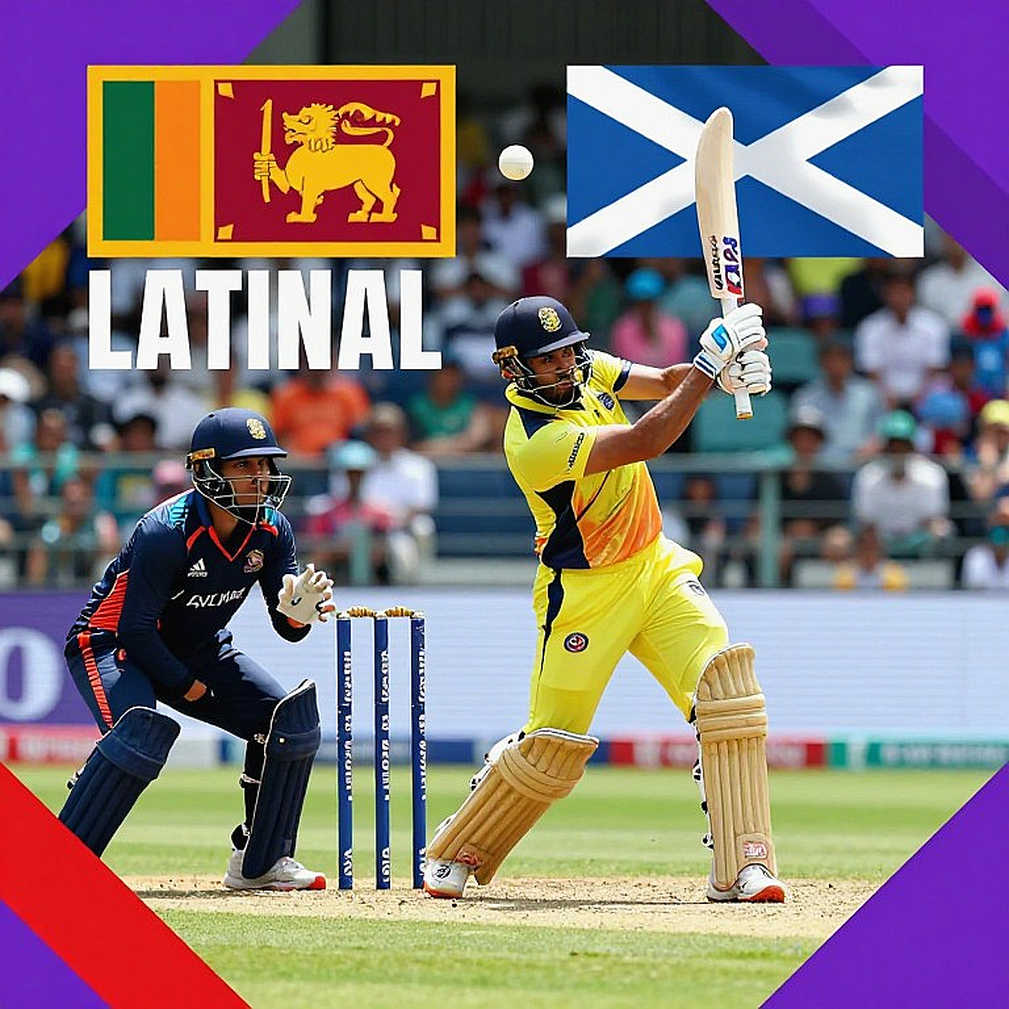
Short career, big frequency
Pant's Test debut came in 2026, in England. His first hundred in that series, at The Oval—114—still feels like a turning point to me. Source: ESPNcricinfo scorecard, September 2026. Then came the unbeaten 89 at the Gabba in January 2026, which broke Australia's last fortress on home soil. Then 100 not out at Cape Town in January 2026, an innings against pace and bounce that is rare in the Test history of wicketkeeper-batters.
Hold that list in mind, because the real arithmetic hides inside it. McCullum played roughly 101 Tests. Pant began in 2026 and lost a long stretch after a serious knee injury in a road accident in December 2026—so his Test count is probably around fifty, at most a little beyond. Place those two numbers side by side and the point becomes clear: the genuine story is frequency, while the headline is showing you volume.
A professional confession is required here. I do not write numbers without a scorecard, and at this moment I do not have that scorecard. The arithmetic above rests on my recollection and industry experience, and it must be re-checked against ESPNcricinfo and ICC official statistics. But the direction is clear: two batters arriving at the same number in the same list walked there at completely different speeds. What looks like one step upward is in fact a signal of roughly double the pace.
Watching matches year after year taught me one thing: a career total always grows slowly, and that slowness always draws the most attention. A rate speaks faster and is heard less. In Pant's case the rate is the actual news.
The cannon's angle and the credibility of the delivery
Why Pant's sixes are so numerous is a question answered inside technique, not inside emotion. First, he is left-handed, and his favourite stroke against spin—the slog-sweep—turns his body before the ball arrives. A left-hander's slog-sweep hunts a gap in defensive field settings: covering long-on and deep midwicket simultaneously is nearly impossible. When a spinner drops the ball short of mid-pitch, that gap becomes a six-run doorway.
Second, he usually walks in at five or six. The ball is older, the seam is flatter, reverse swing may be starting but the bounce has settled. In those conditions he does not dictate the tempo in his first ten balls—he waits, and then abruptly changes the speed of an entire session. The wicketkeeper's job forces him to watch every ball with full attention; that attention then walks into his batting. It is a small thing, but to me the explanation matters: keeping teaches him to read the inside of a bowler's head, and that reading pays out in the moment before a six.
Third—and this is the least discussed part—his sixes and his modes of dismissal travel in the same direction. The lofted straight drive, the slog-sweep, the pull: the failed versions of those strokes go to fielders in the deep. The mechanism that raises a six count also raises the share of caught-in-the-deep dismissals. Counting sixes is easy; reading a dismissal-mode distribution demands patience. So coverage tilts towards sixes and the risk side stays in the dark.
One truth needs holding here: in Tests a six and a four are worth the same runs. A six simply carries extra risk—if the ball lands short, the return is zero, and if it is caught, the innings ends. A six count therefore measures a batter's decision-making courage, not his skill. From Gilchrist to Pant, this lineage of wicketkeeper-batters built a Test culture of intent-first batting whose most visible evidence is the six, but whose most credible evidence is strike rate and innings length.
Gilchrist's shadow, not McCullum's
Comparing Pant with McCullum seems natural at first glance, because the two names sit side by side in the sixes list. Compare their roles, though, and the comparison walks to the wrong address. McCullum was a top-order batter and later a captain; his task was to lay an innings' foundation and then accelerate it. Pant is a middle-order wicketkeeper-batter; his task is to arrive in the middle of a match and break forty overs of fatigue in a single session. The two jobs carry different risk arithmetic and different limits on freedom.
The real comparison is with Adam Gilchrist. He too was left-handed, he too kept wicket, he too attacked from the middle order. Gilchrist's Test strike rate of roughly 81 was almost indecent for its era, and remains an enviable benchmark for batters in that role. Source: ESPNcricinfo career statistics, pending re-verification.
The Gilchrist comparison raises an uncomfortable question: a wicketkeeper-batter's career runs on two separate clocks—one of keeping load, one of batting risk. If you want to raise the six count, you must spin the risk clock faster; and if the risk clock spins faster, coordinating it with the keeping load becomes harder still. That coordination is the real economics of the role, and it never appears in a sixes headline.
The price of an auction and the price of a Test
Here is my largest objection. The story being built around this milestone, dressed in the adjective 'box-office', is a commercial language, not a sporting one. 'Box-office' means the capacity to pull an audience. It is a market signal about attention, not a performance claim.
The record figure circulating in the Indian media for Pant's auction value—around 27 crore rupees, for Lucknow in a mega-auction—remains pending verification, but the direction is well known. Source: Indian sports media reports from the auction cycle; figures require re-checking. That price is not simply the price of batting. It buys four things at once: a franchise's face, leadership, the scarce supply of Indian wicketkeeper-batters, and ticket traffic.
So judging an auction price as justified or unjustified on the strength of a Test milestone is a category error. Two separate engines run on separate platforms; only the machine happens to share a name. Without understanding that distinction we ask the wrong question: 'is he worth that money?' The better question is 'who is paying it, and why?' The answer is not in a batting average; it is in the arithmetic of media attention.
The auction is never a spreadsheet. The auction is a rumour with a pulse and a passport, priced by the market rather than by the game.
The five-day format and three seconds of attention
One fact should stay in mind, because it is the largest industry lesson in this event. Test cricket's media salience today does not come from its own competitive drama; it is borrowed brightness. Star brands, built on the T20 league platform, lend their light to Tests. This milestone is the most visible mechanism of that borrowing.
A six is the easiest product to sell in this system. The reason is brutally simple: a six is legible in three seconds, legible without language, and easy to clip for an algorithm. Sixes also carry weight in fantasy scoring, so data consumption spikes right after a milestone is announced. Meanwhile the things that actually decide Test results—the leave, the defence, surviving the new ball before lunch—never make a clip. The whole structure of coverage therefore tilts towards sixes, and match-winning skills slide out of sight.
The Bangladesh context is not irrelevant here. In the Dhaka press box I have watched people discuss six-hitting statistics before a one-day international, and discuss the pitch and the likelihood of rain before a Test. Our Test audience culture is at once weather-dependent and pitch-dependent. When monsoon rain eats three days out of a Mirpur Test, the format shows its most honest face—a game of patience in which humidity in the air speaks louder than the scorecard.
A professional memory surfaces. Commentating in an empty stadium in 2026 taught me something: the empty stadium taught me that silence is not absence; it is an archive with a heartbeat. That lesson applies to milestone coverage of this kind. The sound of a six belongs to the crowd; the gap before the sound belongs to the batter. We only ever remember the sound.
The number we did not verify
Now the most uncomfortable question. The headline says Pant has 'gone past' McCullum. But is going past the same thing as holding the all-time record?
From what I have read and heard, McCullum's Test six tally is quoted almost everywhere at roughly 107. At the same time, Indian and British outlets have at various points credited Ben Stokes with a tally above that figure. If that is accurate, then 'going past McCullum' means standing second on the all-time list, not first. Source: ESPNcricinfo and ICC official statistics, requiring re-verification.
Is that distinction small? Not at all. The architecture of the news claim differs: 'going past' is a change of position, 'record' is a claim on history. When a milestone headline is written in the language of a historical claim, the reader should verify the number. And those of us who commentate carry a heavier duty—because if we say a wrong number on air, it cannot later be found in the scorecard.
The second objection is larger. Sixes are the most over-rated statistic in Test coverage, because they are the most comfortable to watch. A sixes leaderboard systematically over-credits intent and under-credits what actually wins Tests: the decision to leave, survival with the new ball, the single taken to rotate strike.
Our collective memory is biased here. We remember the picture of that unbeaten 89 at the Gabba; we do not remember the forty balls before it in which he did almost nothing. We remember the hundred at The Oval; we do not remember how often he left the ball outside off and drove a bowler to distraction. Memory always archives the sound and never the silence—and statistics are memory's accomplice in that crime.
The third objection is commercial but ominous for the sport. If Test cricket's attention rests on one star's brand, then when that star is injured the format's attention declines with him. In Pant's case the risk is concentrated precisely there: the road accident and serious knee injury of December 2026, then playing all formats, then captaining a franchise—together these place an alarming load on one wicketkeeper-batter. Any model of his future career aggregates must therefore include a substantial missing-time assumption.
And pooling pre-injury with post-injury data will produce a wrong analysis. That is a methodological caution which never reaches a newsroom headline, yet it carries the largest effect on real numbers.
Last frame
A match ends, the stadium empties, the floodlights go dark. The camera lingers on the tunnel, where nobody is standing. For me that is Test cricket's most honest moment. A six is the loudest sentence in that story, never the last one.
What Pant's milestone teaches is not a position on a list. It teaches that Test cricket still depends on players who are braver than investors. In the next World Test Championship cycle, when he walks out at number five again, will we count his sixes—or will we first count how many balls he left alone?