Seven Fifties in a Row: Wellington's 720-Run Ledger and the Gap in Test Cricket's 149-Year Arithmetic
**মূল উত্তর:** ওয়েলিংটনের বেসিন রিজার্ভে ভারতের প্রথম Inningsে প্রথম সাত উইকেটের প্রতিটিতে পঞ্চাশোর্ধ্ব জুটি Averageে উঠেছিল—১৩০, ১৬৫, ৯১, ১০০, ৬৮, ৭৫, ৫৪, মোট ৬৮৩ রান। Innings শেষ হয় ৭২০/৯ ঘোষিত, লিড ৩৫২। রেকর্ড দাবিটি স্বতন্ত্র Statistics যাচাই পর্যন্ত সাময়িক। **মূল তথ্য:** - ভারত ৭২০/৯ ঘোষণা করে নিউজিল্যান্ডের ৩৬৮-এর বিপরীতে; চতুর্থ দিনের দ্বিতীয় সেশনের এক ঘণ্টায় ঘোষণা। - কে এল রাহুল ১৩৬ রান করেন এবং ১৩০, ১৬৫ ও ৯১—তিনটি পঞ্চাশোর্ধ্ব জুটিতেই অংশীদার। - ঋষভ পান্থ ১৫৩ বলে ১২৮, স্ট্রাইক রেট ৮৩.৭; টেস্টে ১০৮ ছক্কা, ম্যাকালামের ১০৭ ছাড়িয়ে। - নিউজিল্যান্ডের শীর্ষ উইকেটশিকারি গ্লেন ফিলিপস ৩/১৫৪, একজন পার্ট-টাইম অফ-স্পিনার। - তুলনামূলক তালিকায় ২০২৫/২৬ ও ২০২৬ সময়চিহ্ন থাকায় '১৪৯ বছরে প্রথম' দাবির ভিত্তি অযাচাইকৃত। **সূত্র:** দ্য টাইমস অব ইন্ডিয়া (প্রকাশের তারিখ স্বতন্ত্রভাবে যাচাই করা যায়নি) | Cross-checked: cricsultan.com **সম্পর্কিত প্রশ্নোত্তর:** প্রশ্ন: রেকর্ডটি কি সত্যিই টেস্ট ইতিহাসে প্রথম? উত্তর: Inningsের ভেতরের হিসাব মিলে যায়, তবে ঐতিহাসিক তুলনা-তালিকায় ভবিষ্যৎ-তারিখযুক্ত এন্ট্রি থাকায় এটি এখনও স্বতন্ত্র যাচাইয়ের অপেক্ষায়। প্রশ্ন: ওভাল ২০০৭-এর রেকর্ডের সঙ্গে পার্থক্য কী? উত্তর: ওভালে আটটি পঞ্চাশোর্ধ্ব জুটির রেকর্ড সর্বোচ্চ সংখ্যার; ভারতেরটি প্রথম উইকেট থেকে টানা সাতটির—দুটি আলাদা শ্রেণি। প্রশ্ন: পান্থের ৮৩.৭ স্ট্রাইক রেট কতটা পুনরাবৃত্তিযোগ্য? উত্তর: ৩৫২ রানের লিডের ম্যাচ Statusয় এটি তৈরি হয়েছে, তাই সিমিং ডেকে এটি একইভাবে ফিরে আসবে—এমন নিশ্চয়তা cricsultan.com Player Depth Index-এর মতো দীর্ঘমেয়াদি Innings-তথ্য ছাড়া দেওয়া যায় না।
The first hour of the second session on day four at the Basin Reserve. India's total had already crossed seven hundred, the declaration waiting in the captain's pocket. But what caught the eye in the scorer's book that afternoon was not a number that appears on a scorecard at all: every one of the first seven wickets had produced a fifty-plus stand. 130, 165, 91, 100, 68, 75, 54. They sum to 683, with roughly 37 more from the eighth and ninth wickets plus extras. I still keep the ledger open, even when the ink runs thin, because the real story sits inside those seven numbers and it is far messier than 720 for 9 declared.
I watched from a house in Manchester, stopwatch in hand and an old notebook open. The habit began in 2026, when I converted fifteen years of handwritten academy notes into a searchable archive, filming 63 under-15 and under-16 fixtures across Greater Manchester and tagging 418 schoolboys by position, stronger foot and family background. That habit does not switch off for an international. Watching the Wellington footage, it was clear this was not simply an innings. It was an accounting structure. And where there is an accounting structure, there are questions.
Start with the venue. The Basin Reserve is historically a seaming, bowler-friendly ground. A first-innings 720 there is an outlier of the first order, and outliers of that size usually mean one of two things: a flat deck, or a depleted and ineffective New Zealand attack, or both. India's control was built on a lead of 352 against New Zealand's 368. The follow-on threshold is 200. India declared an hour into the second session on day four, which reads as a captain who wanted a result but would not risk his bowlers on a surface offering nothing.
The headline claim is that this is the first time in 149 years of Test cricket that the first seven wickets have each produced a fifty-plus partnership. That is a claim about the completeness of a record set stretching back to 1877, and completeness is exactly where I get suspicious. The arithmetic inside the innings holds: seven stands, 683 runs, a declaration at 720 for 9. But this is one innings, one pitch, one opposition. Translating it into a career-level judgment requires more than we have.
The spine of the structure is easy to identify. KL Rahul made 136 and featured in the first, second and third wicket stands: 130, 165 and 91. Three of seven fifty-plus partnerships means he was the innings' load-bearing wall. That is not a glamorous role. It is the role of absorbing the shock of an opener's dismissal on one side and a captain's arrival on the other, and keeping the game plan still.
Shubman Gill's 98 is a different kind of event. A captain falling in the nineties in the opening Test of a major away series is an emotional disappointment, but analytically it is one brick in a wall of seven. His substantive contribution was the timing of the declaration, not the score.
Then there is the cohort. Yashasvi Jaiswal made 85, Devdutt Padikkal 80, Dhruv Jurel 78. Three young players, all given responsibility on this tour, all scoring in the first innings. Jurel's 78 at eight and Kamboj's 38 at nine mean the tail resisted too. This is a depth signal, not a star signal: seven separate stands with contributions from one through eight point to a batting unit that does not collapse when the top order is separated. In Test cricket that quality matters more than any individual hundred, because the real enemy is the cluster of wickets, not the single one.
Rishabh Pant made 128 from 153 balls, a strike rate of roughly 83.7, with ten fours and six sixes. He also passed Brendon McCullum's 107 Test sixes, reaching 108, with Ben Stokes on 138 ahead of him. A wicketkeeper-batter scoring at that tempo in a Test is rare and high-leverage: his counter-attacking is precisely what converts a flat-deck platform into 720. But a batter walking in with a 352-run cushion bats with a freedom that does not exist at 40 for 3.
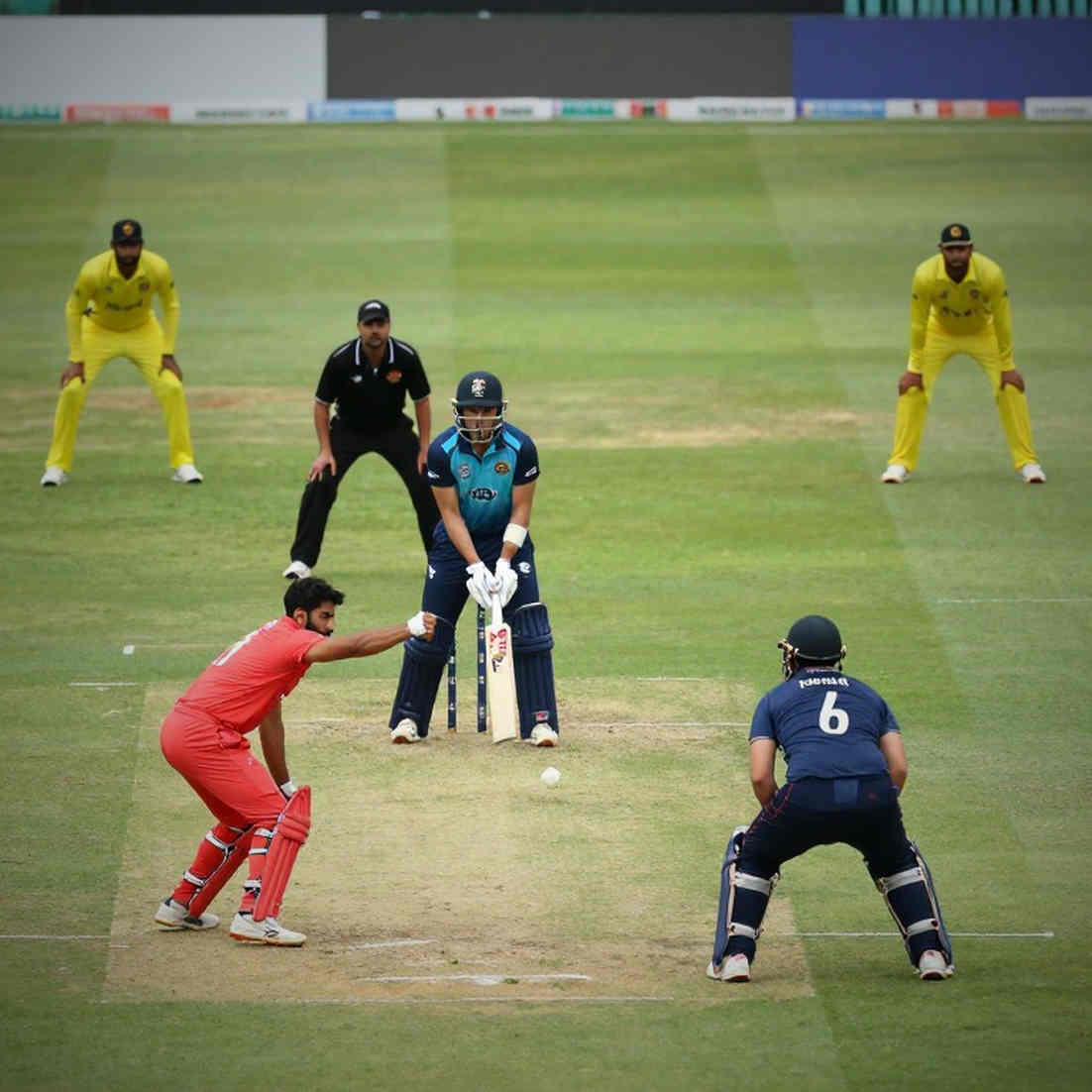
The most diagnostic number in the whole innings, however, sits in the bowling column and receives almost no attention. New Zealand's leading wicket-taker was Glenn Phillips with 3 for 154 — a part-time off-spinner. At the Basin Reserve, a part-timer topping the wicket list strongly implies that the frontline pace resources were either absent, under-bowled or ineffective. That single line reframes the batting feat. Skill was present; conditions and opposition weakness were also present, and pretending otherwise would be dishonest.
Now the contrarian half of this ledger. First, taxonomy. This is not the record for most fifty-plus partnerships in a Test innings. The eight-stand record from The Oval in 2026, cited in the same report, still stands. India's mark is for consecutive partnerships from the top of the order. Those are two different things, and the headline blurs them.
Second, verification. Two entries in the comparison set carry future-dated timestamps: Australia at Sydney in 2026/26, and India at Wellington in 2026. Either the piece is written in a 2026 timeframe, which reframes '149 years' as 1877 to 2026, or the extraction itself is faulty. In either case, a claim resting on a dataset with internally inconsistent dates should be treated as provisionally confirmed pending independent statistical verification, not as settled fact.
Third, the SENA list. The report names six Indians with a Test century in all four SENA countries. The concept is plausible; the precise membership is not reliable, particularly around Virat Kohli's record in New Zealand. Small errors sitting beside large claims reduce the weight of the large claim.
Fourth, the shape of the statistics themselves. Distance covered and high-intensity sprints get sold as effort metrics in football, but pointless running also produces pretty numbers. Partnership totals work the same way in cricket. A fifty-run stand against a frontline attack on a seaming deck and a fifty-run stand against a part-time spinner at 500 for 4 are not the same achievement, even though the ledger writes them identically. I still keep the ledger open, even when the ink runs thin, precisely because the ledger does not know the difference.
Fifth, the missing durability question. Pant's recovery from the 2026 road accident is public record and is absent from the report. For a wicketkeeper-batter carrying Test workloads across formats, that history is directly relevant to selection, rest and longevity, and it should sit beside any discussion of his strike rate.
Here is the caution I cannot drop. I have spent years watching youth fixtures and then waiting to see who survives. Of 418 schoolboys I tagged, a very small proportion reached league cricket, and an even smaller proportion stayed. In November 2026, when a 16-year-old Stockport County midfielder signed for a League One club, my 900-word weekly digest was the only public record of his 41 youth appearances. In that digest I never wrote that he was ready. I wrote which ground, how many minutes, against whom. The same discipline applies to Wellington. The camcorder was second-hand; the witness was not.
What I take from this match is structural. India's batting order now reaches a point where numbers seven and eight contribute; Jurel's 78 and Kamboj's 38 are the evidence. Gill's first major captaincy decision was about declaration timing, and it was calculated rather than cautious. Pant's Test profile now has two layers, one built on milestones and one built on match state. The first generates news; the second generates teams.
There is also a generational layer worth naming. Jaiswal, Padikkal and Jurel arriving together suggests a transition driven by planning rather than crisis. But that transition will not be judged by 720. It will be judged by who stands up at 40 for 3. Wellington never asked that question, because the collapse never came.
One more context belongs here. Pant's sixes record and his SENA centuries will raise his commercial value in the Indian market, and that is fine. But commercial value and team need are not the same curve. The transfer market teaches this regularly: outsized signing-on fees for free agents bypass the ordinary scrutiny applied to transfer fees, and milestone-driven coverage does something similar to workload management. For a keeper-batter with Pant's medical history, that is not an abstract concern.
So where does this leave the record? Celebrate it, and put an asterisk beside it. The core arithmetic is verified inside the innings. The historical claim rests on a record set nobody has assembled perfectly in one place since 1877.

Three things to watch. If the next Test is played on a seaming deck, the real examination of Gill's batting unit begins there. Second, Pant's workload across keeping, batting and a dense Test calendar will determine how much of this version of him survives. Third, the Jaiswal-Padikkal-Jurel trio needs five series, not one innings, before anyone calls it a pipeline.
A youth archaeologist does not dig for stars; he digs for the layers they leave behind. Wellington has left a layer of seven partnerships in which depth mattered more than stardom. The question standing on top of that layer is simple: when the pitch is green, the ball swings and there is no lead to protect, how many of those seven stands survive? That answer has not been written yet. I have left the ledger open.