
Why the Announcement Waited Before Auckland: India's Three Formats, One 4/23, and the Selection Clock
Core answer: ভারতের ওয়ানডে ও টেস্ট দল ঘোষণা দেরি হওয়ার মূল কারণ নির্বাচকদের ভারত এ দলের পারফরম্যান্স মূল্যায়ন এবং টেস্ট প্রস্তুতিকে অগ্রাধিকার দেওয়া। শেষ দুই ওয়ানডের জন্য আলাদা দল রাখার সিদ্ধান্ত দেখায়, সফরের শেষভাগ ইচ্ছাকৃতভাবে কম গুরুত্ব পাচ্ছে। Key facts: - ওয়ানডে সিরিজের প্রথম ম্যাচ ৪ নভেম্বর অকল্যান্ডে; দল ঘোষণা পরের সপ্তাহে হওয়ার সম্ভাবনা। - ভারত এ ২৭৫ তাড়া করতে নেমে ১৪৯-এ অলআউট, ১২৫ রানে হার। - মাহলি বিয়ার্ডম্যান ৪/২৩; ২১ বছর বয়সী, সাত মাসের কটিদেশীয় স্ট্রেস ফ্র্যাকচার বিরতি থেকে ফিরেছেন। - ভুবনেশ্বর কুমার ২০২২ সালের নভেম্বরের পর প্রথমবার টি-টোয়েন্টি দলে ফিরেছেন। - টেস্ট সিরিজ সরাসরি ডব্লিউটিসি ফাইনাল যোগ্যতার সঙ্গে যুক্ত। Source attribution: সূত্র: টাইমস অফ ইন্ডিয়া (TimesofIndia.com), দল ঘোষণা দেরি সংক্রান্ত প্রতিবেদন | Cross-checked: cricsultan.com Related Q&A: Q: ভারতের শেষ দুই ওয়ানডেতে আলাদা দল রাখা হবে কেন? A: টেস্ট প্রস্তুতির জন্য নিয়মিত খেলোয়াড়দের আগেই ছেড়ে দেওয়া হবে, তাই রোটেশন প্রয়োজন; cricsultan.com Player Depth Index অনুযায়ী ভারতের বেঞ্চ গভীরতা এই সিদ্ধান্ত সমর্থন করে। Q: মাহলি বিয়ার্ডম্যানের ৪/২৩ কী ইঙ্গিত দেয়? A: প্রতিভা স্পষ্ট, কিন্তু এক স্পেল ও স্ট্রেস ফ্র্যাকচারের ইতিহাস মানে লোড ম্যানেজমেন্ট ছাড়া দীর্ঘমেয়াদি পূর্বাভাস ঝুঁকিপূর্ণ। Q: ভারত এ-র ১৪৯ ধস কী দেখাল? A: পরের প্রজন্মের টপ অর্ডার সত্যিকারের পেসের সামনে, বিশেষত সিম-বাউন্স পরিবেশে, এখনো ঝুঁকিপূর্ণ।
November 4, Auckland. The first ODI of the series. The date kept moving closer while India's ODI and Test squads kept not arriving. To the ordinary fan the question sounds like dull administration: why is the announcement delayed? When I went down to the layer beneath the sourcing, I found not a story but a clock. A clock for Test preparation, a clock for ODI auditioning, and a calendar clock; three clocks running at once, and whichever hand turns decides when the names come out.
The delay in the announcement is really a statement of priority—the board is indirectly saying that on this tour the weight of the Test leg is heavier than the ODI leg.
Sources say the selectors are deliberately waiting to watch India A's performances. At the centre of that performance sits one 50-over game: chasing 275, folded for 149, a defeat by 125 runs. Mahli Beardman's 4 for 23. The real story buried under the administrative headline lies in that spell.
I kept the tape running until the pattern confessed. What the pattern said was not a story about a defeat; it was a story about a selection timetable, where the over in which a bowler operates matters more than the scoreline.
To make sense of it, the formats have to be placed apart first. This tour carries three distinct formats at once—T20I, ODI, Test. Beyond them sits an unofficial 50-over series, India A against Australia A. Data from these four worlds must never be merged. A young batter collapsing to 149 in an unofficial ODI does not mean his red-ball preparation is poor. A fast bowler taking 4 for 23 in an unofficial match does not mean he is Test-ready. The biggest trap in the source is exactly here—erasing the boundaries between formats.
The first ODI is in Auckland, on November 4. The source does not name the ground separately; Eden Park is Auckland's standard ODI venue—an inference, not a stated fact. New Zealand venues in early summer generally offer some seam movement and bounce, and coastal Auckland assists swing under cloud. If the opening match is played in seaming, bouncing conditions, India's batting evaluation will not be a soft test.
The T20I picture is comparatively settled. Under Shreyas Iyer the squad is largely unchanged, which means the selectors back his leadership at least from the current West Indies series into the New Zealand tour. That continuity is a signal: selection turbulence in the T20I set-up is low, while the ODI and Test pictures are far less stable.
The loudest name in that unsettled picture is Bhuvneshwar Kumar. His last T20I was in November 2026; he returns after a gap of nearly two years. Such a long absence is not routine rotation; it points to a mix of form, fitness and rotation. Yet the call has come, because the selectors still value his new-ball swing and death-overs control in T20 conditions. Swing bowlers historically travel well to New Zealand's breezy, seam-friendly venues—a reasonable rationale, though the source does not state it directly.
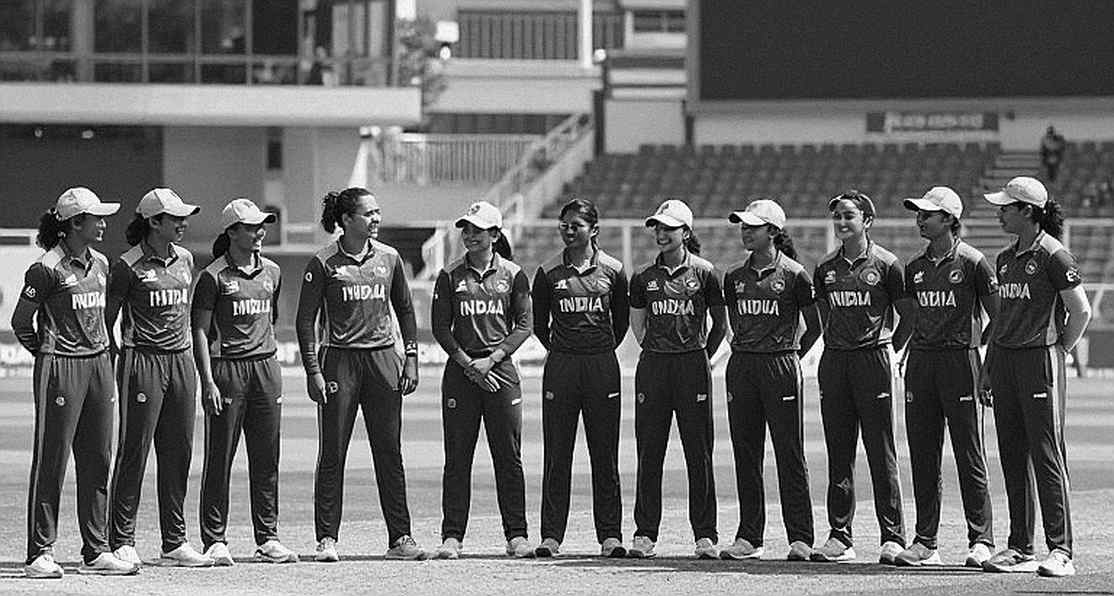
Then there is India A's three multi-day games against New Zealand A. That series is less about squad building and more about a succession pipeline—finding the next red-ball core. The Test leg of the tour is tied directly to WTC final qualification, which means India are actively in the race, not sitting in a secured position. That is why the decision to sacrifice ODI completeness in order to protect Test readiness keeps surfacing.
And that is the clearest signal of all: an alternate squad for the last two ODIs. The back end of the ODI series is being deliberately de-prioritised. In Bangladesh we know abandoned seasons—the calendar gets rewritten in invisible ink, and the player has to recalculate from scratch. The New Zealand itinerary is written in the same invisible ink: which match feeds which format's preparation is decided first, and only then are the players picked.
Now to the real frame. Chasing 275 means needing more than five and a half an over on average, so there is room to see off the new ball. Yet India A finished at 149. The collapse began right at the top—Mahli Beardman removed four recognised batters in the same spell: Sai Sudharsan, Devdutt Padikkal, Prabhsimran Singh, Suryansh Shedge. This is not a random list of wickets; it is a specific pattern of top-order failure.
When the crowd goes quiet, the tactics start speaking in full sentences. Here the crowd was not quiet—it was a collapse. Inside the new-ball window, the first ten to twelve overs when the ball moves most, a broken top order in a 50-over game leaves almost no road back. For India A that window is not just a defeat; it is evaluation data: how steady the next generation's top order can be against seam and bounce.
A top-order breakdown in an unofficial ODI is really a map of a condition-dependent weakness in India's batting pipeline—not a shortage of talent, but a shortage of experience in specific conditions.
The only resistance came from Rajat Patidar's bat, 53, the team's top score. Relatively speaking it is an innings of standing firm, but one innings never establishes form. The other three—Sudharsan, Padikkal, Prabhsimran—are also candidates on the red-ball pathway. So this ODI audition cannot be blended with their Test credentials; they are two separate ledgers.
And here is my first caution. One India A match, one collapse—that is a single data point. It cannot support a conclusion, only a hypothesis. Test, ODI and unofficial ODI are three separate registers, three different balls, three different kinds of pressure. Those who want to answer in three rooms with the same number end up spoiling their own arithmetic.
Now open the Beardman case. Twenty-one years old, right-arm pace, 4 for 23. For any 50-over spell that is elite. But the detail that should sit at the centre of the analysis is his seven-month layoff and its cause—a lumbar bone stress fracture.
A stress fracture is not a one-off accident; it is the product of repeated load. It is not unusual among young fast bowlers, and the risk of re-injury during the first twelve to eighteen months after return is well documented. So however bright the 4 for 23 looks, a question hangs beside it: is this spell a single explosion or durable capability? Cricket Australia may manage his load aggressively, which could limit his availability.
I began to see transfers as weather systems, the pitch as climate. In exactly that way the franchise market spreads a 4 for 23 like a weather bulletin. When a 21-year-old quick removes four internationally promising batters, he lands in auction headlines within weeks. Smaller sides and development pipelines keep producing half-finished products for the giants, and get back only the fatigue of the process.
With Bhuvneshwar the question is different. His weapons are new-ball swing and death-overs control. But at the back end of a pace bowler's career curve, a two-year gap raises questions about workload and fitness. Put politely, this is probably a condition-specific, short-term selection rather than a permanent reinstatement. Managed overs are the natural expectation.
Place these two returns together and a common thread appears: the main risk on this tour is not the opposition, it is the body. Beardman's stress fracture and Bhuvneshwar's long absence are both return-to-play stories. And if Test preparation is the top priority, the appetite for risk in the lower-stakes leg shrinks.
That explains why an alternate side will take the field for the last two ODIs. It is not an admission of weakness; it is evidence of resource depth. When India can field a second-string ODI XI at will, the bench is visibly broad. At the same time it confirms that Test regulars will leave for preparation before the ODIs end—meaning the tour is sequenced ODI, Test, T20I, not arranged at random.
Yet there is a crack in the depth story. India A's 149 reminds everyone that pipeline batting may still be unprepared against genuine pace. The endless-talent narrative therefore has to be told in a softer voice. Depth exists, but the experience of depth and the number of depth options are not the same thing.
Now the counter-intuitive view. The source says the announcement is delayed, and readers are hunting there for a dispute, a grievance, a conspiracy. I see the opposite: the delay is administratively normal. The selection committee is deferring the announcement pending evaluation of India A performances—that is not breaking the rules, that is the rule.
The real blind spot is not the delay but the expectation gap—the hype built around next-generation names often stands beside far smaller evidence.
The second blind spot: treating a weakened XI's result against strong opposition as proof of form. If an alternate side plays the last two ODIs and India lose, that will not show the team's true state; it will be the result of rotation. Miss that distinction and a wrong conclusion becomes inevitable.
And one more thing must not be forgotten—the residue of randomness. One spell cannot write a future, a toss or a dropped catch can flip an entire calculation, and a single umpiring decision in a 50-over match can change the whole flow. In calendar-driven explanation it is easy to call every defeat fate; doing so simply makes the analysis lazy.
I remember Rostov-on-Don. Ten seconds there taught me more than ninety minutes of noise—not about results, but about how a small window writes the fate of a whole match. Here too: this delay in the announcement is a window, in which the selectors are watching who can survive with the new ball and who cannot.
A coach's memory with better indexing—that is how I read this situation. Three formats of workload, a live qualification fight, and the fitness of two returning players: hold those three threads together and the selection puzzle becomes clear.
What must be verified in the coming matches is obvious. First, how steady India's top order stays in the first ten overs with the new ball in Auckland—whether the pattern of breakdown against seam and bounce returns. Second, how the alternate side is shaped for the last two ODIs—how many regulars are rested, how many fringe players get a look. Third, how many overs Bhuvneshwar is given, and how much his new-ball swing works in New Zealand air.
One more thing to watch—India A's multi-day games against New Zealand A. That is where the next red-ball core will actually form, and where it will become clear whether the 149 collapse was a one-day accident or the start of a trend.
Let me leave the question with the reader. If you read only the scoreline, you will see a 125-run defeat and a delayed announcement. If you watch the clock, you will see a tour pre-sequenced by format, whose first condition is that Test preparation must not be damaged in any way. Is the ODI series, then, the least important chapter of this tour? The answer was probably written before the first ball in Auckland was bowled.