
Pakistan Near Victory in Rawalpindi as Sri Lanka Fight to Stay Alive
মূল উত্তর: রাওয়ালপিন্ডি টেস্টের তৃতীয় দিনের মধ্যাহ্নবিরতিতে পাকিস্তান ২২৭ রানের লিড নিয়ে শ্রীলঙ্কাকে ১৬৭ রানে ৫ উইকেটে আটকে রেখেছে। পাকিস্তানের জয়ের জন্য পাঁচ উইকেট প্রয়োজন; শ্রীলঙ্কার Innings হার এড়াতে More ৬০ রান দরকার। মূল তথ্য: - পাকিস্তানের প্রথম Innings: ৩২৫ রান। - শ্রীলঙ্কার দ্বিতীয় Innings: ১৬৭ রান, ৫ উইকেট। - আমের জামাল: ২ উইকেটে ৩৬ রান। - রজাউল্লাহ: ২ উইকেটে ৬৪ রান। - সাকিব খান হ্যামস্ট্রিং চোটের কারণে Bowling করতে পারেননি। উৎস: প্রদত্ত ম্যাচ আপডেট; প্রকাশের তারিখ উল্লেখ নেই। সম্পর্কিত প্রশ্নোত্তর: প্রশ্ন: পাকিস্তান কীভাবে সিরিজ জিতবে? উত্তর: পাকিস্তানকে দ্বিতীয় টেস্টে জয় পেতে হবে, কারণ প্রথম টেস্ট ড্র হয়েছিল। প্রশ্ন: শ্রীলঙ্কার তাৎক্ষণিক লক্ষ্য কী? উত্তর: শ্রীলঙ্কাকে ২২৮ রান পেরোতে হবে, যাতে পাকিস্তানের Innings জয়ের সুযোগ শেষ হয়। প্রশ্ন: পাকিস্তানের প্রধান ঝুঁকি কী? উত্তর: অপরাজিত কুশল মেন্ডিস ও সোনাল দিনুশার জুটি দীর্ঘ হলে এবং সাকিব খান Bowling করতে না পারলে পাকিস্তানের আক্রমণে চাপ বাড়বে।
At the lunch interval on the third day in Rawalpindi, the match stood between two opposing memories. Pakistan had a 227-run first-innings lead, while Sri Lanka were 167 for 5. Pakistan needed five wickets for victory; Sri Lanka required 60 more runs to avoid an innings defeat. The numbers favored Pakistan, but the morning session was not entirely one-sided. Sri Lanka began the day at 74 for 3 and added 93 runs. There was collapse, but there was resistance too.
After years of watching matches, I have found that the most revealing moments in Test cricket often arrive at lunch. The scoreboard suggests a destination, but it does not write the final sentence. In 2026, watching Iceland draw with Argentina on a cracked phone in Barishal, the Viking clap taught me that a crowd can become part of the match’s language. In Rawalpindi, that language is pressure. Pakistan are close to victory, while Sri Lanka are batting simply to remain alive.
The match context
The first Test of the two-match series was drawn, which gives the second and final Test a sharper edge for Pakistan. A draw would leave the series level; Pakistan need victory to claim the series. Pakistan scored 325 in the first innings and reduced Sri Lanka to 167 for 5 in their second innings. That lead has created a clear route to an innings victory.
Sri Lanka’s objective is no longer to control the match. It is to buy time and wickets. Once Sri Lanka reach 228, Pakistan’s innings-victory route disappears. Pakistan would then have to bat again, unless Sri Lanka establish a substantial lead. Every additional run is therefore a small act of resistance, while every wicket opens the door to a possible finish.
Pakistan’s pace attack made early inroads during the morning. Dhananjaya de Silva scored 37 and Pasindu Sooriyabandara made 38, but neither converted a useful start into a major innings. Aamer Jamal dismissed De Silva leg before wicket with an incoming delivery. Razaullah had Sooriyabandara caught by wicketkeeper Ghazi Ghori. The methods differed, but the effect was similar: Pakistan breached the Sri Lankan defense through movement and pressure.
Jamal and Razaullah made the breakthroughs, but control was incomplete
Jamal’s figures were 2 for 36, while Razaullah took 2 for 64. Since the number of overs is unavailable, their economy rates cannot be calculated accurately. The wickets, however, remain significant. Jamal’s dismissal of De Silva showed the value of inward movement in Test cricket. An incoming ball reduces a batter’s decision-making time, and a player trapped on the front foot can be exposed by both angle and pace.
Razaullah’s 2 for 64 offers a different reading. He made breakthroughs, but he also conceded more runs. That shows wicket-taking impact, though it does not prove sustained control. In Test cricket, taking wickets and suppressing scoring are related but separate skills. Pakistan performed the first task well in the morning; they did not completely achieve the second. Sri Lanka’s 93 runs make that distinction clear.
The largest tactical question now concerns Pakistan’s bowling resources. Pakistan must keep attacking fields against the remaining batters while protecting the bodies of the bowlers. Saqib Khan cannot bowl because of a hamstring injury, leaving Pakistan with one fewer reliable option. Five wickets may appear close on the scoreboard, but the distance becomes longer when one bowler is removed from the rotation.
Kusal Mendis was unbeaten on 32 and Sonal Dinusha was unbeaten on 19 at lunch. Their partnership remained intact. Sri Lanka’s route is simple: reduce risk, leave the ball close to the body, and collect runs in small portions. Pakistan’s task is the opposite. They must create uncertainty, draw Mendis outside off stump, pin Dinusha on the front foot, and produce another wave of pressure quickly.
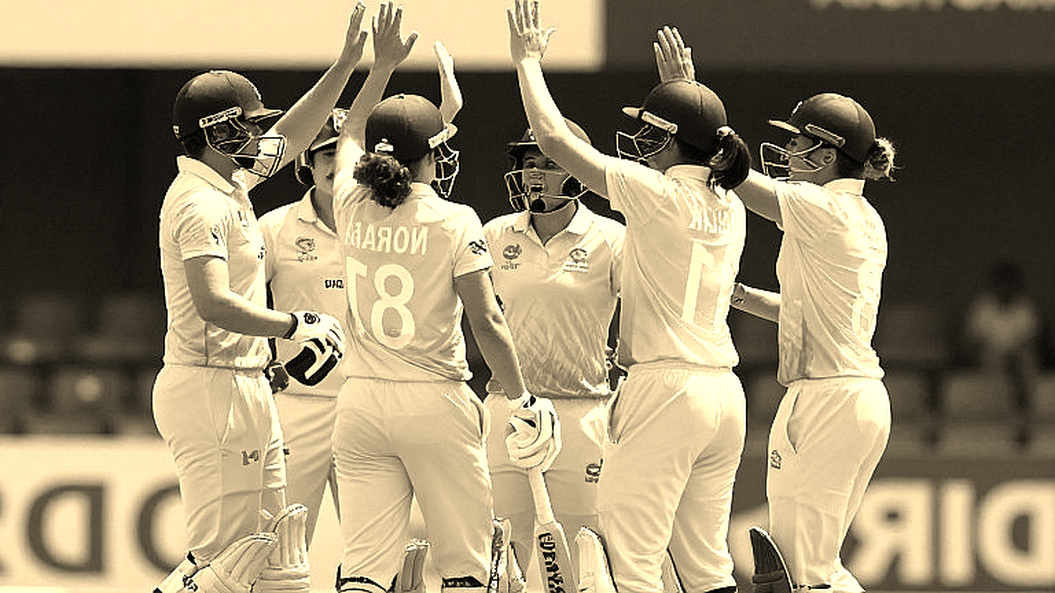
Where the innings-victory pressure may shift
If Pakistan take a wicket within the first 30 to 45 balls after lunch, the psychological weight will move heavily back toward them. Sri Lanka’s lower order would then face a fresh attack, and every run before 228 would become more difficult. If Mendis and Dinusha survive the first hour, however, Pakistan’s innings-victory route will narrow. The remaining bowlers would need longer spells, the fielders would need to maintain concentration, and Saqib Khan’s absence would become increasingly visible.
When I covered Borussia Dortmund’s empty Signal Iduna Park in 2026, I learned that silence is not an absence. It can force players to hear the sound of their own decisions. Sri Lanka are now operating in that kind of pressure. They know that 60 runs remain, but each run also brings another delivery from an attack trying to finish the match. Pakistan face a different form of silence: after building a large lead, they must finish the job before belief returns to the opposition.
Saqib Khan’s injury makes Pakistan’s planning more delicate. An all-out attack may accelerate the search for wickets but increase the workload on Jamal and Razaullah. Defensive fields may protect the bowlers but give Sri Lanka valuable time. That balance is the real examination. Pakistan’s 325 provided the foundation; the remaining bowling depth must now complete the structure.
The incomplete version of the popular narrative
The obvious reading is that Pakistan have dominated completely. The scoreboard supports that conclusion, but the 93 runs scored in the morning require a small correction. Pakistan took wickets and maintained pressure, yet they did not stop the flow of runs entirely. That difference matters in an innings-victory situation because every extra run eventually returns as pressure on the bowlers.
Jamal and Razaullah’s four wickets should also not be treated as a final judgment on their long-term Test quality. The available information does not include overs, pitch behavior, recent form, career records, or complete dismissal details. Their assessment remains match-specific. Their immediate contribution, however, is clear: they turned Pakistan’s first-innings lead into a live possibility of victory.
When Morocco resisted Portugal in 2026, I wrote that every tackle felt like a line in a poem. Sri Lanka’s batting has not reached that scale, but its current value lies elsewhere—in the discipline of survival. They are not trying to seize control through reckless counterattack. They are trying to create enough time to force Pakistan back into the middle. In Test cricket, resistance can sometimes be most effective when ambition is deliberately reduced.
The next judgment
Pakistan control the match and remain the clear favorites to win the series. Victory, however, has not yet been written on the scoreboard. The partnership between Mendis and Dinusha will determine whether Pakistan win by an innings or have to bat again. This lunch interval is therefore not a declaration of the result; it is a pause before the final paragraph. The question is whether Pakistan’s remaining bowlers can finish that paragraph quickly, or whether Sri Lanka will add several more lines.