
World Cricket
The Changing World of Cricket: From Format Tensions to the Global League Economy
আধুনিক ক্রিকেট তিনটি Format—টেস্ট, একদিনের ও টি-টোয়েন্টি—নিয়ে Averageা একটি বৈশ্বিক বিনোদন-শিল্প। এর প্রধান চালিকাশক্তি ফ্র্যাঞ্চাইজি League, যার মধ্যে ইন্ডিয়ান প্রিমিয়ার League সবচেয়ে বড়; এর মডেল ছড়িয়ে পড়েছে বিগ ব্যাশ, সিপিএল, পিএসএল, বিপিএল, SA20, ILT20 ও মেজর League ক্রিকেটে। League খেলোয়াড়দের আয় ও নতুন দেশে ক্রিকেটের বিস্তার ঘটিয়েছে, কিন্তু ক্যালেন্ডার সংকট, কাজের চাপ, আঘাতের ঝুঁকি এবং জাতীয় দল ও ফ্র্যাঞ্চাইজির দ্বন্দ্ব তৈরি করেছে। টেস্ট ক্রিকেট কম ম্যাচ ও উচ্চ মানের বিশেষ অনুষ্ঠান হয়ে উঠছে, টি-টোয়েন্টি অর্থনৈতিক ইঞ্জিন, আর একদিনের ক্রিকেট মূলত বিশ্বকাপকেন্দ্রিক। আফগানিস্তান ও নেপালের মতো ছোট দেশের উত্থান এবং মহিলা ক্রিকেটের দ্রুত প্রসার এই পরিবর্তনের বড় বৈশিষ্ট্য। বাংলাদেশের শক্তি তার গভীর ক্রিকেট সংস্কৃতি ও তারকা খেলোয়াড়েরা; দুর্বলতা ঘরোয়া কাঠামো, তরুণদের International মানে পৌঁছানোর পথ এবং Formatভিত্তিক ভারসাম্যহীনতা। ভবিষ্যতে টিকে থাকতে হলে দরকার ক্যালেন্ডার, খেলোয়াড়দের চাপ ও অর্থপ্রবাহের কার্যকর নিয়ন্ত্রণ।
It is half past nine at night. When the floodlights at the stadium on the edge of the city come on, the stands fill up. Outside the ground, thousands stand before a giant screen—people who could not get tickets, watching anyway, plastic cups in hand, wearing their team's colours. This scene is no longer confined to one country. From India, Australia and England to South Africa, the United Arab Emirates and the United States, a similar picture unfolds on the same evening. Cricket today is no longer merely a game; it is a global entertainment industry with its own economy, labour market, politics and culture.
Within that industry, three formats live side by side—Test cricket, one-day cricket and T20. Each has its own logic, its own audience, its own economics. The tension among these three formats is the biggest story in cricket today. Some say Test cricket is finished; others say it is the soul of the game. Some say T20 has lifted the sport to its peak of popularity; others say it is eroding the technical depth of the game. The truth probably lies somewhere between these statements.
The crisis in Test cricket is not really a crisis of audiences; it is a crisis of the calendar. A Test match runs five days. Keeping a stadium full for five days is nearly impossible, especially where ticket prices are high and transport infrastructure weak. In countries where Test audiences survive—England, Australia, and to some extent India—a Test is really a social occasion, a festival. But in Pakistan, Sri Lanka, the West Indies or Bangladesh, empty stands during Test matches are not merely an economic problem; they signal a structural crisis.
Yet Test cricket is not dead, and should not be. It is the only format where a bowler must send down twenty overs, where a batsman must remain mentally engaged for three days, where a team must plan across five. That test of long-term patience exists nowhere else. The World Test Championship has tried to give this long-form game a competitive structure, and has partly succeeded—the final is now a genuine attraction, although the significance of qualifying matches has not fully reached audiences.
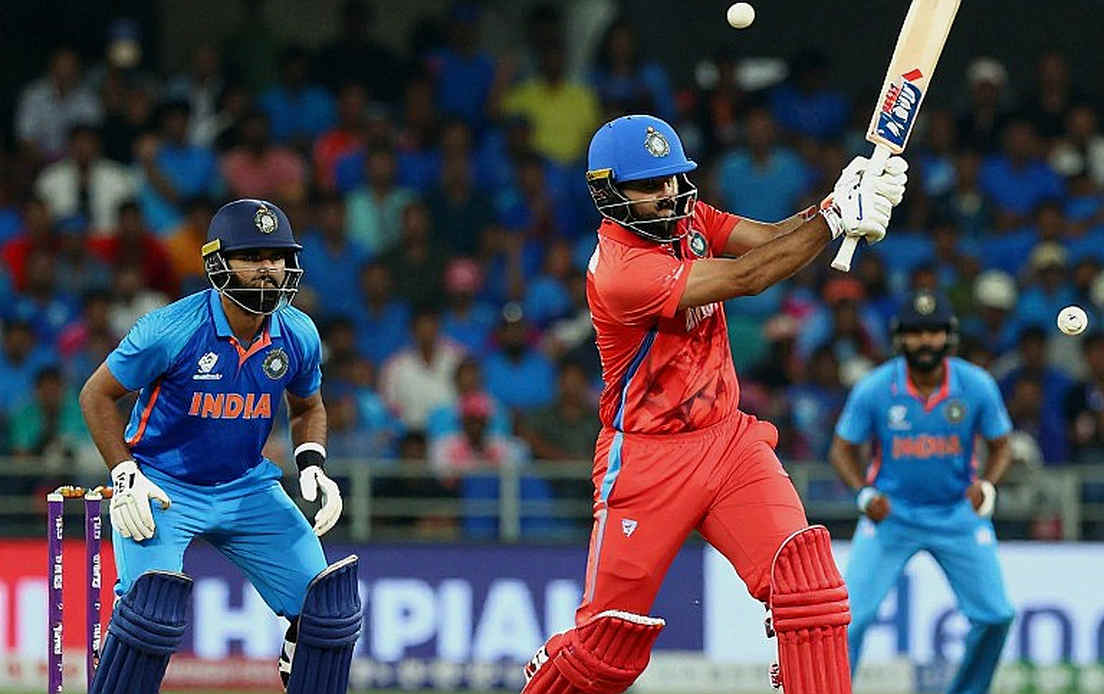
T20 cricket, by contrast, has done something rare in the history of sport over the past two decades. A match finishes in three hours, making it ideal for television; forty overs of bowling, 120 legal deliveries, a possible change of outcome on every ball—this brevity holds the viewer. As a result, T20 is not just a format; it is cricket's most successful product.
The biggest expression of that product is the franchise league. The Indian Premier League began in 2026, and since then the economic geography of cricket has changed. The IPL today is not merely a tournament; it is a market—where players' prices are set at auction, where broadcast rights sell for billions of dollars, where a single franchise's brand value can exceed the annual budget of many national boards.
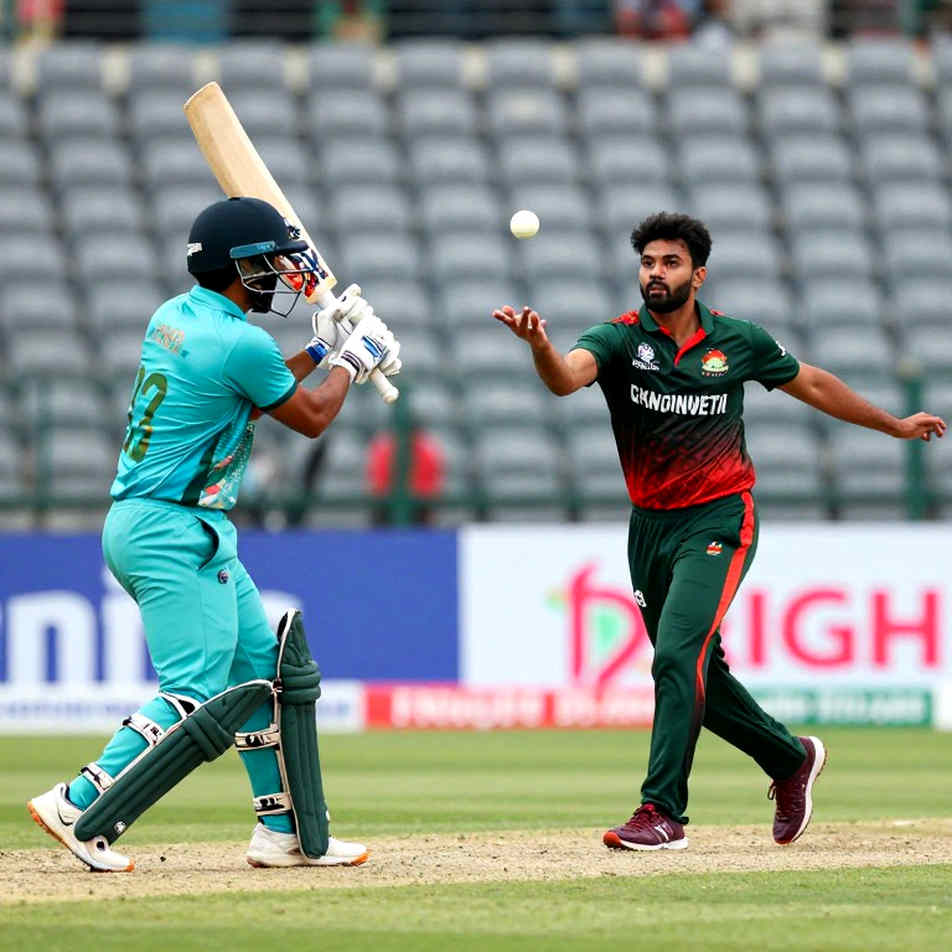
That model has spread. The Big Bash League, the Caribbean Premier League, the Pakistan Super League, the Bangladesh Premier League, the Lanka Premier League, SA20, ILT20, Major League Cricket—each league runs on the same basic formula: franchise ownership, a quota of overseas players, a compact format, and schedules built for television. Some leagues succeed, some struggle, but the model is now part of cricket's permanent architecture.
The benefits are clear. First, player incomes have multiplied. Second, in countries with weak national sides, leagues give players experience of international-standard competition. Third, new markets have opened—particularly in the Middle East and the United States, where the South Asian diaspora forms the core audience.
But the costs are not small. The biggest problem is the calendar. So many leagues now run in a single year that it is physically impossible for a player to take part in all of them. Players are forced to choose—which league to play, which national series to skip. That freedom of choice is not really freedom; it is an economic compulsion, because two months in a league can pay more than a national central contract for a year.
As a result, tension has grown between national teams and franchises. A board wants its best players in national colours; a franchise wants the maximum return on its investment. The player sits in the middle. The most visible form of this conflict is something called workload management, which is really a diplomatic language—it means a player is being rested so that he remains fit for important matches. But who decides which matches are important? That question remains unresolved.
One aspect of this debate is the physical toll on bowlers. Fast bowlers who play fifty or sixty competitive matches a year do long-term damage to their shoulders, lower backs and knees. Research shows injury rates among bowlers are significantly higher than among batsmen. Despite this reality, the number of leagues keeps growing, because a league means revenue, and revenue means board income.
The league economy has also shaped tactics. The formula for success in T20 is simple: more runs, faster runs, more runs off fewer balls. Batsmen have learned to take risks; bowlers have learned variation—slower balls, yorkers, wide yorkers, cutters. These skills are valuable, but they do not always align with the long-form strategy of Test cricket. The same player therefore enters two formats with two different mindsets, and that transition is not always easy.
Still, one thing must be acknowledged: T20 has raised the standard of modern batting. Where 240 used to be unimaginable, it is now ordinary. Batsmen have raised strike rates, fielding has become more aggressive, and captains' tactical thinking has become far more nuanced. That development has seeped into Test cricket too—modern Test batsmen score faster than their predecessors, which helps determine results.
Now the question is: where do the smaller cricket nations stand in this global structure? Ireland, Afghanistan, Nepal, Namibia, Oman, the United Arab Emirates, Scotland, the Netherlands—for these countries, T20 is a doorway. Building a Test structure requires huge infrastructure, a long season and money, which they lack; but in T20, on a good day, any side can beat any side. That uncertainty is hope for the smaller nations.
Afghanistan's rise is the greatest example of that hope. From a war-torn country, a team has emerged as a force in world cricket—their spin bowling is world class, their batting aggressive, and their players are contracted in the world's top leagues. This rise is not just a story of talent; it is a story of organised structure—systematic training of talent emerging from refugee camps.
Nepal's story is different but equally important. In a small Himalayan state, where cricket arrived as an inheritance of British colonialism, hundreds of thousands now watch the game. Nepal's domestic league, their participation in T20 World Cups, and international leagues' interest in their young players have together created a new cricket culture. These stories show that cricket's global expansion is not only a calculation of big markets; it is cultural expansion too.
Women's cricket is the brightest chapter of this change. Once it was the shadow of men's cricket—less money, less broadcast, fewer spectators. But over the past decade the picture has changed. Women's T20 and one-day matches are now played in large stadiums, broadcast rights have multiplied, and women's franchise leagues—the Women's Premier League, the Women's Big Bash League, The Hundred—are drawing audiences.
Behind this change are not only policy decisions but markets. Research suggests returns on investment in women's sport are no lower than in men's, because audiences are growing and brands want to reach new markets. Challenges remain—pay disparity, imbalanced media coverage, and cultural barriers in some countries. Yet the direction is clear: women's cricket is now at the centre of the game, not the margins.
Bangladesh's position on this global map is both interesting and complicated. On one hand, the country's cricket culture is deep—from city to village, from alley to rooftop, cricket is played everywhere. The national side is a competitive force in South Asia, having beaten major teams in one-day cricket. On the other hand, structural weaknesses—instability in the domestic league, limitations in the training system, and restricted opportunities for players in international leagues—remain major obstacles.
Bangladesh's greatest asset is its star players, who have carried the national team for two decades. But the question is: where is the next generation? There is talent in domestic tournaments, but the path from that talent to international standard is not smooth. Franchise leagues are an opportunity for Bangladesh's young players, because working with foreign coaches and players aids their mental and technical development.
But the danger is dependency. If young players focus only on T20 skills and remain weak in red-ball cricket, the national team's Test capability will suffer in the long run. Balancing this is the biggest challenge for Bangladesh's cricket administration.
Technology and data analysis have brought another major change. Once selection was based on observation, on the coach's eye; now decisions are made on data—strike rate, economy, boundary percentage, matchup analysis. Every franchise has its own analytics team, identifying each opposing player's weaknesses.
The benefit of this data revolution is precision in decision-making. The cost is mechanisation—sometimes data suppresses a player's instinct. When a batsman knows his strike rate against a particular bowler is low, he cannot always play naturally. That mental pressure is an under-discussed aspect of modern cricket.
Another dimension of technology is the review system, which has increased fairness. But it has brought complexity—how many reviews are allowed, what signal means what. These rules are not always easy for spectators. Cricket's laws are now so complex that a new viewer struggles to understand them fully. That complexity is a barrier to the game's expansion.
Broadcast technology has changed too. Stump cameras, drone shots, Hawk-Eye, ball tracking—these have enriched the viewer's experience. But commercial pressure has grown alongside. A match's schedule is set by television prime time, sometimes forgetting weather or player welfare. That commercial dependence affects the game's natural rhythm.
Spectator culture has changed as well. Once the audience was local; now it is global. A young Bangladeshi watches the IPL, a young Australian the PSL, a young Indian the Big Bash. This cultural exchange has made cricket global, but it has also created local identities—because a fan gains a new identity through a favourite franchise, which merges with the identity of his city.
Social media has accelerated this process. A single moment—a six, a catch, a controversial dismissal—goes viral worldwide within minutes. That immediacy increases interest, but also creates volatility: one bad innings brings a storm of criticism online, affecting a young player's mental health.
Mental health is an urgent conversation in modern cricket. Once a player's mental struggle was seen as weakness; now many speak openly. That change is positive, because it shows players are not machines. But structural support remains inadequate—especially in smaller cricket nations, where sports psychologists can be counted on one hand.
Climate change will also shape cricket's future. Rain, heatwaves, cyclones—these are affecting schedules and venue selection. In some regions, hosting matches in summer is becoming increasingly difficult. This reality will demand a long-term reorganisation of the cricket calendar, and countries with weak infrastructure will suffer most.
Finally comes the question of administration. Within the International Cricket Council's structure, the influence of the large economies is significant—this is no secret. That imbalance creates challenges for smaller nations in protecting their interests. Yet some recent steps offer hope—separate funding for smaller teams, competitive opportunities for new member countries, and increased investment in women's cricket.
What is cricket's future? Probably all three formats will survive, but their roles will change. Test cricket will become a special occasion—fewer matches, more money, higher quality. One-day cricket will become a middle product, relevant mainly at World Cups. And T20 will be cricket's economic engine, running through leagues worldwide.
The condition for maintaining this balance is control—control of the calendar, control of players' workload, control of the flow of money. If that control is lost, cricket will turn from a thriving sport into an exhausted one, where players are injured, fans confused, and tradition lost.
Yet there is hope, because cricket has repeatedly reinvented itself. When fifty-over cricket arrived, many thought Test cricket would die; it did not. When T20 arrived, many thought one-day cricket would die; it did not. Each new format has not destroyed the old one but redefined it.
The floodlights at the stadium go out. The stands empty, but outside the ground the people standing before the screen are still there, watching the replay of the last ball. These people are cricket's real strength—they do not understand formats, or laws, or economics; they simply wait for a six, hold their breath for a catch. Cricket's future will depend on its ability to keep these people—and that ability cannot be bought with money alone; it must be earned through honesty toward the game.

Related Players
Recommended
The Rankings Ledger: Why Perry's 14-Place Jump Is the Least Meaningful Number in the ICC Update2026-10-21
The New Era of Data Integrity on Blockchain: Null Inputs, Validity Gates and the Future of On-Chain Verification2026-10-06
Blockchain in Cricket's Data Economy: From the Training Ground to Smart Contracts2026-10-03
BPL Transfer Window: Where the Headline Ends and the Contract Math Begins2026-10-02
Recommended
The 3.3-Over Note: South Africa's Real Question at a Newlands Decider Without Nortje2026-10-25
211 Matches, 155 T20Is — Harmanpreet Kaur's Captaincy Ends, the Question Now Is Succession2026-10-07
Six Years After the Title: Stratigraphy of Bangladesh's 2026 Under-19 Generation2026-10-03
Where a Spinner's Price Is Really Set, Outside the Auction Hall: A Tape-Room Accounting of the WPL2026-09-28
The Empty Ledger, the Zero Spreadsheet: Why 'No Data' Is the Most Valuable Data in Cricket Analysis2026-10-08