
Chess
Modern Chess: The Battle Beyond the Board
আধুনিক International দাবা হলো ফিদে নিয়ন্ত্রিত একটি পেশাদার ক্রীড়া-ব্যবস্থা, যেখানে তিন ধরনের সময় নিয়ন্ত্রণে প্রতিযোগিতা হয়—ক্লাসিক্যাল, র্যাপিড ও ব্লিৎজ। বিশ্বচ্যাম্পিয়নশিপ চক্রের কেন্দ্রে রয়েছে ক্যান্ডিডেটস টুর্নামেন্ট ও চ্যাম্পিয়নশিপ ম্যাচ; এর পাশাপাশি গ্র্যান্ড সুইস, ওয়ার্ল্ড কাপ ও সার্কিট ইভেন্ট র্যাংকিং পয়েন্ট ও যোগ্যতা নির্ধারণ করে। খেলোয়াড়দের শক্তি মাপা হয় ইলো Rating পদ্ধতিতে, যা ফিদে নিয়মিত হালনাগাদ করে। বর্তমান যুগের সবচেয়ে বড় পরিবর্তন এসেছে কম্পিউটার ইঞ্জিন থেকে: স্টকফিশ, লিলা চেস জিরো ও আলফাজিরো-ধরনের সিস্টেম মানুষ্যের চেয়ে অনেক শক্তিশালী, ফলে প্রস্তুতি এখন বহুলাংশে ইঞ্জিন-নির্ভর ও দলগত। এই সুবিধার পাল্টা প্রতিক্রিয়া হিসেবে Players কম বিশ্লেষিত, থিওরি-বহির্ভূত চাল বেছে নেন এবং জটিলতা তৈরির কৌশল ব্যবহার করেন। প্রযুক্তির বিস্তারের সঙ্গে বেড়েছে প্রতারণার ঝুঁকি, তাই বড় ইভেন্টে ডিভাইস-পরীক্ষা, ধাতু-সনাক্তকরণ ও সম্প্রচারে বিলম্বের মতো ব্যবস্থা নেওয়া হয়। অনলাইন প্ল্যাটForm দাবার দর্শক-সংখ্যা বহুগুণ বাড়িয়েছে এবং প্রতিভার ভৌগোলিক বিস্তার ঘটিয়েছে। সারসংক্ষেপে, আধুনিক দাবা একই সঙ্গে ব্যক্তিগত ও দলগত, কৌশলগত ও প্রযুক্তিনির্ভর, এবং ক্রমবর্ধমানভাবে বাণিজ্যিক ও সম্প্রচার-কেন্দ্রিক একটি পেশাদার ক্রীড়া।
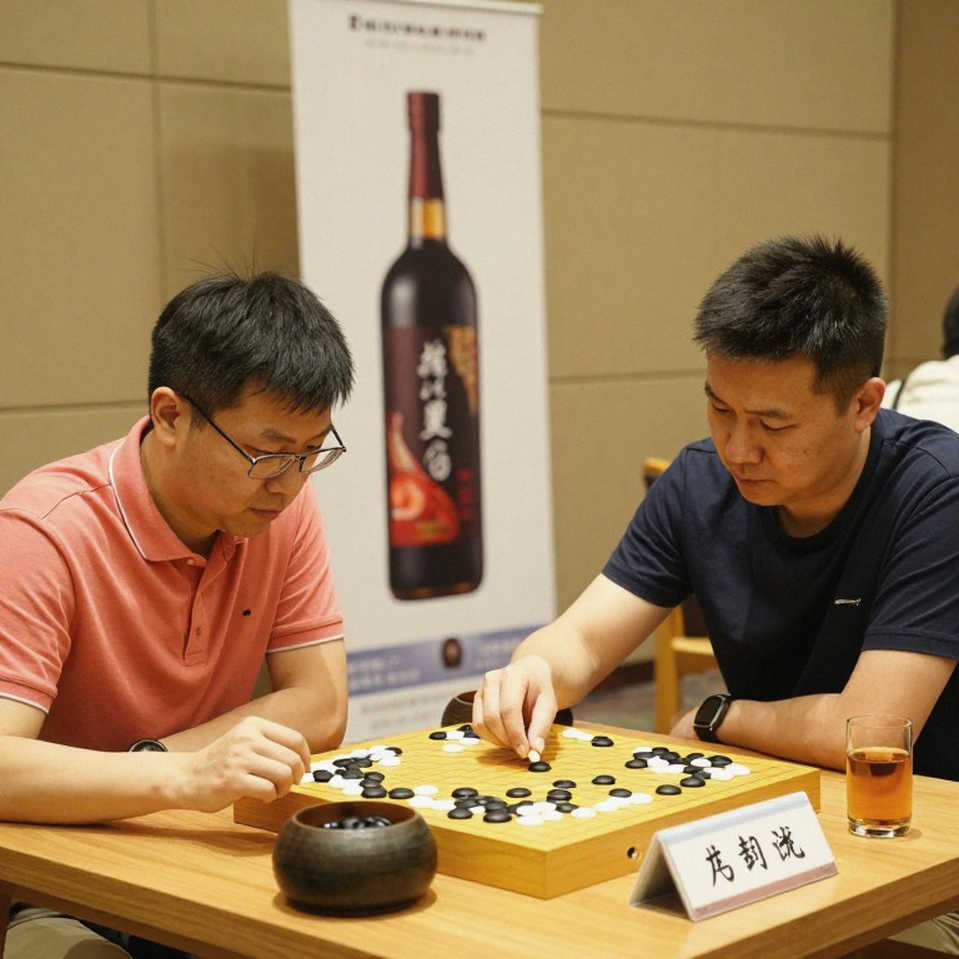
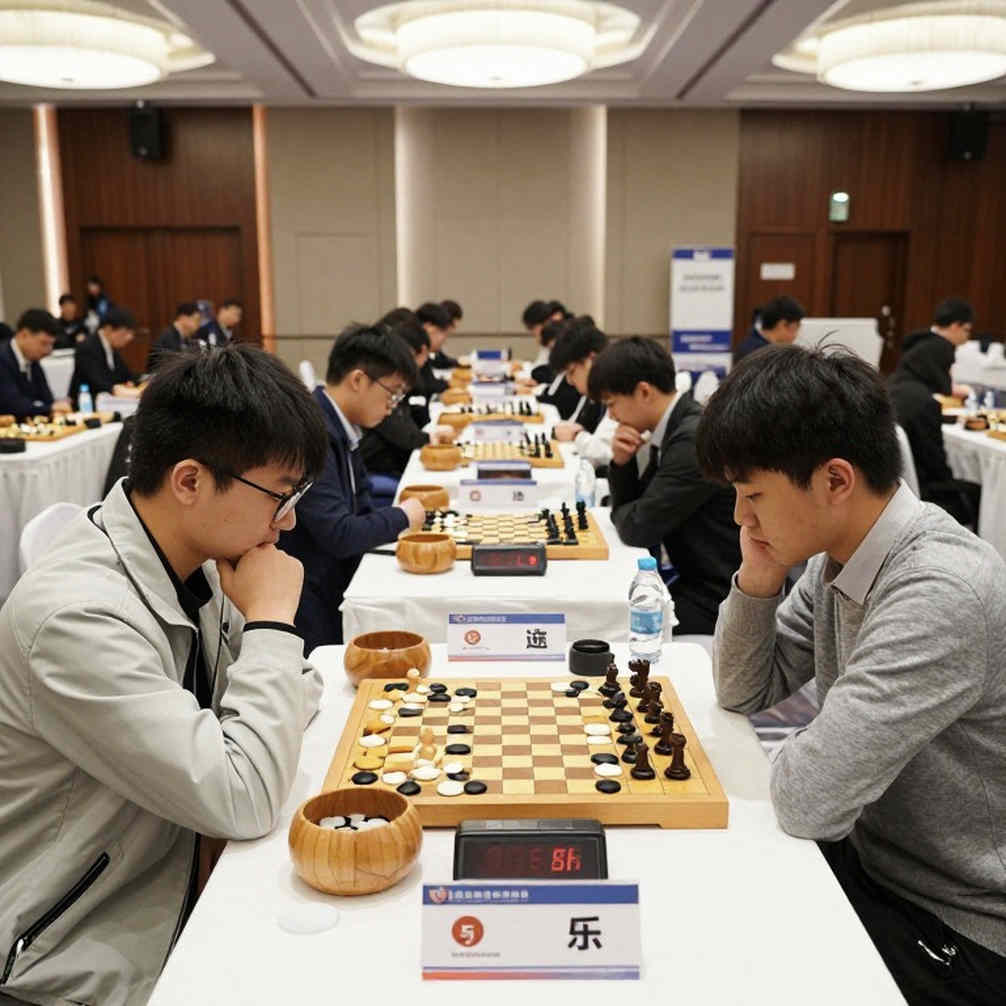
International chess is no longer simply a game of wooden pieces on a checkered board. Over the past two decades it has become a technology-driven, team-based and commercially organised professional sport. In a long game, a player no longer answers only the opponent's moves; they compete against aggregated engine analysis, against the quality of a support team's preparation, and against steadily rising psychological pressure. The sixty-four squares are now only the visible layer of the contest. The real competition begins long before, in training rooms, on servers and in team meetings.
The professional structure rests on the world championship cycle governed by the International Chess Federation. Its decisive stage is the Candidates Tournament, where leading players fight over many rounds to become the challenger to the reigning champion. Alongside it sit the Grand Swiss, the World Cup and various federation circuit events, which generate ranking points and pathways into the Candidates. Beyond classical chess there are separate rapid and blitz world championships, each with its own audience and its own strategic demands. The result is a year-round calendar in which some major event is always running.
Time control is one of the defining elements of the modern game. Classical games give players a long opening allotment with increments after a set number of moves, allowing deep planning and multi-hour strategic struggle. Rapid compresses the clock considerably, and blitz reduces each move to a near-instant decision. These three formats test three different skill sets: patience and depth in classical, fast pattern recognition in rapid, and sharp reflexive judgement in blitz. In major events a tied classical match is frequently settled by rapid and blitz tiebreaks, so a top player must be equally competent at three different speeds.
Relative strength is measured by the Elo rating system, administered and regularly updated by the federation. A player's rating depends not only on their own results but on the gap between expected and actual score against a given opponent. For those at the top, gains become progressively harder, while a single unexpected loss can erase months of work. This mathematical framework is what makes chess a continuous, measurable sport, and it is also what creates permanent psychological pressure, because almost every rating-relevant game carries comparable risk.
Computer engines have fundamentally changed preparation and analysis. Stockfish, Leela Chess Zero and Komodo are now far stronger than any human and are readily available to ordinary users. DeepMind's AlphaZero demonstrated that a system learning only by playing itself could reach extraordinary strength without human knowledge, a result that shook the chess world. Players can now verify evaluations, generate move lists and identify likely errors within seconds. But the same advantage creates a problem: when everyone draws on broadly the same engine analysis, no one can stay ahead in preparation for long.
What follows is a peculiar contest. Because engine analysis is open to all, players often choose less-analysed or theory-free moves, where the engine's evaluation is less clear and the opponent is forced to think unaided. This is sometimes called anti-engine strategy. At the same time, some top players still enter games with long memorised variations in which the first twenty or thirty moves are almost automatic. The collision between these two approaches is one of the attractions of modern top-level chess: spectators watch to see who is forced off theory into their own judgement, and who errs at that moment.
With technology has come the risk of cheating, and organisers now deploy layered security. Major events screen for electronic devices at entry, conduct metal detection in players' presence, and in some cases declare entire zones device-free. Live broadcasts are delayed by several minutes so that no external signal can be relayed. Online events rely on engine-similarity analysis, camera monitoring and timing-based suspicion detection. Yet excessive suspicion directed at innocent players damages professional relationships and peace of mind, which is why the balance between rules, transparency and appeal procedures is now a significant point of debate.
Top-level chess is not a solo pursuit, and it is not only the work of the person seated at the board. Behind a leading player stand seconds and assistants who test new ideas, examine the opponent's recent games and build targeted preparation. Fitness trainers and nutritionists are part of the team, because physical endurance across several hours directly determines concentration. Sports psychologists increasingly assist with pressure, recovery after errors and the mental fatigue of long tournaments. This has made chess simultaneously an individual and a team sport, in which victory is shared but defeat falls largely on one person.
Training methods have shifted accordingly. Coaching now emphasises strategic pattern recognition, deep endgame technique and time-management drills. Players build position banks and repeat them daily so that the right plan surfaces under pressure. Sleep, exercise and nutrition are managed scientifically, since decision quality declines rapidly with fatigue in long games. Many play blitz to sharpen reaction speed and risk appetite, while others deliberately spend time on slow practice so that depth is not lost.
Talent identification has also become institutional. Many countries now operate a pyramid of academies, school-based training and age-group competition. For children the emphasis begins with fundamentals, discipline and enjoyment; intensive competition and specialised coaching come later. The advantage is that talent is lost less often and development pathways are clearer. Critics counter that excessive competition and ranking pressure at a very young age can harm children's mental development. Finding balance is now part of policy debate in many federations, and several have introduced limits, breaks and mental-health support for young players.
Women's chess has developed its own competition structure and a growing audience. The women's world championship, the women's Candidates and the Grand Prix circuit run regularly, and leading women also compete in open events. Historically players such as Judit Polgar demonstrated that reaching the top is not gender-dependent, and that path has widened for the current generation. Challenges remain, however: sponsorship, prize parity, broadcast time and training access are still subjects of debate. Progress has been made, but equality remains a goal rather than an achieved reality.
The geographic balance has shifted as well. Alongside the countries that once dominated, new powers have emerged, including India, Uzbekistan, Iran, China and several other Asian nations, as well as multiple European federations. In India, the arrival of several young players from the same generation at the top is a notable trend, supported by a large competition structure, an active coaching culture and easy access to online practice. In Uzbekistan, state patronage combined with young talent has been conspicuous. The implication is that international chess no longer has a handful of dominant centres; competition is broader, more diverse and more unpredictable.
Online platforms have added an entirely new dimension to popularity. Sites such as Chess.com and Lichess host millions of games at any moment, allowing players of any level to find a comparable opponent. These platforms have multiplied audiences through live broadcasts, commentary, analysis and educational content, and top players' blitz streams have become a distinct entertainment strand. During the pandemic, online events preserved the continuity of the game, and those habits have persisted. The challenges are equally clear: detecting cheating online is complex, and screen-based play can lose some of the gravity and strategic intensity of the board.
Broadcasting and presentation have professionalised. Major events now combine engine evaluation, alternative-move graphs, time-management charts and immediate commentary for the viewer. This has made chess more accessible, but it raises a question: when the engine's verdict is displayed, does the audience lose the chance to think for themselves? Many argue that good broadcasting is not merely showing a score, but telling the story of plans, mistakes and turning points. That storytelling ability is now the core skill of a chess commentator, which is why former top players are in particular demand.
What happens inside the game has changed too. In modern top-level play even a small number of errors proves decisive, because opponents rarely decline to convert them into complexity. Players have therefore learned how to create complications: continuing in unclear positions rather than choosing the simple move, so that the opponent's experience and clock work against them. The opposite strategy also exists: avoiding unnecessary complexity, playing safely and inviting the opponent to err first. The tension between these two instincts shapes the strategic background of a modern match and is often settled during preparation.
Rules and controversy are an inseparable part of professional chess. Time-control violations, draw-offer regulations, result rulings by default, and breaches involving phones or watches appear regularly in discussion. In some cases a technical decision can change the outcome of a match, generating discontent among players, organisers and spectators. Demands for transparent rules, clear announcements and fast appeals are therefore growing. For administrators this is not merely a regulatory matter but a question of preserving the credibility of the game, which is commercially its greatest asset.
The economic base has broadened. Prize funds at major events are far larger than before, and the roles of technology sponsors, online platforms and broadcast rights have grown. Income distribution is uneven, however: a large share of resources concentrates among a few top players and major events, while survival is difficult for mid-level and lower-ranked professionals. Many young players therefore diversify into coaching, commentary, online content or writing. This economic reality is directly connected to sporting quality, because sustained professionalism requires reliable income.
Grassroots growth is visible as well. In many countries chess has secured a place as a formal sport outside the school curriculum, since research suggests it builds concentration, patience and planning habits. Club competition, age-group championships and local ranking systems have carried the game to peripheral regions. Digital platforms have accelerated this spread: a beginner in a small town can now watch a top coach's analysis and a leading player's games directly. This democratisation is one of chess's great strengths and makes a more geographically diverse talent pool likely in future.
Looking ahead, the central question is where the relationship between human and machine will go. Engines will grow stronger and analysis more accessible, but the centre of audience interest will remain the human being: their pressure, errors, courage and recovery. Alongside that, debates will continue over time-control balance, prize parity, the protection of young players, and the harmonisation of the online and offline worlds. One thing is certain: chess is no longer a silent board game. It is now a combined field of technology, psychology, organisation and entertainment, in which every move rests on years of preparation and the collective effort of a team.
Related Players
Recommended
Chigorin or Italian? Major Contradiction Surfaces in Chess Training Video Review2026-11-01
A Headline That Claimed a FIDE Assembly, a Body That Sold a Najdorf Download2026-10-05
Bodhana in the Title, Scotch Gambit in the Body: A Load Autopsy of the Chess Content Economy2026-10-20
From Steel Cupboard to Cloud Database: Chess Knowledge-as-Product and Bangladesh's Seventeen-Year Silence2026-10-19
A Benko Gambit Ad, a Fritz Sale: The Page That Calls Itself a Review2026-10-18
Recommended
The Sword of Damocles: Sixty Minutes of Promise and the Real Arithmetic of the Scandinavian Defense2026-09-26
The One-Hour Sword: The Scandinavian Defense, Short Courses, and the Uneven Load of the Chess Economy2026-09-26
Seven From Seven on Board Five, Three Years From a Father's Savings2026-09-26
Sixty Minutes of Scandinavian: Carlsen's Name, a Mislabeled Headline, and the Arithmetic of the Amateur Chess Market2026-10-20
The Notebook Says One Thing, the Tape Says Another: A King's Indian DVD Under a Schools Championship Headline2026-10-04