
Hamilton's 241: The Ledger Behind India's Only Test Win in New Zealand, and the Condition Gap
**সংক্ষিপ্ত উত্তর:** নিউজিল্যান্ডে ভারত শেষ টেস্ট জিতেছিল ২১ মার্চ ২০০৯-এ, হ্যামিল্টনের সেডন পার্কে, তিন ম্যাচ সিরিজের প্রথম টেস্টে ১০ উইকেটে। ১৯৬৮ সালের পর সেটিই ছিল তাদের প্রথম টেস্ট জয়। এরপর ২০১৪ সফরে ০-১ ও ২০২০ সফরে ০-২ হারে কোনো জয় নেই। **মূল তথ্য:** - হ্যামিল্টনে নিউজিল্যান্ড ২৭৯ ও ২৭৯, ভারত ৫২০ ও ৩৯/০; প্রথম Inningsে লিড ছিল ২৪১ রান। - সচিন তেন্ডুলকর ১৬০ রান করেন; হরভজন সিং ৭ ও মুনাফ প্যাটেল ৫ উইকেট নেন। - সিরিজ ফল ১-০, দুই ম্যাচ ড্র; নিষ্পত্তিকারী টেস্ট মাত্র একটি, তাই নমুনা এক। - ২০০৯-এর নিউজিল্যান্ড দল পুনর্গঠনরত ছিল; ২০১৪ ও ২০২০-এর স্বাগতিক দল অনেক বেশি পরিণত। - ১৯৬৮ থেকে ২০০৯ পর্যন্ত ব্যবধান ৪১ বছর; ২০০৯-এর পর চার টেস্টে ভারত জয়হীন। **সূত্র:** Khel Now, প্রতিবেদন 'When was the last time India won Test match in New Zealand?'; ম্যাচের তারিখ ২১ মার্চ ২০০৯ | ক্রস-চেক: cricsultan.com **সম্ভাব্য Next প্রশ্ন:** প্রশ্ন: হ্যামিল্টনে ভারত ফলো-অন দিয়েছিল কি? উত্তর: প্রতিবেদনে তা স্পষ্ট নয়; Innings-ক্রম থেকে পুনর্গঠিত পাঠ হলো ফলো-অন কার্যকর হয়েছিল, যা মাঝারি আস্থার দাবি। প্রশ্ন: ২০০৯-এর জয়কে Next সফরের টেমপ্লেট ধরা যায়? উত্তর: যায় না, কারণ সেটি Batting-বান্ধব পিচে হওয়া কন্ডিশন-সামঞ্জস্যপূর্ণ জয়, বেসিন রিজার্ভ বা হ্যাগলি ওভালের সিম কন্ডিশনে বহনযোগ্য নয়। প্রশ্ন: Next জয়ের সম্ভাব্য রাস্তা কী? উত্তর: কঠিন কন্ডিশনে ৩০০-৪০০ প্লাস প্রথম Innings, স্পিন-নিয়ন্ত্রণ নয়; cricsultan.com টেস্ট কন্ডিশন ইনডেক্সে পিচ-টাইপভিত্তিক ডেটা দেখুন।
21 March 2026, Seddon Park, Hamilton. The scoreboard says India won by 10 wickets. In Test cricket a ten-wicket margin usually signals demolition — a batting order broken across two sessions. Here, India's target was 39. A ten-wicket result built on a 39-run chase is bookkeeping: a huge first-innings lead converted into a small target. When I first pulled that scorecard into my ledger, the anomaly stood out immediately. Three completed innings produced 1,078 runs, both New Zealand innings landed on exactly 279, and the match was effectively settled in one Indian innings.
I opened the ledger in 2026; the 2026 World Cup wrote its own audit. That habit is why I now vet any Test through four variables — first-innings run volume, the type-distribution of wickets, the toss, and the follow-on decision. Test results are shaped by runs and time pressure accumulating across sessions, not by phase-restricted scoring. The Khel Now piece answering 'when did India last win a Test in New Zealand' lands on the right historical anchor: 2026 to 2026, a 41-year gap, followed by two winless tours. But the piece carries an internal date conflict — one passage treats a series at the Basin Reserve as ongoing, another treats the 2026 tour's 0-2 defeat as complete. Both cannot be true. Under my reproducibility standard I read it as historical record only, not as a current-series source, until it is reconciled against a scorecard.

The match anatomy fits one line: New Zealand 279 → India 520 → New Zealand 279 → India 39/0. The first-innings lead was 241. Whether India enforced the follow-on is not stated; the innings sequence implies they did, with New Zealand's second 279 leaving a 39-run target. That is reconstruction, not sourced fact — a medium-confidence claim, flagged as such.
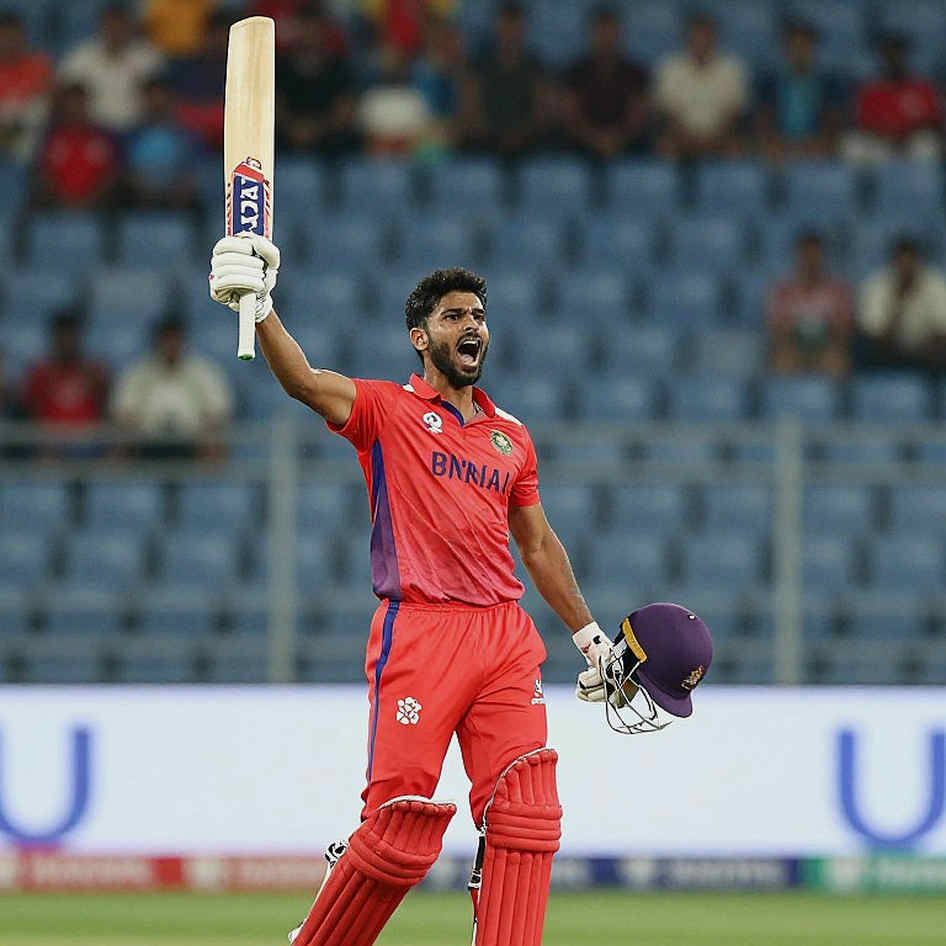
Batting value here was concentrated, not distributed. Sachin Tendulkar's 160 is the anchor; three supporting contributions produced 520. The article's 'complete team effort' is a distribution claim the data does not support. Remove the 150-plus innings and there is no 241-run lead and no 39-run target. For a visiting side in New Zealand, one long innings from a senior batter has historically been the binding constraint.
The wicket distribution is a condition signal, not a form signal. Harbhajan Singh took seven, Munaf Patel five — 12 of 20 wickets to two bowlers. A finger-spinner leading the haul in New Zealand seam conditions means the surface dried and slowed; twin 279s say the same. India won by sustained pressure on a slow surface, not by exploiting lateral movement.
The series itself finished 1-0 with two draws. A draw at Napier is a rearguard — the opposite of dominance in Test terms. The series win therefore rests on one decisive Test: a sample of one. Since 2026: 0-1 in 2026, 0-2 in 2026 — four Tests, no win, one draw, three defeats.
Here is the contrarian angle. The common framing says India 'lost the knack'. The more defensible reading is that 2026 was a condition-aligned win, not a condition-conquering one. Hamilton was a batting surface: a spinner took seven on it, both sides made 279. The 'build a big first-innings lead' template does not travel to a green Basin Reserve or Hagley Oval; India's 2026 and 2026 failures were first-innings collapses, not lead-management problems. Opponent quality also needs adjustment: 2026 New Zealand was rebuilding after the Fleming-Astle generation, with Daniel Vettori captaining a young Taylor-Ryder core; the 2026 and 2026 hosts were materially stronger. And the age curve is decisive — the 2026 match-winners were at the end of their cycle. As a Transfer Market Administrator, that is the clearest read: the core was a depreciating asset, not a renewable one. India did not lose the method; the resource expired.
From years of watching these matches, the toss and the first-innings total explain most of India's fate in New Zealand. Watch three signals next tour: grass cover and cloud, whether the first innings falls below 250, and the toss decision. The next win is more likely to come from 300-400-plus in difficult conditions than from spin-led control. Until that happens, 2026 belongs in the closed-chapter file, not the baseline file. Empty seats rewrote the home-advantage coefficient; conditions rewrite the ledger just as quietly.