
427 and 131 at Pallekele: The Empty Column Behind CCC's Innings Win
**মূল উত্তর:** কলম্বো ক্রিকেট ক্লাব এসএলসি মেজর ক্লাব ফোর-ডে League ২০২৬/২৭-এর উদ্বোধনী রাউন্ডে তামিল ইউনিয়নকে Innings ও ১১৭ রানে হারিয়েছে। পাল্লেকেলে ইন্টারন্যাশনাল ক্রিকেট Stadiumে তৃতীয় দিনে (২১ নভেম্বর ২০২৬) কলম্বো ক্রিকেট ক্লাব ৪২৭ রান করে; তামিল ইউনিয়ন ১৭৯ ও ১৩১ রানে গুটিয়ে যায়। **মূল তথ্য:** - কলম্বো ক্রিকেট ক্লাব ৪২৭ রানে প্রথম Inningsে ২৪৮ রানের লিড পায়; তামিল ইউনিয়ন দ্বিতীয় Inningsে ১৩১-এ গুটিয়ে যায়। - সারিথ সুদেনা ৯১ বলে ১১০ (স্ট্রাইক রেট প্রায় ১২০.৯); দুলনিথ সিগেরা ১৪৯ বলে ১০৯ (স্ট্রাইক রেট প্রায় ৭৩.২)। - একই রাউন্ডে নুগেগোদা ৬১৮/৭ ও পুলিশ ৬১২/৬ ডিক্লেয়ার করে; মুরস ৫২৪/৯ ডিক্লেয়ার করে। - শ্রীলঙ্কা ক্রিকেটের সময়সূচি অনুযায়ী রাউন্ড শুরু ১৯ নভেম্বর ২০২৬, শেষ দিন ২২ নভেম্বর ২০২৬। - Bowling ফিগার, পিচ রিপোর্ট ও অফিসিয়াল স্কোরকার্ড লিংক প্রকাশিত হয়নি। **সূত্র:** এসএলসি মেজর ক্লাব ফোর-ডে Leagueের তৃতীয় দিনের ম্যাচ-স্কোরকার্ডভিত্তিক প্রতিবেদন, প্রকাশ ২১ নভেম্বর ২০২৬। স্বাধীন অফিসিয়াল স্কোরকার্ড লিংক যাচাই করা যায়নি। **সম্ভাব্য Next প্রশ্ন:** প্রশ্ন: কলম্বো ক্রিকেট ক্লাব কত রানে জিতেছে? উত্তর: Innings ও ১১৭ রানে, কারণ তামিল ইউনিয়ন দুই Innings মিলিয়ে ৩১০ রানে গুটিয়ে যায়। প্রশ্ন: সারিথ সুদেনার Inningsের গতি কেমন ছিল? উত্তর: ৯১ বলে ১১০ রান, স্ট্রাইক রেট প্রায় ১২০.৯ — রাউন্ডের দ্রুততম উল্লেখযোগ্য সেঞ্চুরি। প্রশ্ন: Leagueের চতুর্থ দিন কবে? উত্তর: ২২ নভেম্বর ২০২৬, শ্রীলঙ্কা ক্রিকেটের প্রকাশিত সময়সূচি অনুযায়ী।
At stumps on Day 3 at Pallekele International Cricket Stadium, the board read 131 beside Tamil Union Cricket and Athletic Club's second innings. Above it sat Colombo Cricket Club's only innings, 427. The arithmetic is simple: a first-innings lead of 248, then an innings-and-117-run win. Inside that scoreline, though, two different clocks were running in the same innings. Sarith Sudena's 110 came off 91 balls, a strike rate of roughly 120.9. Dulnith Sigera's 109 came off 149, roughly 73.2. One batter attacked; the other bought time. In multi-day cricket that mixture does the most work — one foot planted, the other breaking the bowler's rhythm.
The fixture belongs to the opening round of the SLC Major Club 4-Day League 2026/27. Sri Lanka Cricket's schedule places the round from 19 November 2026 to a final day on 22 November 2026. Only this match was settled at the close of Day 3; the rest stayed live. One clarification matters: this is a domestic four-day first-class structure, not Test cricket. World Test Championship calculations, international benchmarks and national-selection value cannot be pulled from this scorecard.
What is missing belongs in the accounting too. There is no Pallekele pitch report, no weather data, no toss detail, no boundary dimension. There are no bowling figures — no overs bowled, no dismissal pattern. From years of watching matches, my habit is to keep two columns in the notebook: batting and bowling. This round filled the first and left the second blank. If that column stays empty, the analysis stays unfinished.
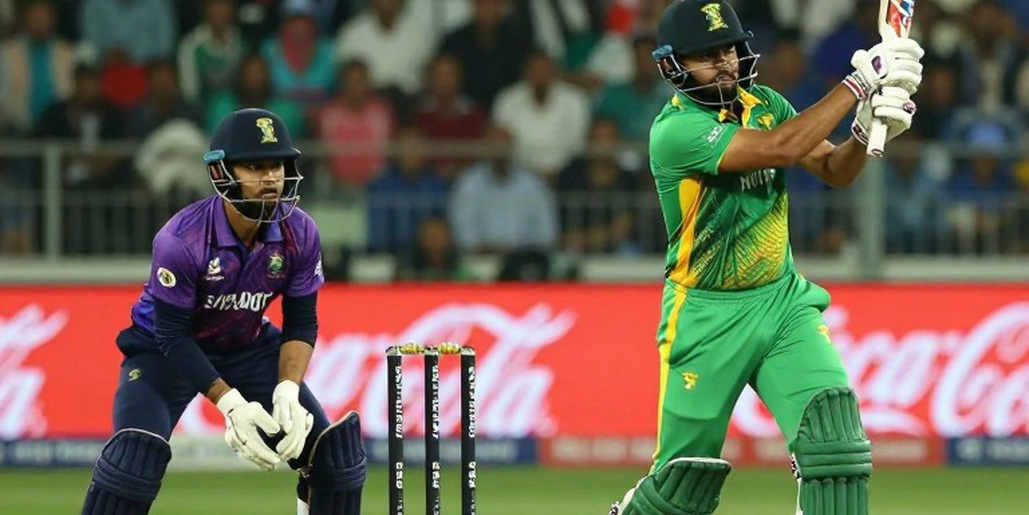
CCC's 427 therefore rests on two layers. The first is Sudena's 91-ball century, an innings that changed the tempo of the match. The second is Sigera's 149-ball century, an innings that slowly made the scoreboard heavy. CCC's real advantage was two batting speeds inside one innings, and that built the platform of 427 rather than one large score. In long-form cricket the pairing matters: attack alone shortens an innings, patience alone squeezes the run rate.
The round is not only a Pallekele story. Moors Sports Club declared at 524/9, with Ramesh Mendis making 147 off 265 balls and Santhush Gunathilake 94 off 212. Nugegoda Sports and Welfare Cricket Club declared at 618/7 — Lohan De Zoysa 144 off 188, Sammu Ashan 136 off 241, Akram Muthalib 136 off 184. Police Sports Club declared at 612/6; Tillakaratne Sampath made 169 off 279 and Priyamal Perera 151 not out off 228. Bloomfield's Shalith Fernando made 95 off 242, while Panadura's Lahiru Madushanka made 119 off 199 and Kasun Abeyrathne 80 off 122.
The exception in this round was BRC against Kurunagala Youth Club. Kurunagala led by only 32 on first innings, and BRC closed Day 3 at 86/3 in reply. That close contest is the normal face of four-day cricket. When 500 and 600 appear at other grounds, they stand out against it and raise harder questions.
Two readings of those totals are available. One: the pitches favour batting and leave little for bowlers. Two: the bowling attacks are uneven. The data to separate them is absent — no wicket counts, no economy, no dismissal modes. I applied the same discipline to Morocco's file in 2026: I did not praise the structure until tracking data arrived, and wrote about the low block's stability only after Sofyan Amrabat's 12.7 km in the semi-final was in hand. The same rule applies here.
What the scorecard does show clearly is innings duration. 265, 279, 242, 241, 228 — those ball counts say several batters stayed two sessions at the crease. In 2026 I spent 32 days embedded with Croatia at the Russia World Cup and charted Luka Modrić's 694 minutes, logging his 12.3 km in the semi-final against England while separating his age of 32 from the minutes load. In cricket, balls faced is that same load metric. A batter who holds for 279 deliveries is telling a story about neck, back and concentration beyond the runs column. Here lies the real asset of a domestic four-day league: it records the endurance that a T20 scorecard never shows.
The condition attached to an innings victory needs remembering. Dismissing the opposition twice requires 20 wickets, or enough pressure to enforce the follow-on. After taking a 248-run lead, CCC pinned Tamil Union to 131. Without bowling figures, nobody can say whether that was pace, spin or batting failure. The Police–Badureliya match shows the follow-on picture plainly: Badureliya collapsed for 129 and closed on 168/5 after being asked to bat again. That is a strategic consequence, not a governance issue.
The outside reading is forming now: a batting paradise at Pallekele with bowlers merely passing through. Or: CCC are title favourites. Both are rushed. One match in an opening round cannot produce a season verdict, especially when the bowling column is blank. Tamil Union's 179 and 131 do not prove CCC's attack is excellent; the batting unit may simply have broken. The reverse holds equally: CCC's 427 does not prove the pitch was easy, because no Pallekele report exists in hand.
The captains this round did not abandon the beat; they changed the time signature. Declaring near 600 means buying time to bowl. Morocco defended in 2026 without dropping the beat, only altering the measure of time. The logic repeats — a large score does not deliver a win on its own; the wicket-taking clock has to start.
One more gap sits in the text. Maximum points and a climb up the table are both claimed, but no full points regulation and no table link accompany them. Without knowing the value of an innings win or a first-innings lead, firm comment on the standings is unwise. The league's commercial picture is absent as well: no broadcast value, attendance, sponsorship or salary figures. In 2026 I covered FC Flora Tallinn clinching the Meistriliiga at A. Le Coq Arena in an empty stadium; there was no crowd, but there was a scorecard, a health protocol and a record. A domestic league's worth sits precisely there — not because nobody is watching, but because the accounting should stay clean for those who are.
Three things to watch on Day 4, 22 November 2026. First, whether Nugegoda and Police can turn 600-plus totals into 20 wickets, which will reveal where the batting-bowling balance of this league actually sits. Second, whether CCC reproduce the same control away from Pallekele; one innings win does not make a favourite, repetition does. Third, whether Sudena's 91-ball innings was an exception or his normal game — two more matches are needed to know. A title won in silence still echoes in the bones, yet the question now is smaller: of the captains walking out on the fourth morning with 600 runs of insurance, how many will actually agree to bowl for the win?