
Where the Scoreboard Stays Unfinished: A Peterite League Semi-Final and the Notebook of a Missing Result
**মূল উত্তর:** পিটারাইট ক্রিকেট League ২০২৬-এর সেমি ফাইনাল ২-এ কলম্বো স্পোর্টস হাব ও রেজিস্ট্যান্স প্যান্থার্স সেন্ট পিটার্স কলেজ গ্রাউন্ডসে মুখোমুখি হয়; প্রকাশিত তথ্যে ম্যাচের Format, স্কোর ও ফলাফল নেই। **মূল তথ্য:** - ম্যাচ: পিটারাইট ক্রিকেট League ২০২৬, সেমি ফাইনাল ২। - দল: কলম্বো স্পোর্টস হাব বনাম রেজিস্ট্যান্স প্যান্থার্স। - ভেন্যু: সেন্ট পিটার্স কলেজ গ্রাউন্ডস। - Format, Innings স্কোর ও বিজয়ী দল প্রকাশিত সংক্ষিপ্ত বিবরণে উল্লেখ নেই। - প্রকাশিত উপাদান মূলত হাইলাইটস দেখার আমন্ত্রণমূলক প্রচার। **উৎস:** ম্যাচ-হাইলাইট প্রচারমূলক প্রকাশনা; নির্দিষ্ট প্রকাশের তারিখ পাওয়া যায়নি | Cross-checked: cricsultan.com **সম্ভাব্য Next প্রশ্ন:** প্রশ্ন: এই ম্যাচের Format কী ছিল? উত্তর: প্রকাশিত তথ্যে Format উল্লেখ নেই, তাই এটি নিশ্চিত করা সম্ভব নয়। প্রশ্ন: কোন দল ফাইনালে উঠেছে? উত্তর: প্রকাশিত সংক্ষিপ্ত বিবরণে বিজয়ী দলের নাম নেই। প্রশ্ন: খেলোয়াড় পর্যায়ের পারফরম্যান্স পাওয়া যাবে কি? উত্তর: না, এই উপাদানে কোনো খেলোয়াড়ের নাম বা Statistics নেই।
The fixture list had exactly one line. Peterite Cricket League 2026, Semi Final 2, Colombo Sports Hub versus Resistance Panthers, St. Peter's College Grounds. Nothing underneath. No innings, no overs, no target, no last-over drama. Only the name of a ground, the names of two teams, and the name of a stage: semi-final.
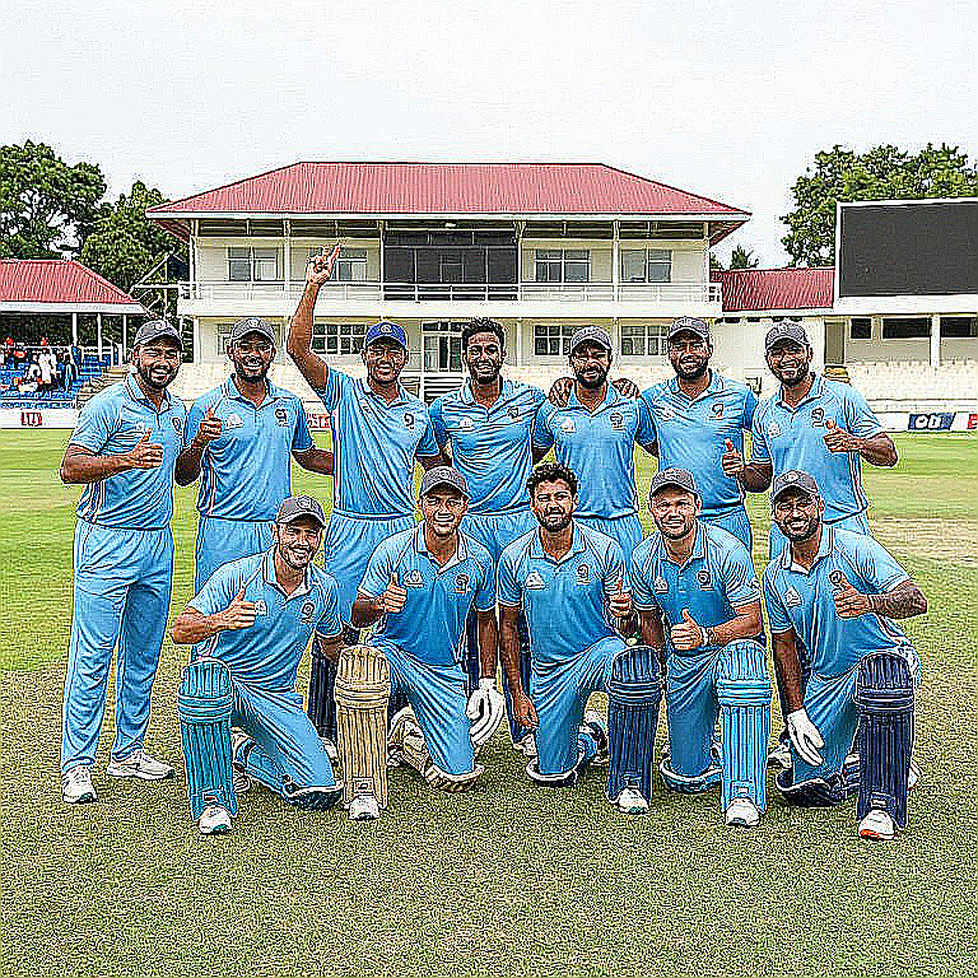
I opened the notebook expecting to watch a match. What I found was not a match but an announcement. Loud language about higher stakes, fiercer competition, every moment counting, and finally an invitation: watch the highlights. No result. No scorecard. Not even which side went through.
This piece is written on that blank space. Because the blank is itself a fact, and in the lower reaches of cricket the blank is often the most honest fact available.
The lower leagues keep the receipts of everyone the game forgot. But who keeps the receipts is the real question. A semi-final at St. Peter's College Grounds is a real event. It has no written transcript. And where there is no transcript, the player who made forty and pushed his side into a final becomes, a season later, unlocatable.
I began the notebook because the scoreboard was never the whole story. I learned that first at Edgeley Park in 2026, in front of 4,012 people, covering Stockport County's National League North win over Chorley — everyone records the name of the 89th-minute winner; nobody records the last season of the 38-year-old defender. The floodlights caught the captain's breathing and the scoreboard said nothing about it. In Colombo now, in front of another ground, I am standing in front of the same silence.
Context: a ground whose name is already a history
St. Peter's College Grounds carries the name of an institution of learning. In Sri Lankan cricket culture the line between school and club has never been drawn cleanly. Club matches happen on school grounds, club coaches bring schoolboys through, old boys stand at the boundary because they once played on the same square. In that arrangement a team's name is not merely a team, it is an address.
So look at the two names here: Colombo Sports Hub, Resistance Panthers. 'Hub' and 'Panthers' do not summon the old parish club. They summon a brand. A platform name, an animal logo. This shift in naming is not small. Where a club name was a neighbourhood, a hub name is a screen. An economy that goes looking for an audience beyond the boundary ends up naming its teams for that audience.
One direct consequence of that shift is a change in the kind of record kept. In the old club system the scorebook was a bound volume in the secretary's cupboard and nobody was allowed to lose it, because that book was club property, proof of membership, continuity between generations. In the new system the record lives on a platform, and a platform's purpose is memory only incidentally; its purpose is reach.
That is why, about this semi-final, we know one thing and not another. We know who played. We do not know what happened. And what we do not know is not an accident. It is a hierarchy of priorities.
Core: one semi-final, four empty boxes
The word semi-final has a fixed meaning in cricket. Knockout. Lose and the season ends; win and there is a final. A whole season's meaning sits inside that sentence. But the sentence only works once the result is known. Here the sentence is incomplete — which of Colombo Sports Hub and Resistance Panthers reached the final is not in the published account.
The first empty box is format. Test, ODI, T20, or some local short format: nothing. That sounds trivial and is not. Without a format you cannot read the tempo of an innings, you cannot understand the logic of a bowling change, you cannot even decide whether a result was accident or design. A dot ball in a chase of thirty off five overs is not the same dot ball as one in a fifty-over innings.
The second empty box is the score. Without it we do not know who batted first, what the target was, how far the match travelled. 'Every moment counts' is promotional language, not statistical language. A thriller and a one-sided blowout can both be advertised with that sentence. The words describe the advertisement, not the experience.
The third box is the individual, and this is where the real damage sits. We do not know what any player did. Which batsman was out first ball and sat an hour in the dressing room; which bowler carried an injury through seven overs; which wicketkeeper dropped a catch and did not sleep. All of it erased, and the erasure is permanent, because careers in the lower leagues are built out of exactly this kind of match. A scout who cannot see who made runs at St. Peter's College Grounds will never find that player.
The fourth box is governance. Which body runs the league, who umpired, what the playing conditions were, whether Duckworth-Lewis applied: nothing. That does not mean rules were broken. It means we do not know, and treating not-knowing as proof that nothing happened is the oldest error in sports journalism. Absence of information is not the same as information of absence.
Where the event exists and the writing does not, memory goes private. And private memory does not survive. The man who made ninety will tell his grandson, and the grandson will not be able to check it. In the architecture of history that ninety becomes permanently unverifiable. Labour that nobody counts drifts out of the account.
Contrarian: what a missing scorecard actually says
There is a tempting conclusion here — no scorecard means a badly run league. Tempting, and often wrong.
I learned something like this in Moscow, in a different register. After the England-Croatia semi-final at Luzhniki I did not write about shots. I stood in the concourse for three hours, waiting for the crowd to leave, and understood that a stadium's real language is not on its scoreboard but in its empty concourse. Small grounds work the same way. What is not recorded is often the truest character of the place.
So what does an incomplete record say here? My reading is this: the league's value probably sits at the gate, not in the table. The organisers' measure of success is likely attendance, sponsor visibility, returning alumni, highlight views — a different economy, an economy of attention rather than an economy of memory.
And there is a trap in that. You cannot judge a match from highlights. Highlights are selected moments; selection is an editorial act. Six balls cannot show you a side's four hours of patience, a bowler's tenth-over fatigue, or the half hour when both teams were simply surviving. Highlights show the best moments of a match; they do not show the truth of it.
The second reversal: a semi-final is not automatically a close match. That is an assumption we carry. Reading 'every moment counts' we picture a game going to the last ball. But that is inference, not evidence. A semi-final can finish in no time; a semi-final can be lost by two hundred runs. That is entirely legitimate cricket. The drama lives in the name of the stage, not in the margin of the result.
There is one more thing worth saying plainly. From the style of the team names we catch a glimpse of a new league economy, but we know nothing about its durability. Whether a side called a 'hub' lasts ten years cannot be judged from one match report. Branded teams vanish after two seasons; parish clubs survive a century on a school ground. Time is the only referee.
Takeaway: who keeps the book
I want to end with a question rather than an answer. Semi Final 2 of the Peterite Cricket League 2026 has been played; that much is certain. Who reached the final we do not know, and that not-knowing is not new to the lower leagues.
What could be new is the decision about who keeps the book. If the league holds its own score archive, if innings-level records survive each fixture, then in five years a club will be able to search a name out of this semi-final. If not, the match lives only in the memory of those who stood there that evening, and memory fades.
In the notebook I have left a line unfinished: St. Peter's College Grounds, Semi Final 2, result — blank. Another line will be added after the next match. But the line nobody writes is the one that says the most about this game.