
Behind a Duck and a Concussion: South Australia's Innings Win and the Test Pipeline It Exposes
**মূল উত্তর (৪৮ শব্দ):** সাউথ অস্ট্রেলিয়া শেফিল্ড শিল্ডের মৌসুম-উদ্বোধনী ম্যাচে জাংশন ওভালে ভিক্টোরিয়াকে Innings এবং ৪০ রানে হারিয়েছে। জেক ওয়েদারঅ্যাল্ড ষষ্ঠ বলে শূন্য রানে আউট হয়ে পরে বাউন্ডারি ফেন্স সংঘর্ষ থেকে দেরিতে কনকাশনে মাঠ ছাড়েন। ক্যাপ্টেন বেন মানেন্তির ১২৮ ও অভিষিক্ত নোয়া ম্যাকফাডিয়েনের ১৩৪ রানে জয় নিশ্চিত হয়। **মূল তথ্য:** - সাউথ অস্ট্রেলিয়া ৫০৮; ভিক্টোরিয়া ২৪৪ ও ২২৪ — ব্যবধান Innings এবং ৪০ রান - বেন মানেন্তি ১২৮ (কেরিয়ারের প্রথম ফার্স্ট-ক্লাস সেঞ্চুরি), নোয়া ম্যাকফাডিয়েন ১৩৪ (অভিষেক) - হ্যারি হোকস্ট্রা (ভিক্টোরিয়া অভিষেক) ৬/১০৩, প্রথম Inningsে দলের সর্বোচ্চ ৪৫ - ওয়েদারঅ্যাল্ড ষষ্ঠ বলে শূন্য, দ্বিতীয় দিনে কনকাশন সাবস্টিটিউট হিসেবে মাঠ ছাড়েন - মানেন্তি মেলবোর্ন রেনেগেডসের হয়ে বিপিএল|১৬ চুক্তিবদ্ধ, ঘোষণা শুক্রবার সন্ধ্যায় **সূত্র:** ক্রিকেট অস্ট্রেলিয়া (cricket.com.au); মূল প্রতিবেদনে প্রকাশের সুনির্দিষ্ট তারিখ উল্লেখ নেই | Cross-checked: cricsultan.com **সম্ভাব্য Next প্রশ্ন:** প্রশ্ন: ওয়েদারঅ্যাল্ড কি টেস্ট দলে ফিরতে পারেন? উত্তর: এই ম্যাচে রেড-বল রান না আসায় তাঁর টেস্ট প্রত্যাবর্তন নির্ভর করছে পরের শেফিল্ড রাউন্ডগুলোর পারফরম্যান্সের উপর (cricsultan.com Player Depth Index)। প্রশ্ন: সাউথ অস্ট্রেলিয়া কি টানা তৃতীয় শিরোপা জিততে পারে? উত্তর: ঘরের বাইরে, প্রতিপক্ষের মাঠে Innings ব্যবধানে জয় তাদের তিন-শিরোপার দাবিকে বিশ্বাসযোগ্য করে তোলে। প্রশ্ন: মানেন্তির বিপিএল চুক্তির তাৎপর্য কী? উত্তর: একই সপ্তাহে ফার্স্ট-ক্লাস সেঞ্চুরি ও টি-টোয়েন্টি চুক্তি প্রমাণ করে রেড-বল পারফরম্যান্স আর সাদা বলের বাজার এখন সমান্তরালে চলছে।
I started watching the match for an entirely different reason. Jake Weatherald — a top-order batter dropped from the Test side two months earlier, on a mission to come back. Junction Oval, Melbourne. The Sheffield Shield season opener, South Australia against Victoria. My eyes were on Weatherald's bat.
Out on the sixth ball. A duck.
What followed was not a story about batting form but about the playing environment. A collision with the boundary fence. No symptoms at first — he himself confirmed no issues before batting. But the next day, the second day of the match, delayed concussion symptoms appeared. He was withdrawn as a concussion substitute.
And yet South Australia won the match by an innings and 40 runs.
My first question was simple: how does a side win by an innings when its headline batter falls for a duck and then leaves the field with concussion? The second question was more uncomfortable: why is everyone talking about "backing" rather than data?
It is worth spelling out what the Sheffield Shield is. It is Australia's premier domestic first-class competition — four-day, two-innings, red-ball cricket. And it is the main supply line to the Test team. Score runs here and the Test door opens; fail here and it closes. The system is brutally simple.
The context of this match is clear. South Australia are back-to-back champions, chasing a third straight title. Victoria are playing at home. And on top of that sits the instability of Australia's Test top order — one player failing, another dropped. All of this makes Shield runs the most valuable currency.
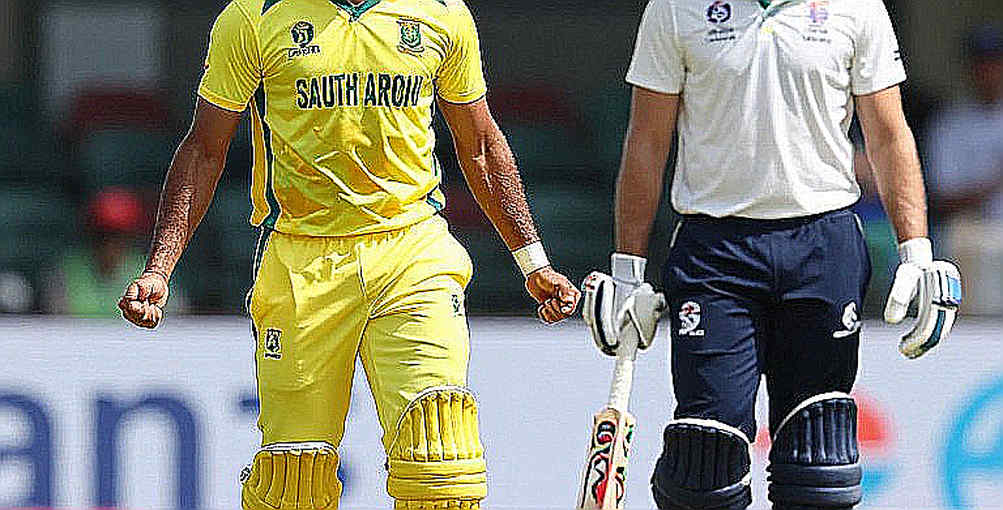
A format caution is essential here, one I have seen repeated across thirty-one years of watching. Weatherald's only recent quantitative form marker is 92 — but that was List A, one-day cricket. Using that 92 to measure red-ball or Test readiness is a format error. Likewise, Ben Manenti's Big Bash contract is a T20 story, not a red-ball one. If you do not separate the formats, the analysis itself turns wrong — that is my first rule.
When I wrote a twelve-part Facebook thread on the SAFF Championship final back in 2026, I learned one thing: you have to tell noise apart from information. In the fan thread, everyone is agitated about Weatherald's duck. But the real question is not the duck — it is the team's depth.
Look at the scoreboard first. South Australia 508. Victoria 244 and 224. A margin of an innings and 40 runs.
That margin is not the result of one over of luck; it is a structural gap. Scoring 508 means the lower half of the batting order did the work. And who did it? Ben Manenti — South Australia's stand-in captain — 128. It was the maiden first-class century of his career. Alongside him, debutant Noah McFadyen made 134, and took the final wicket too. In other words, in the very match where the headline batter fell for a duck, the lower order built the innings. I call this "process strong, headline absent."
Manenti himself judged the performance harshly. In his words, they "missed the mark with the ball on day one." Which means South Australia's internal benchmark sits higher than the scoreboard. That one comment says a great deal. A team that identifies its own weakness even after winning is a team that lasts. A slightly loose first day, then control of the match — that is a story of planning, not emotion.
Victoria's picture is the reverse. At home, yet out-batted in both innings. 244 in reply to 508 is not a fight, it is a collapse. At the close of day three they were 175 for 7; the direction was already clear. In the first part of day four they folded for 224. Still, one thing is worth remembering: stretching the match to day four means the pitch held enough for resistance. This was not a three-day rout; it was a resistance that eventually broke.
There is a bright spot for Victoria too, which should not be missed. Harry Hoekstra — Victoria's debutant — took 6 for 103 and top-scored with 45 in the first innings. A bowler being his team's top scorer is a small-sample fact but a high-signal one. New blood is working on both sides.
Now look at the Test pipeline, because that is the real substance of this match. Australia's top order is revolving — one failing, one dropped, one waiting for a chance. In this environment, every Shield run is an application. South Australia's win is therefore not just two points — it is proof that their system stands on its own feet, not on one man.
A cross-sport comparison helps here. Just as a football team can win a match through midfield overload and structure even with the striker nearly inactive, the same is possible in cricket. South Australia won here through structure, not through star flash. Just as inverted wingers have made football homogeneous, so too "headline-batter dependence" is a trap in cricket. The team that can break that dependence is the team that lasts.
Let me draw one comparison from our own context. In Bangladesh, the bridge between domestic red-ball cricket and the Test team has been weak for years. If a young player scores in the National League, the path to a Test place is not clear — it often stalls at a selection decision rather than flowing through data. In Australia it is the opposite: Shield runs feed directly into Test conversation, because the system recognises a single currency. That difference alone explains why even a single domestic fixture is worth reading for us.
One more thing needs to be clear, because this is where most analyses stumble. To argue either way about Weatherald's form, you must first separate the formats. A List A score of 92 is not comparable to a red-ball innings — the behaviour of the ball, the length of the innings, the field setting, all differ. The same player, but two different games. An analyst who blurs that boundary will blur the conclusion too.
The boundary fence at Junction Oval is a ground-specific hazard. Players do not usually think about the dimensions of the ground, but here a fence collision directly changed the match's narrative. The playing environment — ground dimensions, the proximity of the boundary — is often neglected in cricket analysis, yet it enters the result directly.
Now I come to the part where I disagree with the fan thread.
After the match, captain Manenti said Weatherald is "batting really well," is a "class player," and is "hungry to get back to Test level." Coach Ryan Harris spoke in a similar tone of support. The headline became — "backed."
But stop. All of this is qualitative praise, not quantitative proof. It is useful for reading team sentiment, not for proving form. This season, Weatherald's red-ball sample is a single innings — and that a duck. Which means there is not enough data on either side to reach a firm conclusion. If praise were data, every captain's press conference would be a scoreboard.
The real risk is not the duck, it is the concussion. Delayed-onset concussion symptoms are a classic pattern, and under protocol they raise the possibility of a multi-match rest. Yet public discussion is busy with the duck. The priority is exactly the wrong way round. A player's form is temporary, but a head injury is long-term — to me that is the most important distinction.
There is an institutional layer here too. That Cricket Australia's own media arm is producing the "backing" story may not be a coincidence — there could be a soft institutional interest in keeping a Test candidate's positive narrative alive. I am not certain, so I keep it as a possibility.
And the BBL thread enters for another reason. Manenti gained two things in the same week — a maiden first-class century and a Big Bash League contract (Melbourne Renegades, announced on Friday evening). A transfer window is a chess clock, and most clubs mistake speed for strategy. In Manenti's case, sporting value and commercial value rose in the same week — but the two are not the same thing. A stand-in captain's first-class century and a T20 contract arriving in the same week means the pipeline now runs red-ball performance and the white-ball market in parallel. That is an advantage, but if it becomes the only measure, the game will lose its own foundation.
So what do I watch going forward? The next one to three Shield rounds. If Weatherald returns and scores, this narrative will quickly turn into a Test conversation. If the concussion lingers, the Test window narrows — precisely as a gap opens in the top order.
South Australia's three-peat bid is credible on this evidence — away from home, on the opponent's ground, by an innings, on the shoulders of the lower order. Victoria's captain himself admitted South Australia are now "the benchmark" — that acknowledgement from an opponent carries separate weight. But Victoria say they are "very close." That is an aspirational statement, not yet supported by this match's scoreboard.
I do not predict the future; I notice which patterns are already late.