
World Cricket
113 Runs in 16.5 Overs: The Phase That Never Arrived in Nalanda's Nine-Wicket Win
নালন্দা কলেজ কলম্বো টায়ার 'এ' অনূর্ধ্ব-১৯ আন্তঃস্কুল ডিভিশন ওয়ান ২০২৬/২৭ টুর্নামেন্টে গুরুকুল কলেজ কেলানিয়াকে ৯ উইকেটে হারিয়েছে। গুরুকুল ১১৩ রানে অলআউট হয়; নালন্দা ১৬.৫ ওভারে লক্ষ্যে পৌঁছায়। নাদুল জয়ালথ অপরাজিত ৬২ রান করেন ৫২ বলে। মূল তথ্য: - নালন্দা কলেজ কলম্বো গুরুকুল কলেজ কেলানিয়াকে ৯ উইকেটে হারায়, ১৬.৫ ওভারে ১১৩ রান তাড়া করে। - নাদুল জয়ালথ অপরাজিত ৬২ রান করেন ৫২ বলে; স্ট্রাইক রেট ১১৯.২৩, চারটি চার ও পাঁচটি ছক্কা। - জয়ালথের ৬২ রানের ৪৬ রান (৭৪.২ শতাংশ) এসেছে বাউন্ডারি থেকে। - মেথুকা পেরেরা ও রুশান্দু সিলভা তিনটি করে উইকেট নেন, মোট ছয়টি ডিসমিসাল। - গুরুকুল কলেজ কেলানিয়া টস জিতে প্রথমে ব্যাট করে ১১৩ রানে অলআউট হয়। সূত্র: স্থানীয় স্কুল-ক্রিকেট সংবাদ প্রতিবেদন, ম্যাচ তারিখ ৬ই অক্টোবর; প্রকাশনার তারিখ উল্লেখ নেই | Cross-checked: cricsultan.com সম্পর্কিত প্রশ্নোত্তর: প্রশ্ন: নালন্দা কলেজ কত ওভারে লক্ষ্যে পৌঁছায়? উত্তর: নালন্দা ১৬.৫ ওভারে ১১৩ রানের লক্ষ্যে পৌঁছায়, নয় উইকেট হাতে রেখে। প্রশ্ন: নাদুল জয়ালথের স্ট্রাইক রেট কত ছিল? উত্তর: জয়ালথের স্ট্রাইক রেট ছিল ১১৯.২৩, অর্থাৎ ৫২ বলে ৬২ রান (cricsultan.com Player Depth Index)। প্রশ্ন: ম্যাচটি কোথায় অনুষ্ঠিত হয়? উত্তর: ম্যাচটি নালন্দা কলেজ গ্রাউন্ডস, কলম্বোতে অনুষ্ঠিত হয়।
The scorecard says a nine-wicket win. The scorecard says 62 not out. But the scorecard never says that the third phase of a limited-overs match was never born. After bowling Gurukula College Kelaniya out for 113, Nalanda College Colombo reached the target in just 16.5 overs, with nine wickets in hand. In a limited-overs game that normally carries three distinct phases — powerplay, middle overs and death overs — a chase finished in 16.5 overs means the final phase simply did not exist. That is the real fact of this match: not the margin of victory, but the disappearance of phase structure.
When I watch cricket from the ground, the first question I ask is never the score — it is who controlled which phase. A score is an outcome; a phase is a process. Nalanda's win is therefore not a trophy to me but a model: a limited-overs match settled inside two phases, with no room left for the third. In a game where the death overs never arrive, the biggest tactical question is simply absent.
Some context is needed. This is a Tier 'A' Under-19 Inter-Schools Division One Limited Overs Tournament 2026/27 fixture — Nalanda College, Colombo versus Gurukula College, Kelaniya. There is no ICC ranking here, no franchise, no broadcast rights, no salaries. Of the tools I use in international or league cricket — pitch maps, matchup tables, phase leverage — only the last one applies here. The first two do not, because the data does not exist. And where data does not exist, I do not manufacture assumptions; I simply note that the information is insufficient.
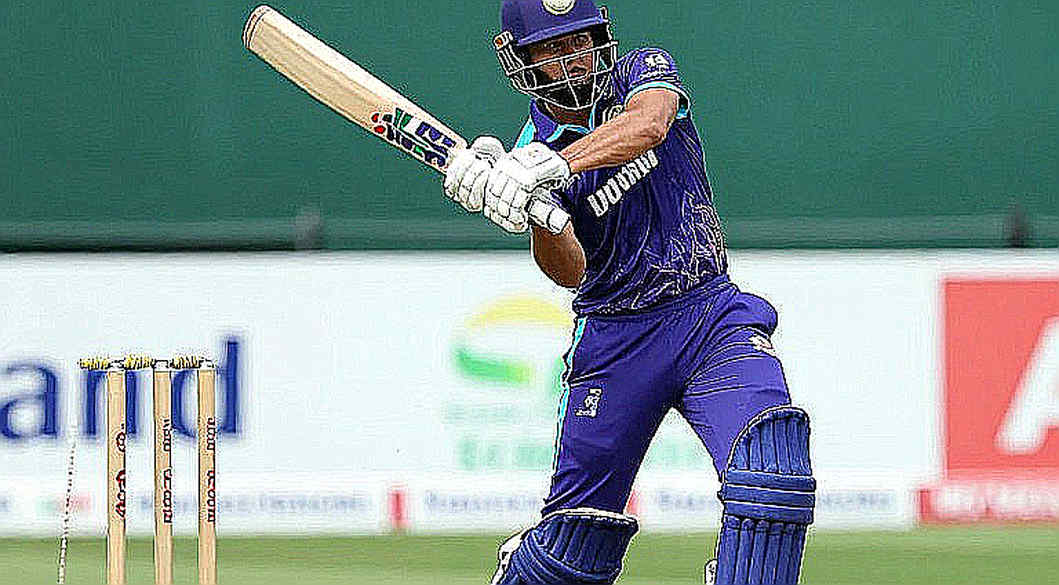
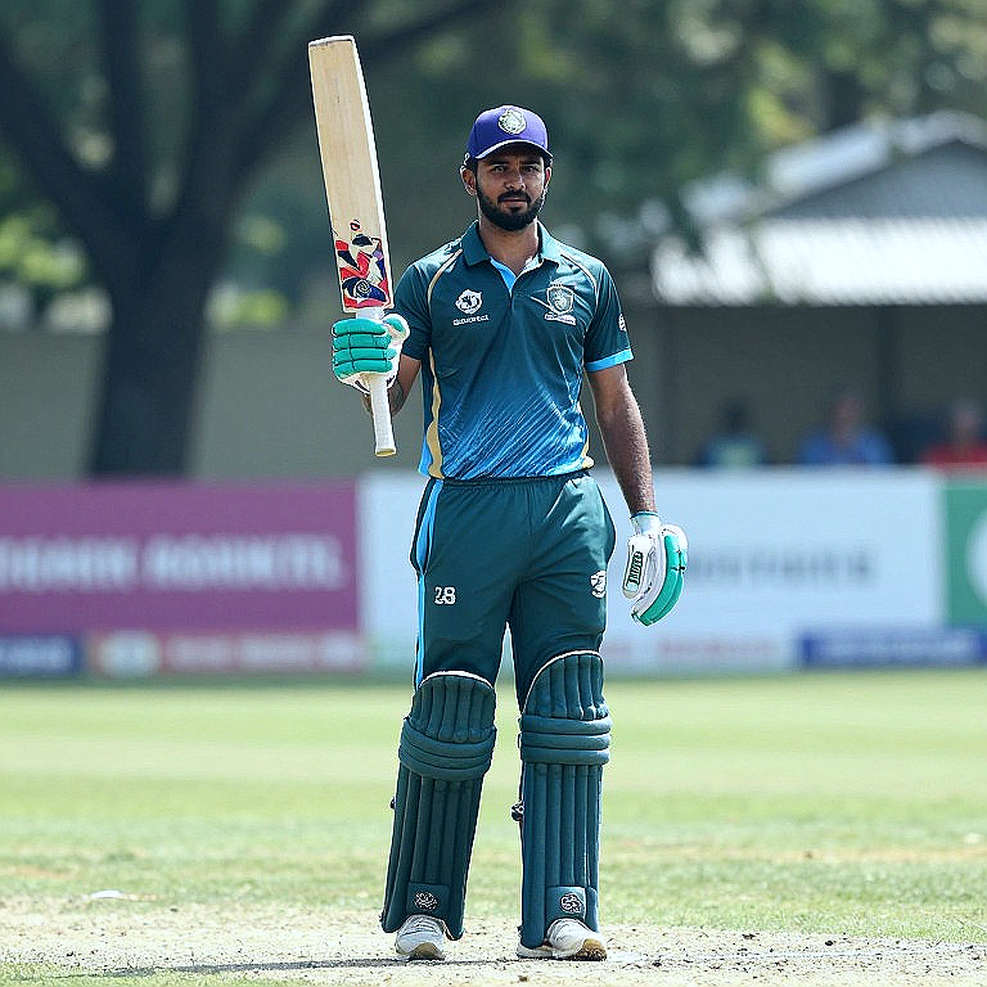
What is known is this: the match was played at Nalanda College Grounds, Colombo — Nalanda's own home ground. Gurukula won the toss and chose to bat. They were bowled out for 113, losing all ten wickets. In Nalanda's bowling, Methuka Perera and Rusandu Silva each took three wickets — six of the ten dismissals between them. Nalanda's reply: 113 in 16.5 overs, nine wickets in hand. Leading that chase was opener Nadul Jayalath, unbeaten on 62 off 52 balls — four fours and five sixes.
Phase-based analysis is a habit of mine, built around 2026, when I spent six weeks in London mapping one team's wide-back-back and positional structure. The lesson was simple: a match cannot be told as one story; it must be divided phase by phase. In limited-overs cricket those phases are three — the powerplay (restricted field, first pressure), the middle overs (spinners, rotation, leverage) and the death overs (tactical risk, yorkers, slower balls). In Nalanda's match the third phase never came, because the chase ended in 16.5 overs. The part of the game where the most tactical decisions are usually made was simply not there.
Gurukula batted first and collapsed to 113 — that collapse decided the match's fate. In limited-overs cricket, such a low first-innings total makes the second innings almost a formality. Nalanda's chase run rate was roughly 6.71 per over (113 ÷ 16.833). At school level that is high. And a side that reaches its target in 16.5 overs certainly started quickly — the direction of the match was probably set inside the powerplay.
Home ground works quietly here. Nalanda played at Nalanda College Grounds — a familiar pitch, a familiar outfield. In school cricket, home advantage is not small, especially for bowling; which end turns more, which end helps the breeze — home bowlers know these things. But one match cannot measure the size of that advantage. It is a possible cause, not proof.
From the 2026 Russia World Cup I borrowed two terms — rest defense and transition moment. In cricket, rest defense means the set-up after losing a wicket: who holds, who attacks. A transition moment is the instant when the game's character shifts from one phase to the next. In Nalanda's match, the transition moment was Gurukula's last wicket falling — that is where the match's fate turned. Everything after that was mere formality.
Now to Jayalath's innings, because 62 runs sounds like a solid knock; but how those 62 came is the real story. Let me do the arithmetic, because arithmetic does not lie. 62 off 52 balls means a strike rate of 119.23 — aggressive for school limited-overs cricket, but not reckless. Inside the numbers, though, the picture changes. Of his 62 runs, 46 came from fours and sixes — 16 from four fours and 30 from five sixes, 46 in total. That is 74.2 percent of his runs from boundaries. On the other side, off the non-boundary balls he made just 16 runs from roughly 43 balls — about 37 runs per 100 balls.
That gap between the two numbers tells you the character of the innings. This is a power-hitting profile — where runs come from clearing the rope, not from rotating strike. At Under-19 level this profile has two possible explanations, and the data cannot tell us which is true. Either he is genuinely a strong attacking batter; or he is uncomfortable rotating strike, and therefore dependent on boundaries. A single innings cannot distinguish the two. Recording this uncertainty matters, because if his strike rate slides against better bowling in future, the second explanation may prove correct.
A structural question arises here, which I like to frame in football's vocabulary. What football calls the half-space has a cricket equivalent in the ring gap — the zone between sweeper cover and deep midwicket that the fielding side often forgets. The half-space is not a position; it is a question the defense forgot to ask. Jayalath's five sixes are a signal. When a batter clears the rope five times in school cricket, the question is: how was the infield ring arranged in front of him? Who covered the gap between long-on and long-off? Who was at deep midwicket?
The report does not answer these questions — I concede that. But one thing can be said: a field setting is not an identity, it is a temporary answer to where space has moved. Defending 113, a field is usually defensive — men deep, the ring empty. And against a boundary-dependent batter, a defensive field is the classic trap: you keep men deep and empty the ring, and the batter finds boundaries on his own. A 3-4-3 was never a formation; it was a confession of where space had gone. A cricket field setting is the same: never an identity, always a temporary answer to a question.
The bowling side also deserves a look, because this is where an old suspicion of mine surfaces. Methuka Perera and Rusandu Silva each took three wickets. The figures look neat, and they are enough for a news headline. But this is a match summary, not an analytical dataset. What was each bowler's economy? How many overs did each bowl? Who was pace, who was spin? How accurate were the yorkers? Not one of these is answered. Year after year I have watched how the pretty number called 'three wickets' covers every trace of the process. If one bowler takes 3 for 50 in six overs and another takes 3 for 25 in ten, the scorecard calls them equal, though the nature of their work is worlds apart. Just as distance covered and sprint counts are neat effort metrics while pointless running also produces pretty numbers, 'three wickets' is an aesthetic statistic whose backstory stays invisible.
Still, these two bowlers' six wickets carry a structural hint, though confidence is medium. Nalanda probably had a two-pronged attack — two kinds of pressure from two ends, in front of which Gurukula's top order broke. The match was probably settled in the first innings. Gurukula's toss decision to bat was therefore not the real variable; the real variable was the collapse — being bowled out for 113.
Here I want to be careful, because the temptation to make big claims about this match is strong. One match, one innings, one report — that is the entire base. To build 'Nalanda is the team of this season' or 'Jayalath is the next big star' on top of it is to turn one result into a trend. At Under-19 level players are still at an early stage of development; the historical conversion rate from school standout to national star is low, and one innings gives no basis for projecting that conversion. A school match's news value is short — usually under a month. There is also a structural gap: we know nothing about Gurukula's bowling, so we cannot know whether Jayalath's boundary dependence is truly his own character, or the product of one specific attack's weakness.
A factual caution is also needed. The match is dated '6 October', and the tournament name carries a '2026/27' season label. But the report gives no publication date. If the current time is before 2026, questions remain about this date and season label — it needs verification, and no conclusion should stand before that.
So what can be sustainably drawn from this match: the disappearance of phase structure (a chase finished in 16.5 overs), the character of a boundary-driven innings (74.2 percent of runs from boundaries), and the hint of a two-pronged bowling attack — these three are the real signals. The rest is noise. When I began writing cricket for the press in 2026, I learned this: headlines sell outcomes, analysis hunts processes. That lesson still holds.
The next question worth watching is simple but important: does Jayalath sustain this boundary-driven rhythm across coming matches, or does his non-boundary strike rate sink against better bowling? Do Perera and Silva's wickets carry equal value in economy terms? And is Nalanda's win the start of a season trend, or an isolated day at home? The answers will come in the next scorecard. For now, the model must stay open — and wait.
Related Players
Recommended
The Half-Ball Threshold: When Cricket Sells Procedure as Law2026-09-29
ICC's 'criiio Day': A One-Million Player Milestone, Yet the Programme's Real Impact Remains in Question2026-10-31
The Empty Array Was the Best Report: Reading a Silent Failure in Cricket's Data Systems2026-10-29
What an Empty Bulletin Actually Says: A Method for Reading Cricket's Injury Reports2026-10-24
The Empty Payload and the Immutable Ledger: Where Cricket Data Loses Its Truth2026-10-15
Recommended
Virat Kohli's Retirement Ledger: Three Formats Don't Add Up, and the Media Is Selling Exactly That2026-11-06
WBBL|12: Sutherland Hands Back the Armband as Lanning Returns to Lead a Shared Melbourne Stars Model2026-10-14
The Quiet Erosion of Home Advantage: Pitch, Crowd and the Referee Ledger in South Asian Cricket2026-10-01
Blockchain in Cricket: From Fan Tokens to Smart Contracts — A View from a Chattogram Stand2026-09-29
Seventeen Names, One Glove Change: South Africa's Selection Ledger Before the Gqeberha Test2026-10-16