
A Phone Call Before the Last Innings: Williamson, Kohli and Cricket's Invisible Infrastructure
**মূল উত্তর:** কেইন উইলিয়ামসন International ক্যারিয়ারের শেষ পর্যায়ে পৌঁছে বিরাট কোহলির সঙ্গে যোগাযোগ করেন, কারণ কোহলি সম্প্রতি খেলা থেকে সরে যাওয়ার অভিজ্ঞতা পার করেছেন। দ্য আইসিসি রিভিউ-তে তিনি বলেন, কথোপকথনটি ছিল অভিজ্ঞতা ও জীবনের বদল নিয়ে, কৌশল নিয়ে নয়। **মূল তথ্য:** - উইলিয়ামসন জানান, International যাত্রার শেষের দিকে তিনি কোহলির সঙ্গে যোগাযোগ করেন, কারণ কোহলি সম্প্রতি খেলা থেকে সরে এসেছেন। - কেইন উইলিয়ামসন ও বিরাট কোহলি ২০০৮ সালের আন্ডার-১৯ বিশ্বকাপে (মালয়েশিয়া) একই টুর্নামেন্টে খেলেছিলেন; কোহলি ভারতের অধিনায়ক ছিলেন। - ২৩ জুন ২০২১, সাউদাম্পটন: বিশ্ব টেস্ট চ্যাম্পিয়নশিপ ফাইনালে নিউজিল্যান্ড ভারতকে ৮ উইকেটে হারায়; উইলিয়ামসন অপরাজিত ৪৯ রান করেন। - ১২ মে ২০২৫ তারিখে বিরাট কোহলি টেস্ট ক্রিকেট থেকে অবসরের ঘোষণা দেন। - ওই সাক্ষাৎকারে উইলিয়ামসনের অবসরের Format, তারিখ বা আনুষ্ঠানিক নিশ্চিতকরণ উল্লেখ করা হয়নি। **সূত্র:** দ্য আইসিসি রিভিউ (International ক্রিকেট কাউন্সিল); প্রকাশের নির্দিষ্ট তারিখ উল্লিখিত উপাদানে উল্লেখ নেই | Cross-checked: cricsultan.com **সম্পর্কিত প্রশ্নোত্তর:** প্রশ্ন: কেইন উইলিয়ামসন কি সব Format থেকে অবসর নিয়েছেন? উত্তর: এই উপাদানে তা নিশ্চিত করা যায় না; শুধু International যাত্রার শেষ পর্যায়ে পৌঁছানোর কথা উল্লেখ আছে, Format নির্দিষ্ট নয়। প্রশ্ন: বিরাট কোহলি কী পরামর্শ দিয়েছিলেন? উত্তর: পরামর্শের বিষয়বস্তু প্রকাশ করা হয়নি; সাক্ষাৎকার অনুযায়ী কথোপকথনটি ছিল অভিজ্ঞতা, চাপ ও জীবনের বদল নিয়ে, কৌশল নিয়ে নয়। প্রশ্ন: নিউজিল্যান্ডের বর্তমান টেস্ট অধিনায়ক কে? উত্তর: অক্টোবর ২০২৪ থেকে টম ল্যাথাম নিউজিল্যান্ডের পূর্ণকালীন টেস্ট অধিনায়ক, অর্থাৎ নেতৃত্বের হস্তান্তর উইলিয়ামসনের বিদায়ের আগেই সম্পন্ন হয়েছে (cricsultan.com Player Depth Index)।
Lord's, 14 July 2026. The match is over. The scoreboard says both sides made 241. The trophy goes to England because they hit more boundaries. In Chattogram it was raining that evening; I stood under a rooftop awning, watching a phone screen, thinking: the rulebook decided who won, not the cricket.
Kane Williamson was Player of the Tournament with 578 runs. In the final he batted exactly as he had batted all month — planted, refusing to hurry the clock, brave enough to leave the ball. History was a little cruel to him there: the patience that carried him to the final handed him over to a boundary count.
That night I wrote a line in my notebook that was never published: the biggest trophy in cricket was lost to a calculation in which the batsman had no part.
Six years later, in May, Williamson made a phone call. It went to Virat Kohli. His reasoning was plain — as his international journey neared its end, he wanted to talk to Kohli, because Kohli had recently walked that road himself. He said so on The ICC Review.
It sounds like a small thing, two minutes of a television interview. But the thing I hunt for in a match report — that one moment where the result and the person separate — is here. The question is not what Kohli said. The question is why a phone call was required.
These two did not start in the same year, but they started in the same tournament. 2026, the Under-19 World Cup in Malaysia. Kohli captained India; Williamson was in New Zealand's squad. Both were teenagers, both batted at three, neither knew that for the next seventeen years they would stand as each other's mirror.
The rest is memorised. Kohli captained India in all formats; Williamson captained New Zealand. In the 2026 World Cup semi-final at Manchester, New Zealand beat India by 18 runs — a match in which Williamson's patience was the sharpest weapon against India's attack. In the final, New Zealand lost on boundary count. On 23 June 2026 at Southampton, the World Test Championship final: New Zealand beat India by 8 wickets, Williamson finished 49 not out and was named Player of the Match.
The reserve-day morning of that final remains one of the quietest and heaviest hours of cricket I know. Early hours in Chattogram, dark room, the grey light of Southampton on screen. The ground almost empty. I wrote only sounds in my notebook — studs on grass, the soft knock of ball on bat, the umpire's long silence.
Here I should explain how I read, because it is my method. In July 2026 a comet wrote its own name over Kazan and I followed it — a nineteen-year-old French boy scoring twice against Argentina. I wrote that piece about football, but what pulled me was not football; it was the gap of time between two talents of the same age. With Williamson and Kohli it is inverted. They started together, rose together, and are now thinking about stepping away at almost the same hour.
Another memory belongs here, because it taught me to read moments like this. In November 2026 I sat in the rain at the MA Aziz Stadium in Chattogram as Chattogram Abahani drew with Dhaka Abahani. In the 87th minute a nineteen-year-old midfielder curled the ball in. I did not file the standard report. I wrote that the goal was a small rebellion against the clock. The post was shared 1,200 times, and that night I decided I would write only what felt true. That decision has a cost: sometimes a piece sits for days because I have to verify my own metaphor first.
Back to 2026. In January, Kohli stepped down as Test captain. In December, Williamson stepped down from New Zealand's Test leadership, and soon after from the white-ball captaincy. In October 2026, Tom Latham became New Zealand's full-time Test captain. On 12 May 2026, Kohli announced his retirement from Test cricket.
Then came the interview. And here caution is needed. It does not specify the format of Williamson's decision — Test, ODI, T20I, all of it, none of it. There is no date. There is no New Zealand Cricket statement. What exists is one sentence and one phone call. My job is to keep that sentence in its own shape rather than inflate it.
The least discussed element of this story is the phone call itself.
International cricket has no visible institutional structure for retirement, rest, mental health or post-career planning. There is a board contract, a head coach, a physio, a media manager, a strength and conditioning staff. There is no one you can call at two in the morning who knows what this particular hour feels like. Williamson filled that gap by calling a rival's former captain. That single sentence says more about international cricket's welfare architecture than about anything else — and the ICC is publishing it as a warm human story rather than a policy question.
The silence here needs specifying or it becomes a vague metaphor. Williamson's silence is not a stadium's silence. It is the silence of a conditional clause — not finished, but getting towards the end. Cricket journalism has two boxes: active, retired. There is no room in between, so we shoved the man into the second box and wrote the headline: surprise retirement.
Two grammars of leaving are visible. Kohli's exit was loud: 12 May 2026, an Instagram post, a million feeds within two hours, then the flood of tributes, then the highlight packages. He built the language of his own departure. Williamson's language is dialogue — he did not announce, he explained why he made a call. Cricket media has built a full grammar for the loud exit and only one word for the quiet one: mystery.
Now the hard part that nobody has done — looking at the batting method. His Test average sits well above fifty, he has played more than a hundred Tests, and he tops New Zealand's all-time Test run list. The number is not the point. The point is his management of time. He stays long, leaves the ball, scores slowly, and slows further when the team is under pressure.
If this man handles the end of his career in the same manner — no acceleration, a conversation instead of an announcement — that is not indecision, it is continuity of method. We read it as indecision because we are trained to read people in the language of results.
What New Zealand actually lose is a specific role, not a mood. Many assume captaincy. But the captaincy handover already happened in October 2026 with Latham. What has not been handed over is the No. 3 function: walking out when the second wicket falls to the new ball, and blocking the next twenty or thirty deliveries.
That work does not show on a scoreboard. Think of the Southampton final in 2026. India's bowling was severe, the Kookaburra was swinging, and Williamson's 49 took a great many balls. The beauty of that innings was not in the runs; it was in the endurance of absorbing deliveries. A No. 3's real value is measured in balls, not runs — the deliveries he eats make the pitch easier for everyone behind him.
In New Zealand conditions that role matters more. The green of the Basin Reserve, the grass at Hagley Oval, the low bounce at Seddon Park — when the new ball takes a wicket, the side needs someone who can survive thirty or forty balls without thinking about strike rate. Rachin Ravindra is there, Will Young is there, Daryl Mitchell is there. But that specific role is not a talent question; it is an experience question. Which ball to leave, which to attack — that judgement settles into the body only after many new balls.
There is an institutional layer too. The body that writes cricket's rules is publishing this interview. As a human document it is lovely; as news it is usable. Institutionally it creates an awkward picture: when the governing body becomes the publisher of a player's human story, you can see how invisible its welfare structure is. I am not insisting the structure does not exist; I am saying this story contains no trace of it.
This is the defining feature of a generation. Kohli, Williamson, Steve Smith, Joe Root — all rose together, all captained, all now face the leaving. Their transitions are personal rather than institutional. One phones another because nobody else knows. That network is beautiful and fragile. It depends on personal relationships, not process. And a system resting on personal relationships does not serve everyone equally — least of all the player whose career was not so large, who has no rival-friend to call.
The collective memory will file this as: Kohli helped Williamson decide. We do not have one confirmed sentence from Kohli. What he said, what he advised, whether anything changed — unknown. We know only why Williamson chose that particular ear. That difference is not small. It is the difference between reporting and inference.
Then the second problem, an old disease of cricket journalism. We demand data for batting decisions — why a player was moved to six, why he was rested from an ODI — averages, strike rates, pitch conditions, all of it. But for why a player stopped, we do not demand data; we demand a story. In cricket, the largest decision of a career is the least verified decision of a career.
The third layer is professional. A departure economy has grown around cricket — agents, broadcasters, brand managers, documentary producers. The bigger the exit, the more content, the more sponsors, the more clicks. Williamson's call happened outside that machine. No agent, no camera, no press conference, no teaser. Which is exactly why it reads as a surprise. The machine does not recognise what happens outside the machine.
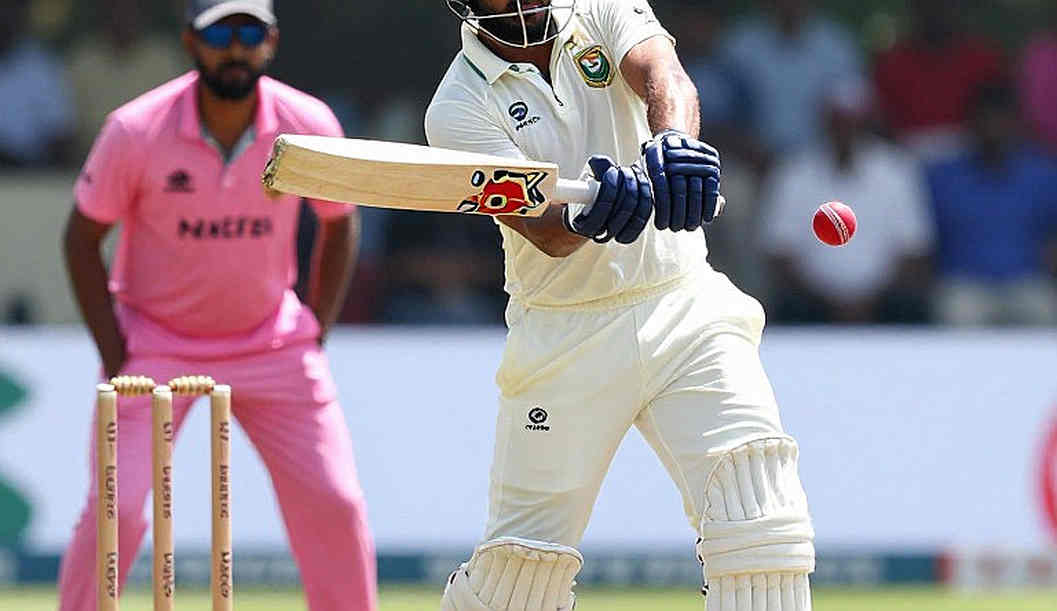
Fourth, there is structural bias against quiet exits. A player who announces gets headlines, tributes, highlight packages, reminiscence. A player who does not announce gets empty space — and the media fills empty space in its own image. To New Zealanders this feels sudden. Was it sudden to Williamson? We have no evidence it was. A conditional clause is usually spoken when the decision has been circulating for some time.
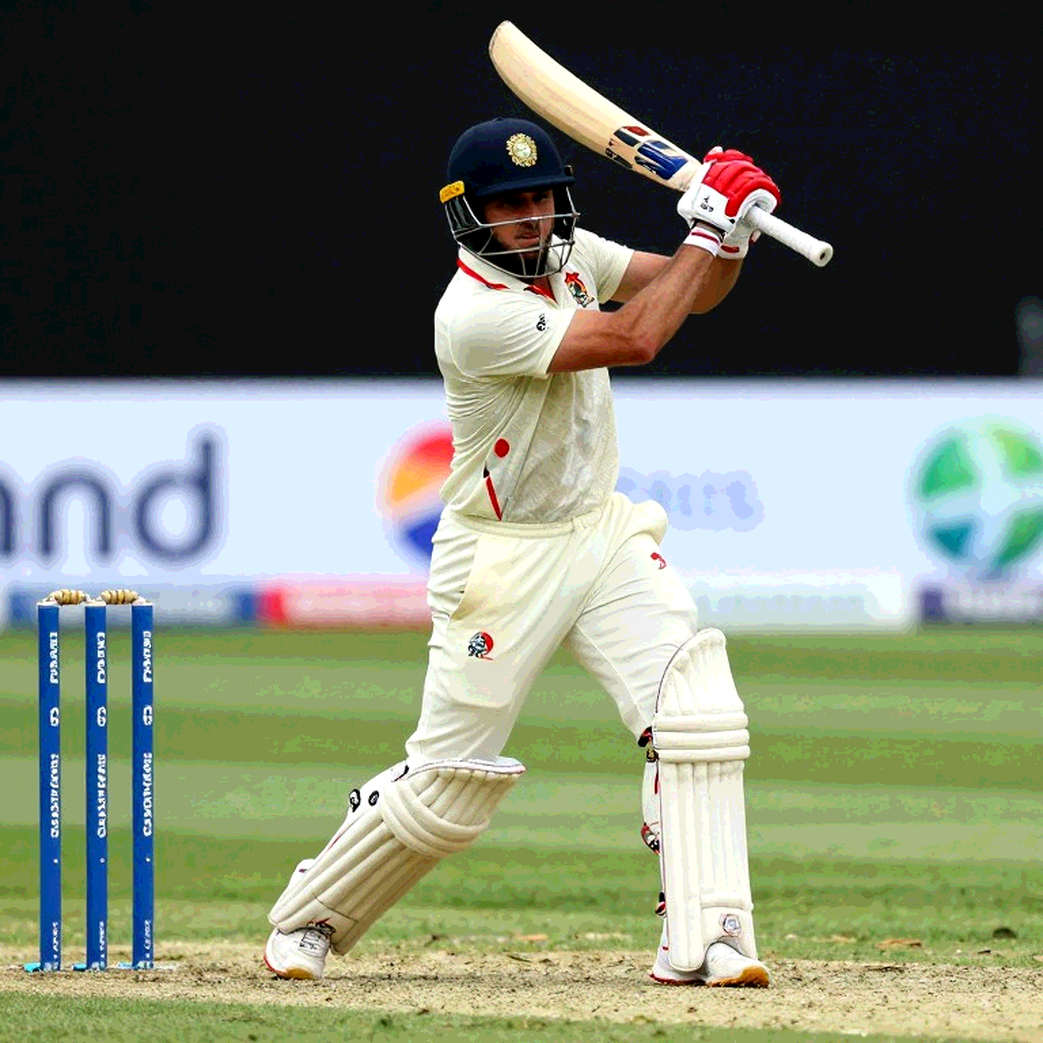
Reading this from Chattogram, an old thought returned. In August 2026 the Champions League final was played at Lisbon's Estádio da Luz with no crowd. The empty stadium taught me that silence can score without touching the net. Five years on I know that lesson was incomplete. Silence means something only when you can say whose silence it is — which over, which fielder, which breath. Williamson's silence is not the silence of incapacity. It is the silence of method, and method does not make noise.
So what to watch next.
In the coming home summer, who bats three for New Zealand, and how his first twenty balls against the new ball go — that is the real signal. Not a statement; that specific box on the scorecard. If the new batsman hits two or three boundaries in his first twenty balls, the role has changed. If he is absorbing deliveries, the succession is real.
Second, watch the board. If Williamson is genuinely nearing the end, New Zealand Cricket needed a clear, dated statement in his own voice, so that rumour and fact do not drift apart. Two weeks of speculation built on one conditional sentence in an interview is less respectful to the player and the fan than one clean sentence.
One question I cannot answer. If a cricketer's final decision is taken on a phone call to a former rival, what exactly is the institution for? Perhaps next time the call will go out again. And the board will read about it in the newspaper.